中国古建文化

Search documents
走山西,看古建“天际线”
Ren Min Ri Bao· 2025-12-24 01:35
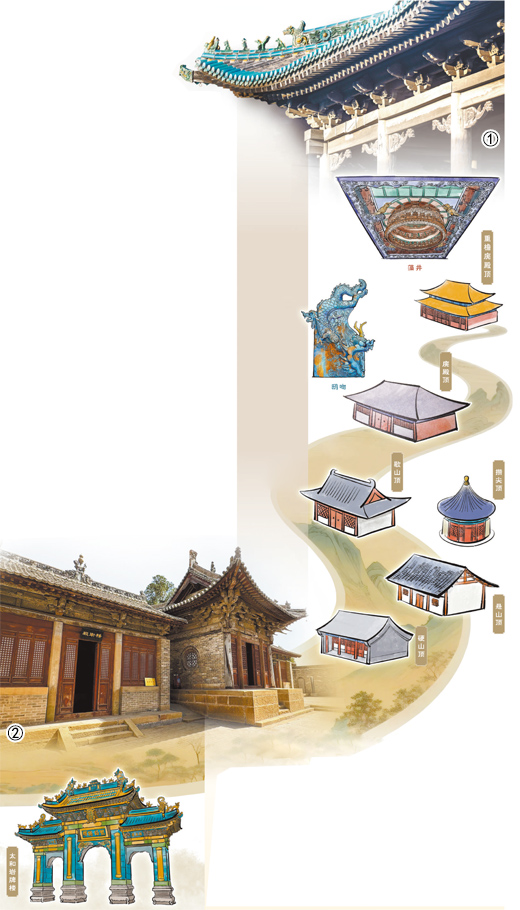
Core Viewpoint - The article highlights the significance of traditional Chinese architecture, particularly the roofs, as both artistic expressions and cultural symbols that reflect the nation's aesthetic values and historical legacy [2][3]. Group 1: Architectural Significance - China has over 260,000 immovable cultural relics of ancient architecture, with roofs being referred to as the "fifth facade" of buildings, showcasing unique aesthetic curves that embody the nation's cultural heritage [2][4]. - The roofs of ancient buildings are designed based on functional needs, utilizing materials that effectively manage rainwater and snow, reduce wind impact, and enhance lighting, demonstrating ancient wisdom in harmonizing with nature [4][6]. Group 2: Types and Features of Roofs - The main types of ancient Chinese roofs include the hipped roof, gable roof, pointed roof, and hard mountain roof, each characterized by distinct features such as deep eaves and upward-curving ridges [4][5]. - The architectural styles evolved over different dynasties, with notable examples including the single-eaved hipped roof of the Tang Dynasty and the double-eaved hipped roof of the Song Dynasty, reflecting advancements in building techniques and aesthetic preferences [5][6]. Group 3: Cultural and Philosophical Aspects - The roofs of ancient buildings encapsulate the philosophical thoughts of the Chinese regarding the relationship between heaven, earth, and humanity, with upward-curving eaves symbolizing a desire for harmony with nature [6][7]. - The aesthetic and philosophical elements of ancient roofs continue to influence modern architecture, as seen in contemporary designs that incorporate traditional features while utilizing modern materials and techniques [6][7]. Group 4: Modern Cultural Integration - The cultural significance of ancient architecture is being revitalized through modern creative products, such as miniature replicas and themed merchandise, appealing to younger generations and integrating traditional aesthetics into contemporary life [7]. - The popularity of cultural IPs and social media trends related to ancient architecture has led to a surge in tourism and interest in historical sites, particularly in Shanxi province, where ancient roofs are a major attraction [4][7].

走山西,看古建“天际线”(文化中国行·这些美 很中国)
Ren Min Ri Bao· 2025-12-23 22:31
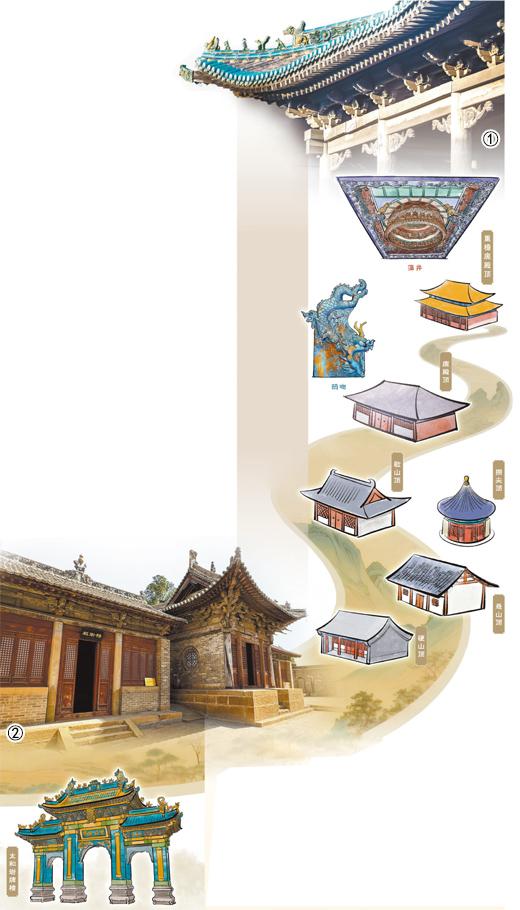
Core Viewpoint - The article highlights the significance of traditional Chinese architecture, particularly the roofs, as a cultural and aesthetic representation of Chinese civilization, showcasing their evolution and contemporary relevance [3][4][5]. Group 1: Architectural Features - Chinese ancient architecture features over 260,000 immovable cultural relics, with roofs being referred to as the "fifth facade" of buildings, embodying unique aesthetic curves that reflect the nation's cultural heritage [3][4]. - The main types of ancient Chinese roofs include the wudian (庑殿顶), xieshan (歇山顶), zhuanjian (攒尖顶), xuanshan (悬山顶), and yingshan (硬山顶), each designed to meet functional needs such as water drainage and wind resistance [4][5]. - Roofs are not only functional but also represent social rituals, aesthetic values, and construction techniques, making their preservation essential for safeguarding Chinese civilization [4][5]. Group 2: Historical Context - Shanxi province has over 28,000 ancient buildings, showcasing a continuous architectural lineage from the Tang to the Qing dynasties, exemplifying traditional Chinese aesthetics [5]. - Notable examples include the Tang dynasty's Foguang Temple, the Liao dynasty's wooden pagoda, and the Song dynasty's Jin Temple, each reflecting the architectural styles and cultural values of their respective periods [5][6]. Group 3: Cultural Significance - The roofs of ancient buildings encapsulate philosophical thoughts on the relationship between heaven, earth, and humanity, with the upward-curving eaves symbolizing a desire for harmony with nature [7]. - Modern interpretations of ancient architectural elements are evident in contemporary designs, such as the China Pavilion at the Shanghai Expo, which draws inspiration from traditional structures [7]. - Cultural products inspired by ancient architecture, such as themed merchandise from museums, have gained popularity among younger generations, bridging the gap between historical appreciation and modern consumer culture [7].