中枢神经系统疾病

Search documents
Cell:突破血脑屏障!张明君/王伊龙团队利用纳米颗粒“劫持”颅骨免疫细胞,让药物直达大脑,已开展人体临床试验
生物世界· 2026-01-17 01:23
Core Viewpoint - The article discusses a groundbreaking method for drug delivery to the central nervous system (CNS) by utilizing calvarial immune cells to bypass the blood-brain barrier (BBB), which has significant implications for treating CNS diseases [4][5][15]. Group 1: Blood-Brain Barrier and Drug Delivery Challenges - The blood-brain barrier (BBB) is crucial for preventing harmful substances from entering the brain but also limits the delivery of most small and large molecule drugs, hindering treatment for CNS diseases [2][7]. - The high failure rate of clinical trials for CNS drugs is primarily due to the inability of most drugs to cross the BBB, leading to insufficient drug accumulation in the brain and poor therapeutic outcomes [7][8]. Group 2: Innovative Drug Delivery Method - A research team from Tsinghua University and Beijing Tiantan Hospital published a study in Cell, demonstrating that drug-loaded nanoparticles can "hijack" calvarial immune cells to deliver drugs to the CNS by utilizing the skull-meninges channel (SMC) to bypass the BBB [4][10]. - The study confirmed that this method significantly improved short-term and long-term outcomes in preclinical stroke models [4][5]. Group 3: Clinical Trial and Safety - A prospective clinical trial (SOLUTION, NCT05849805) was conducted to assess the safety and feasibility of this method in patients with malignant middle cerebral artery infarction (mMCAI), showing that the intracranial injection procedure is simple and does not cause severe complications [13][15]. - The real-world data from this trial highlights the potential for clinical translation of this innovative drug delivery strategy [13][15]. Group 4: Mechanism and Efficacy - The study utilized albumin nanoparticles that exhibit a tendency to be internalized by immune cells, which then migrate to the CNS injury sites, significantly accumulating in neurons at the damaged areas [12]. - The treatment with drug-loaded nanoparticles demonstrated superior efficacy in reducing ischemic infarction and brain edema compared to conventional methods, achieving these effects with only 1/15 of the usual dosage [12].


Cell系列综述:司美格鲁肽等GLP-1类药物在神经和精神疾病中的应用
生物世界· 2025-12-31 04:34
Core Viewpoint - GLP-1 class drugs, including semaglutide and tirzepatide, show potential in treating not only type 2 diabetes and obesity but also various neurological and psychiatric disorders, supported by emerging clinical data [1][2][6]. Group 1: Mechanism and Applications - GLP-1 drugs activate GLP-1 receptors to enhance insulin secretion, suppress glucagon secretion, slow gastric emptying, and reduce appetite, leading to weight loss [1]. - These drugs have been approved for treating type 2 diabetes, obesity, cardiovascular diseases, kidney diseases, and metabolic liver diseases [1]. - Recent studies indicate that GLP-1 drugs may have therapeutic benefits for neurodegenerative diseases, substance use disorders, and other neurological conditions [2][3][6]. Group 2: Clinical Evidence and Safety - A review of clinical evidence highlights the potential of GLP-1 drugs in treating Parkinson's disease and Alzheimer's disease, with a focus on their neuroprotective properties [6][7]. - There is increasing evidence that GLP-1 drugs may reduce addictive behaviors in individuals with substance use disorders [6]. - Most patients with neuropsychiatric disorders using GLP-1 drugs have shown acceptable safety profiles, although large-scale confirmatory trials are still lacking [6][13]. Group 3: Future Research Directions - The role of GLP-1 drugs in neurological conditions will continue to evolve as new clinical trial data emerges, providing clearer evidence of their potential uses and limitations [13]. - Despite enthusiasm for GLP-1 drugs in treating central nervous system diseases, no large-scale trials have yet confirmed their efficacy and safety in these areas [13].

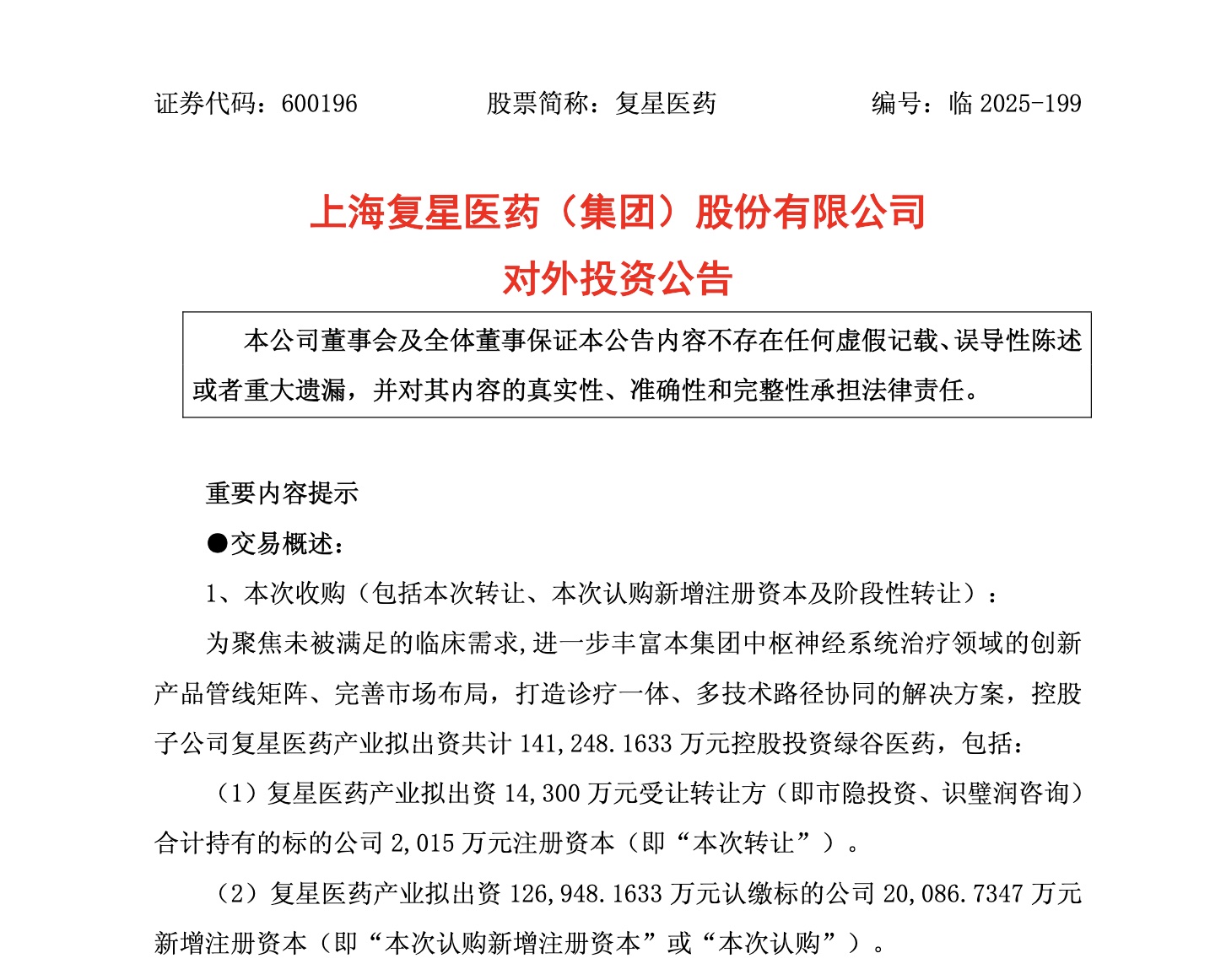
复星医药收购绿谷制药,14亿豪赌阿尔茨海默病市场
Guan Cha Zhe Wang· 2025-12-18 13:53
Core Viewpoint - The acquisition of Green Valley Pharmaceutical by Fosun Pharma is a strategic move to gain control over the Alzheimer's drug "Jiuyiqi" (Mannose Sodium Capsules), which has faced regulatory challenges and production halts, reflecting both potential opportunities and significant risks in the CNS disease market [1][3][4]. Company Summary - Fosun Pharma plans to invest approximately 1.412 billion RMB to acquire a 53% stake in Green Valley Pharmaceutical, which will be consolidated into Fosun's financial statements post-acquisition [1]. - The core asset of this acquisition is the drug "Jiuyiqi," which has been halted from commercial production due to regulatory issues, specifically the expiration of its drug registration certificate in November 2024 [1][4]. - Green Valley's revenue for the first three quarters of 2025 was only 102 million RMB, with a net loss of 67.61 million RMB, indicating a significant decline in its financial health [1][4]. Industry Summary - The Alzheimer's drug market is characterized by high unmet clinical needs, with approximately 17 million patients in China and projected social costs reaching 3.2 trillion RMB by 2030 [9]. - "Jiuyiqi" has been surrounded by controversy regarding its efficacy and regulatory compliance, leading to a halt in its production and a rise in black market activity due to supply shortages [4][5]. - The acquisition is part of Fosun's broader strategy to enhance its portfolio in the CNS disease sector, which includes investments in diagnostic and therapeutic technologies [6][7].