中欧(中亚)班列

Search documents
2025年霍尔果斯开行中欧(中亚)班列9882列 创历史新高
Xin Hua She· 2026-01-09 08:50
Group 1 - The core viewpoint of the article highlights the significant growth in the operation of the China-Europe (Central Asia) freight trains through the Horgos railway port, with a record of 9,882 trains scheduled for 2025, representing a year-on-year increase of 13.2% [1] - The total cargo volume transported through Horgos is projected to reach 14.237 million tons in 2025, marking a year-on-year growth of 17.8%, both figures setting historical highs [1] - The average daily operation of the China-Europe (Central Asia) freight trains exceeds 27 trains, with a train changeover occurring every two hours for inbound and outbound services [1] Group 2 - To date, over 52,000 China-Europe (Central Asia) freight trains have passed through the Horgos railway port, with a total of 90 operational routes that connect to 18 countries and 46 cities and regions abroad [3] - The freight trains carry more than 200 types of goods, including daily necessities, machinery, electronic products, and agricultural products, showcasing the diversity of "Made in China" products being exported to Central Asia and European markets [1][3]

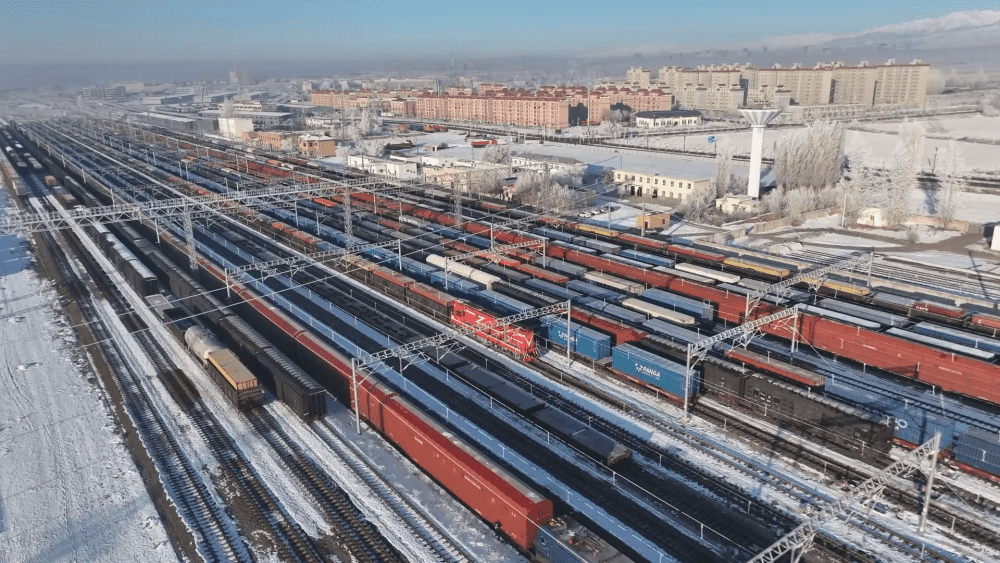
中欧(中亚)班列铺就中国—中亚经济合作“黄金走廊”
Ren Min Ri Bao Hai Wai Ban· 2025-12-08 01:00
Core Viewpoint - The article highlights the increasing activity and significance of the China-Europe (Central Asia) freight trains, which are enhancing economic cooperation and connectivity between China and Central Asian countries through efficient logistics and upgraded port capabilities [1][3]. Group 1: Freight Train Operations - In the first 11 months of this year, the two major ports in Xinjiang handled 16,000 China-Europe (Central Asia) freight trains, marking a year-on-year increase of 7.6% with over 200 types of goods transported [1]. - The West Corridor, which passes through the Alashankou and Horgos ports, is a crucial railway transport route for China-Central Asia trade [1]. - The China Railway Urumqi Group has implemented strategies to enhance port efficiency, including a "fast loading and unloading" model for key goods, resulting in over a 20% improvement in vehicle turnover efficiency at Horgos [1]. Group 2: Economic Impact - The China-Europe (Central Asia) freight trains serve not only as a logistics channel but also as a vital engine for regional economic activation and industrial linkage [3]. - Xi'an Aijiu Grain and Oil Industrial Group plans to import 92,000 tons of grain through the freight trains in 2024, expecting to achieve sales of 180 million yuan from imported raw materials [3]. - The Xi'an headquarters of Konka Smart Appliances has over 60% of its goods shipped via the freight trains, highlighting the logistics advantages that influenced the company's location decision [3]. - From January to October this year, the Xi'an freight trains operated 5,063 times, a 16.3% increase year-on-year, marking the first time the number exceeded 5,000 in the first ten months of the year [3].

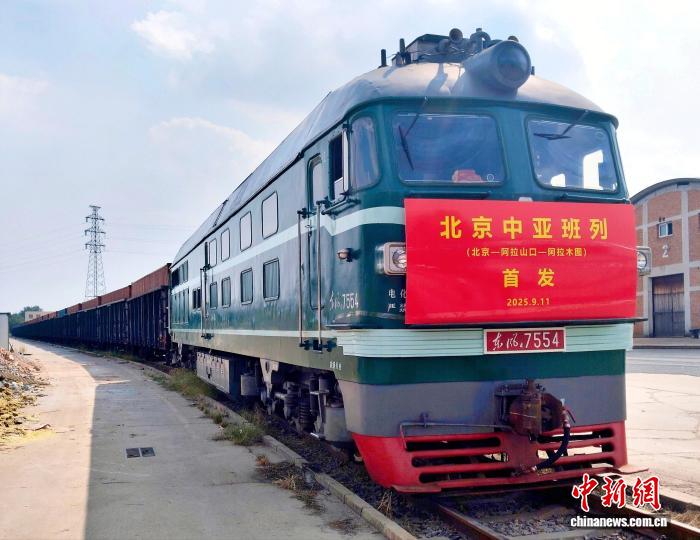
北京至阿拉木图中欧(中亚)班列首发
Zhong Guo Xin Wen Wang· 2025-09-11 06:38
Core Insights - The launch of the China-Europe (Central Asia) freight train from Beijing to Almaty, Kazakhstan, marks a significant development in logistics and trade between the two regions [1][2]. Group 1: Train Launch Details - The inaugural train carried 55 containers valued at over 20 million RMB, including various goods such as auto parts, mesh cloth, air conditioners, and microwaves [2]. - The train departs from the Beijing Railway Logistics Center and passes through the Alashankou port, which is a crucial land port connecting China to Central Asia and Europe [2]. Group 2: Economic Impact - The operation of the Beijing to Almaty freight train is expected to enhance the efficiency of foreign trade logistics in Beijing and reduce logistics costs for enterprises [2]. - It is anticipated to deepen economic and trade cooperation between China and Kazakhstan, while also stabilizing the supply chains of industries between China and Europe [2]. - The China Railway Beijing Bureau plans to continuously optimize the train operation scheme, expand the types of goods transported, and promote the regular and efficient operation of the China-Europe (Central Asia) freight trains [2].