
中美科技合作

Search documents
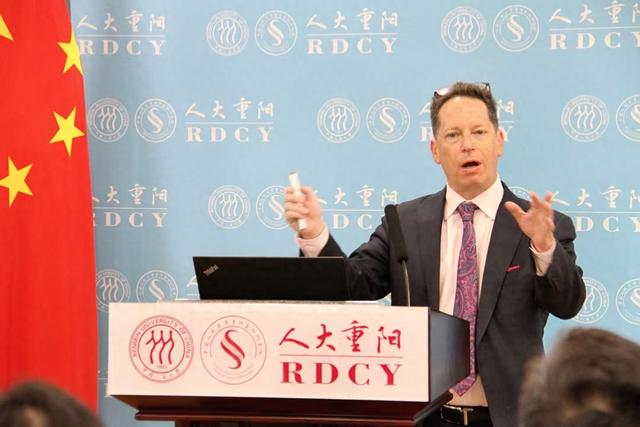
美国学者:如果能在美国买到小米汽车,我一定会买一辆
Bei Jing Ri Bao Ke Hu Duan· 2025-11-20 10:34
Core Insights - The speaker, Scott Kennedy, highlighted the impressive advancements in China's technology sector, particularly in electric vehicles, emphasizing the significant increase in R&D investment and innovation capabilities over the past decade [3][4]. Group 1: China's Technological Advancements - China has made substantial progress in R&D investment, moving its innovation capability ranking from around 40th to 10th place globally [3]. - Key indicators such as the number of patents, innovation quality, and manufacturing output reflect a significant leap in China's technological strength [3]. - The export of electric vehicles has surged, with China becoming the world's largest exporter, moving from negligible exports in 2018 to over a million vehicles annually [4]. Group 2: Electric Vehicle Market - The Xiaomi SU-7 Ultra was specifically mentioned as a notable Chinese electric vehicle, indicating its appeal in international markets [4]. - The evolution of U.S. government policies towards China has influenced China's technological investments and self-sufficiency efforts, impacting the electric vehicle sector [4]. Group 3: U.S.-China Relations in Technology - The speaker discussed the shifts in U.S. technology policy from the Obama administration's rule-making to the Biden administration's "de-risking" strategy, which has prompted China to enhance its technological capabilities [4]. - Despite restrictions in sensitive areas, there remains potential for cooperation between the U.S. and China in sectors like artificial intelligence and electric vehicles [4].

吴伟:认知矫正应成中美科技合作新起点
Huan Qiu Wang Zi Xun· 2025-10-23 23:19
Core Insights - The article highlights a shift in Silicon Valley's perception of China's technological advancements, particularly in AI and renewable energy, moving from skepticism to admiration [1][2] - It emphasizes the need for a reevaluation of the innovation landscape in the context of U.S.-China relations, suggesting that collaboration could lead to mutual benefits [4] Group 1: China's Technological Advancements - China's AI teams have developed the open-source model DeepSeek–R1, which matches the performance of OpenAI's models while costing less than 10% of the industry average for training [2] - The complete industrial ecosystem in China, from chip design to end applications, provides a significant advantage over Silicon Valley's reliance on global supply chains [2][3] Group 2: Silicon Valley's Challenges - Silicon Valley faces a disconnect between capital investment and innovation, with 95% of companies integrating AI into their operations failing to generate profits [3] - The tightening of U.S. immigration policies has led to a talent drain, with 75% of surveyed researchers considering leaving the U.S. [4] Group 3: Future Collaboration Opportunities - The article suggests that breaking down barriers and enhancing communication between the U.S. and China is essential for global economic recovery and technological advancement [4] - It advocates for the establishment of a cooperative framework that includes supply chain dialogue, risk management, and talent exchange [4]
五角大楼资助中国研究项目?我驻美使馆回应:毫无根据
Huan Qiu Shi Bao· 2025-09-07 22:44
Core Viewpoint - The report from the U.S. House of Representatives Special Committee on China claims that the Pentagon has funded hundreds of research projects in collaboration with Chinese universities and defense-related institutions, many of which are blacklisted by the U.S. government due to ties with the Chinese military [1][2]. Group 1: Funding and Research Collaboration - The report states that approximately 1,400 research papers published between June 2023 and June 2025 acknowledged support from the U.S. Department of Defense and involved collaboration with Chinese partners, funded by over 700 defense grants totaling more than $2.5 billion [1]. - More than half of these publications are linked to institutions associated with China's defense technology industry [1]. Group 2: Specific Cases and Concerns - An example cited in the report involves a geophysicist from the Carnegie Institution of Washington, who held a position in a Chinese research institution while participating in U.S. Department of Defense-supported research, raising concerns about taxpayer funds being used to advance Chinese military capabilities [2]. - The report emphasizes that these projects enable China to gain military benefits from research collaborations with the U.S. amid ongoing technological and military competition between the two nations [2]. Group 3: Responses and Context - The Chinese Embassy in the U.S. has dismissed the report as baseless and expressed strong opposition to its claims [2]. - The Carnegie Institution clarified that it complies with all U.S. laws, stating that its work is basic research, publicly available, and not classified, with funding sourced from the National Science Foundation rather than the Pentagon [2]. - In recent years, under pressure from U.S. congressional Republicans, many American universities have terminated collaborations with Chinese institutions, and while a government-to-government science cooperation agreement was renewed last year, it remains largely inactive [3].
《中国式现代化发展报告2024》等四项研究结果在京发布
Zhong Guo Jing Ji Wang· 2025-05-10 13:54
Core Insights - The event held by the Chinese Academy of Sciences focused on the release of significant research outcomes related to Chinese-style modernization, including various reports and a big data platform [1] Group 1: Chinese-style Modernization Reports - The "China-style Modernization Development Report 2024" indicates significant progress in population modernization, economic vitality, and green development across various provinces, with Guangdong and Zhejiang leading in population quality and digital economy [2] - The report highlights the need for regional collaboration, emphasizing the roles of economic growth areas like the Beijing-Tianjin-Hebei region, the Yangtze River Delta, and the Guangdong-Hong Kong-Macau Greater Bay Area in driving coordinated development [2] - China's modernization level ranks 8th among 82 countries, positioning it as a global economic growth driver and governance leader [2] Group 2: Theoretical Framework and Pathways - The book "Advancing Research on Chinese-style Modernization" outlines the unique characteristics of Chinese-style modernization and provides actionable recommendations for transforming distinctive features into competitive advantages [3] - It emphasizes the importance of an independent and inclusive approach to modernization, integrating beneficial elements from global civilizations while remaining rooted in Chinese conditions [3] Group 3: Sino-U.S. Technological Cooperation - The "Sino-U.S. Technology Cooperation White Paper" reviews the achievements in technology collaboration between China and the U.S., highlighting joint efforts in basic research and talent development [4] - It calls for a new balance in technological cooperation to address global challenges such as environmental protection and public health crises [4] Group 4: Technological Advancements and National Strength - The book "Seizing Technological High Ground and Chinese-style Modernization" discusses the importance of technological innovation for national strength, noting China's shift from imitation to independent innovation [5][6] - It stresses the urgency for China to secure competitive advantages in strategic fields like artificial intelligence and quantum information amidst intense international competition [6]