主观主义

Search documents
以学风改造推进马克思主义中国化
Xin Lang Cai Jing· 2026-02-08 21:39
Group 1 - The core argument of the article emphasizes the importance of the "practical approach" in the context of the Chinese Communist Party's (CCP) ideological unity during a critical period of the Anti-Japanese War [1][2][10] - Mao Zedong's work "On the Transformation of Our Learning" critiques the subjective and dogmatic tendencies within the party, advocating for a focus on practical realities and historical context [2][6][11] - The document serves as a foundational text for the Yan'an Rectification Movement, aiming to unify the party's ideology and ultimately contribute to the victory in the Anti-Japanese War [2][10] Group 2 - The article outlines the historical context of the CCP's challenges, including the harsh realities of the Anti-Japanese War and the need for ideological cohesion against external and internal threats [2][3][4] - Mao's emphasis on the integration of Marxism with Chinese realities is highlighted as a critical method for developing effective revolutionary strategies [4][6][12] - The need for a systematic approach to research and education within the party is underscored, with the establishment of research institutions and educational reforms aimed at enhancing Marxist theoretical understanding [9][12] Group 3 - The article discusses the necessity of correcting ideological routes within the party, addressing both leftist and rightist errors that stem from a lack of understanding of China's specific conditions [5][6][11] - It emphasizes the importance of empirical research and the application of Marxist principles to real-world situations, advocating for a scientific approach to political and social issues [8][9][10] - The establishment of a unique academic system that reflects China's historical and cultural context is proposed as essential for the ongoing development of Marxism in China [11][12]
“奥派”死了?过气的先知还是被低估的信条
Sou Hu Cai Jing· 2025-06-25 03:24
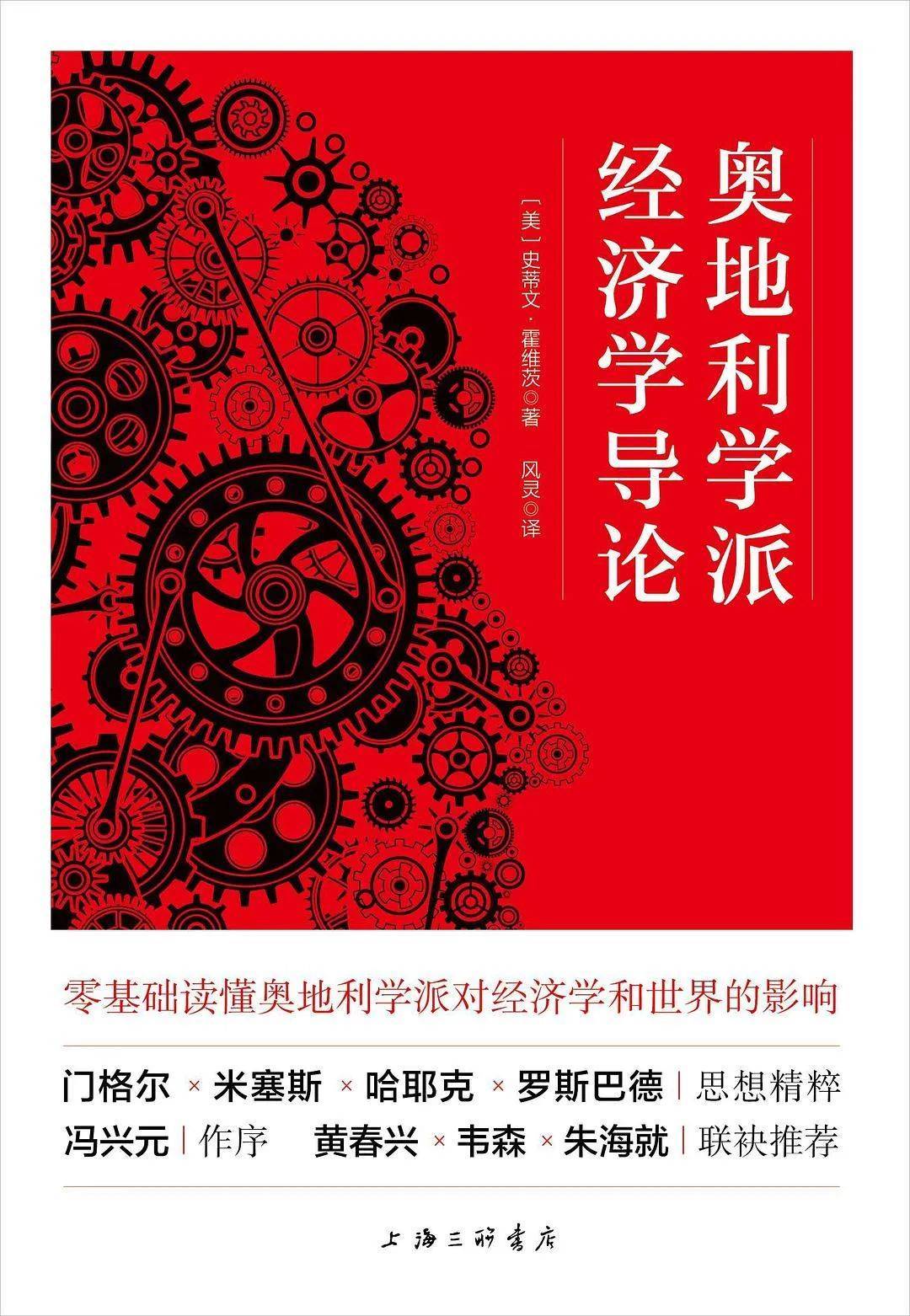
Core Points - The article discusses the recent publication of "Introduction to Austrian School Economics" by Steven Horwitz, which aims to provide Chinese readers with a comprehensive understanding of the Austrian School's fundamental theories [1][4] - Horwitz highlights the resurgence of the Austrian School, emphasizing its growing public presence and the revival of its principles over recent decades [1][4] - The Austrian School traces its origins back to the economic thought revolution of the 1870s, with Carl Menger as a key figure, and was once a dominant school of thought in economics [1][4][5] Summary by Sections Historical Context - The Austrian School emerged from the "marginal revolution" in the 1870s, shifting the focus from labor value theory to utility as the source of value [5] - Menger emphasized the subjectivity of economic value, asserting that value is determined by individuals' perceptions of a good's ability to satisfy their needs [5][8] Methodology - Horwitz discusses the methodology of the Austrian School, particularly the contributions of Menger and Ludwig von Mises, who distinguished between "exact laws" and "empirical generalizations" [6][9] - The Austrian School's methodology is characterized by a priori reasoning, which is seen as essential for understanding historical economic phenomena [9][18] Key Concepts - The book covers important concepts such as market processes, spontaneous order, capital, and entrepreneurship, while also addressing significant historical debates within the Austrian School, including the debates on planned economies and the Keynes-Hayek controversy [4][6][10] Business Cycle Theory - Horwitz equates the Austrian School's business cycle theory with the ideas of Mises and Hayek, explaining that inflation occurs when the money supply exceeds the demand for money, leading to economic cycles [10][12] - Mises argues that economic downturns are corrections of previous misallocations caused by artificial credit expansion, advocating for minimal government intervention during recessions [12][10] Knowledge and Information - The Austrian School posits that knowledge is decentralized and that market prices convey information that guides economic actors, contrasting with the inefficiencies of planned economies [15][18] - Horwitz critiques modern economics for applying natural science methods to social sciences, advocating for a focus on how order emerges under proper rules and institutions [18][22] Critique and Reflection - The article notes that while the Austrian School has valuable insights, it also faces criticism for its abstract notions of freedom and its perceived neglect of real-world complexities [22][26] - The author suggests that the Austrian School needs to adapt its theories to contemporary economic discussions and acknowledges the importance of critical engagement with its principles [26][27]