奥地利学派

Search documents
对2026房价的侧面判断
Sou Hu Cai Jing· 2026-01-21 15:34
Group 1 - The core viewpoint indicates that the real estate market in Shanghai is currently driven by low-priced properties under 3 million, primarily catering to first-time homebuyers, with a notable decrease in the influx of new residents [1] - Shanghai's permanent resident population is projected to be 24.8 million, with a target of 25 million by 2035, suggesting limited growth in demand for affordable housing in the coming years [1] - The effective demand for properties priced around 3 million is expected to be low unless there is significant urban renewal, which may create new demand [1] Group 2 - The article suggests that the cyclical nature of the real estate market is unavoidable, and the best approach is to manage the pain through policy measures rather than attempting to eliminate the cycle [2] - There are rumors of potential policy relaxations in 2026, but the effectiveness of such measures in meeting market expectations is uncertain [2] - The current stability in the Shanghai real estate market indicates a period of observation is advisable, with ongoing policies suggesting that the market will continue in its current state [2]


“奥派”死了?过气的先知还是被低估的信条
Sou Hu Cai Jing· 2025-06-25 03:24
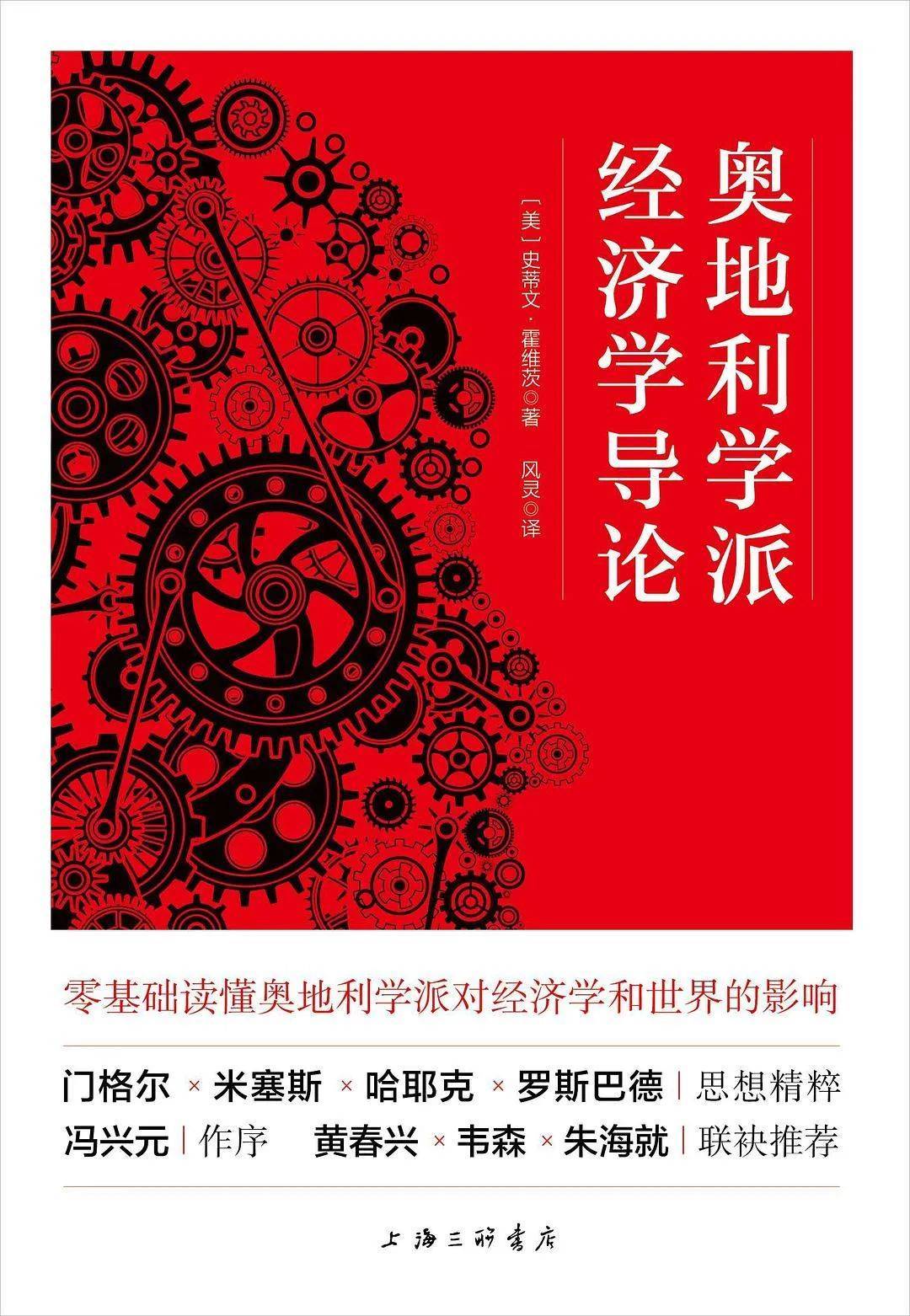
Core Points - The article discusses the recent publication of "Introduction to Austrian School Economics" by Steven Horwitz, which aims to provide Chinese readers with a comprehensive understanding of the Austrian School's fundamental theories [1][4] - Horwitz highlights the resurgence of the Austrian School, emphasizing its growing public presence and the revival of its principles over recent decades [1][4] - The Austrian School traces its origins back to the economic thought revolution of the 1870s, with Carl Menger as a key figure, and was once a dominant school of thought in economics [1][4][5] Summary by Sections Historical Context - The Austrian School emerged from the "marginal revolution" in the 1870s, shifting the focus from labor value theory to utility as the source of value [5] - Menger emphasized the subjectivity of economic value, asserting that value is determined by individuals' perceptions of a good's ability to satisfy their needs [5][8] Methodology - Horwitz discusses the methodology of the Austrian School, particularly the contributions of Menger and Ludwig von Mises, who distinguished between "exact laws" and "empirical generalizations" [6][9] - The Austrian School's methodology is characterized by a priori reasoning, which is seen as essential for understanding historical economic phenomena [9][18] Key Concepts - The book covers important concepts such as market processes, spontaneous order, capital, and entrepreneurship, while also addressing significant historical debates within the Austrian School, including the debates on planned economies and the Keynes-Hayek controversy [4][6][10] Business Cycle Theory - Horwitz equates the Austrian School's business cycle theory with the ideas of Mises and Hayek, explaining that inflation occurs when the money supply exceeds the demand for money, leading to economic cycles [10][12] - Mises argues that economic downturns are corrections of previous misallocations caused by artificial credit expansion, advocating for minimal government intervention during recessions [12][10] Knowledge and Information - The Austrian School posits that knowledge is decentralized and that market prices convey information that guides economic actors, contrasting with the inefficiencies of planned economies [15][18] - Horwitz critiques modern economics for applying natural science methods to social sciences, advocating for a focus on how order emerges under proper rules and institutions [18][22] Critique and Reflection - The article notes that while the Austrian School has valuable insights, it also faces criticism for its abstract notions of freedom and its perceived neglect of real-world complexities [22][26] - The author suggests that the Austrian School needs to adapt its theories to contemporary economic discussions and acknowledges the importance of critical engagement with its principles [26][27]