
延安整风运动

Search documents
以学风改造推进马克思主义中国化
Xin Lang Cai Jing· 2026-02-08 21:39
Group 1 - The core argument of the article emphasizes the importance of the "practical approach" in the context of the Chinese Communist Party's (CCP) ideological unity during a critical period of the Anti-Japanese War [1][2][10] - Mao Zedong's work "On the Transformation of Our Learning" critiques the subjective and dogmatic tendencies within the party, advocating for a focus on practical realities and historical context [2][6][11] - The document serves as a foundational text for the Yan'an Rectification Movement, aiming to unify the party's ideology and ultimately contribute to the victory in the Anti-Japanese War [2][10] Group 2 - The article outlines the historical context of the CCP's challenges, including the harsh realities of the Anti-Japanese War and the need for ideological cohesion against external and internal threats [2][3][4] - Mao's emphasis on the integration of Marxism with Chinese realities is highlighted as a critical method for developing effective revolutionary strategies [4][6][12] - The need for a systematic approach to research and education within the party is underscored, with the establishment of research institutions and educational reforms aimed at enhancing Marxist theoretical understanding [9][12] Group 3 - The article discusses the necessity of correcting ideological routes within the party, addressing both leftist and rightist errors that stem from a lack of understanding of China's specific conditions [5][6][11] - It emphasizes the importance of empirical research and the application of Marxist principles to real-world situations, advocating for a scientific approach to political and social issues [8][9][10] - The establishment of a unique academic system that reflects China's historical and cultural context is proposed as essential for the ongoing development of Marxism in China [11][12]
文化之约 | 回望延安 汲取自我革命的力量
Zhong Yang Ji Wei Guo Jia Jian Wei Wang Zhan· 2026-01-16 00:24
Core Viewpoint - The article reflects on the historical significance of the Yan'an period in the Chinese Communist Party's development, emphasizing the importance of self-revolution and discipline in governance, as well as the need for continuous engagement with the populace to ensure accountability and integrity in leadership [5][10][15]. Group 1: Historical Context - The Yan'an period is characterized by the Communist Party's focus on self-reform and ideological education, particularly through the Yan'an Rectification Movement, which aimed to strengthen party unity and discipline [7][9]. - Mao Zedong's dialogue with Huang Yanpei in 1945 highlighted the necessity for the people to supervise the government, a principle that remains relevant today [5][6]. Group 2: Party Discipline and Education - The article discusses the emphasis on discipline within the party, noting that the establishment of political discipline was crucial for the party's ability to lead effectively [10][12]. - The Yan'an Rectification Movement involved widespread self-criticism and reflection among party members, fostering a culture of accountability and collective responsibility [8][11]. Group 3: Leadership and Governance - Key leaders, including Mao Zedong, Zhu De, and Liu Shaoqi, exemplified the values of hard work and simplicity, which helped to cultivate a strong connection with the masses and build trust [14][15]. - The article highlights the "Ten No's" of the Yan'an period, which served as a moral compass for the party, promoting integrity and self-reliance among its members [14][15]. Group 4: Legacy and Modern Implications - The legacy of the Yan'an period continues to influence the Communist Party's approach to governance, with a focus on innovation, reform, and addressing the needs of the people in contemporary China [16]. - The article concludes by asserting that the principles established during the Yan'an period remain vital for the party's ongoing mission to serve the people and respond to their expectations [16].

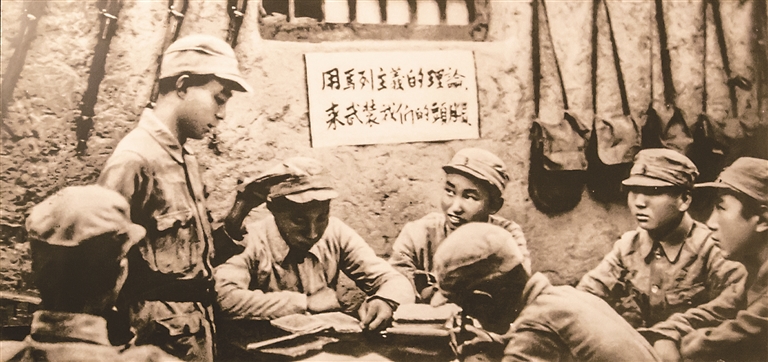
时代专论丨全面抗战时期中国共产党的纪律和作风建设
Zhong Yang Ji Wei Guo Jia Jian Wei Wang Zhan· 2025-07-03 01:16
Group 1 - The core viewpoint emphasizes the importance of discipline and style construction within the Communist Party of China (CPC) as a guarantee for overcoming difficulties and achieving growth [1][2][3] - The CPC has historically focused on maintaining strict discipline to uphold the authority of the Central Committee and ensure the implementation of political lines and central tasks [2][4] - The relationship between political construction and discipline construction is highlighted, with a focus on the dialectical unity of "kingly way" and "tyrannical way" [2][3] Group 2 - The key task of discipline construction is to maintain the authority of the Central Committee and ensure unity within the party [4][5] - The importance of strict discipline in safeguarding the party's unity and the implementation of strategic deployments is reiterated [4][5] - The historical context of discipline enforcement during the Anti-Japanese War is discussed, showcasing the party's commitment to maintaining discipline even in challenging times [12][16] Group 3 - The concept of "iron discipline" is introduced as essential for executing the party's political line, with Mao Zedong's assertion that discipline guarantees the execution of the line [3][19] - The CPC's approach to discipline includes strict organizational rules and the necessity for all members to adhere to these rules to maintain unity and authority [19][20] - The party's historical experiences during the Anti-Japanese War have led to significant theoretical and institutional innovations in discipline and style construction [17][20] Group 4 - The CPC's emphasis on maintaining close ties with the masses is identified as a fundamental task of style construction, ensuring the party remains a representative of the people's interests [7][8] - The integration of mass opinions into the party's work methods is highlighted as a critical aspect of effective leadership [9][10] - The importance of self-criticism and collective improvement within the party is emphasized as a method for enhancing overall party style [11][12] Group 5 - The party's anti-corruption efforts are underscored as essential for maintaining its integrity and connection with the people, with historical examples of strict punishment for corrupt members [12][14][16] - The CPC's approach to combating corruption is characterized by a commitment to rigorous enforcement of discipline and accountability [12][16] - The development of a collaborative approach to integrity and discipline has become a key method in the party's governance strategy [16][17]