
乡村金融

Search documents
贝多广、曾恋云《读懂乡村振兴与乡村金融》获评2025十大金融图书
Xin Lang Cai Jing· 2026-02-05 10:43
Core Insights - The book "Understanding Rural Revitalization and Rural Finance" by Bei Duoguang and Zeng Lianyun has been recognized as one of the "Top Ten Financial Books of 2025" [1][2] - The book discusses the essence of rural development and the universal challenges faced globally, emphasizing that even developed countries with small urban-rural income gaps continue to focus on rural development through strategic policies [1][2] - It explores fundamental issues in rural revitalization and rural finance, proposing methods to build a comprehensive rural financial ecosystem and enhance rural resilience, drawing on advanced practices from developed economies like the USA, Germany, Japan, and the Netherlands [1][2] Summary by Categories - **Book Recognition** - "Understanding Rural Revitalization and Rural Finance" has been awarded as one of the "Top Ten Financial Books of 2025" [1][2] - **Rural Development Challenges** - The book highlights the commonality of rural development challenges worldwide, noting that developed nations also implement strategies and policies to support rural areas [1][2] - **Financial Ecosystem and Resilience** - It provides specific methods and pathways to construct a robust rural financial ecosystem and improve rural resilience, informed by successful practices from various developed countries [1][2]
重磅!2025十大金融图书正式揭晓
Xin Lang Cai Jing· 2026-02-05 07:49
Core Insights - The "2025 Top Ten Financial Books" list has been officially announced, highlighting significant works that cover various aspects of finance, including monetary systems, transformative finance, rural finance, and data capital [1][14]. Group 1: Overview of the "2025 Top Ten Financial Books" - The list includes books that provide insights into the current state and future outlook of financial development both domestically and internationally [1][14]. - The selected books aim to enhance readers' understanding of complex financial topics through a macro and micro perspective [1][14]. Group 2: Individual Book Summaries - **"Understanding Rural Revitalization and Rural Finance"** by Bei Duoguang and Zeng Lianyun discusses the essence of rural development and the universal challenges faced globally, proposing methods to enhance rural financial ecosystems [2][15]. - **"Exploration and Understanding of Financial Work in the New Era"** by Chen Siqing compiles articles reflecting on China's financial development practices, covering various fields such as risk control and reform [3][16]. - **"A Nation of Livelihood"** by Chi Fulin emphasizes the importance of prioritizing people's well-being in China's modernization efforts, advocating for equitable public services and urbanization [4][18]. - **"Mother of Currency and Anchor of Risk"** by Liu Shangxi et al. introduces a new paradigm for understanding the relationship between finance and public risk, emphasizing the role of fiscal policy in the monetary system [5][19]. - **"New Landscape of Currency"** by Pan Yingli, Guan Tao, and Zhang Ming examines the internationalization of the Renminbi amidst global monetary shifts and the rise of digital currencies [7][20]. - **"Research on the System and Mechanism of Transformative Finance"** by Wang Xin et al. focuses on establishing effective mechanisms for green finance and its relationship with economic growth [8][21]. - **"Deep Reforms"** by Yin Yanlin analyzes deep-seated economic issues and proposes reform directions to enhance high-quality development [9][22]. - **"Contemporary Chinese Economic Lectures"** by Zhang Jun provides a historical perspective on China's economic evolution, addressing the transition from poverty to prosperity [10][24]. - **"Understanding the 14th Five-Year Plan: New Journey of High-Quality Development"** by Zhang Junkuo et al. discusses key themes in China's economic development during the 14th Five-Year Plan period [11][25]. - **"Data Capital in the Big Era"** by Zhu Min and Pan Liu explores the strategic importance of data capital in driving high-quality economic development [13][26].
齐商银行滨州鲁北小微支行深入镇村企业开展营销宣传活动
Qi Lu Wan Bao· 2025-09-28 08:44
Core Viewpoint - Qishang Bank's Binzhou Lubai Microfinance Branch is focusing on rural financial needs by conducting marketing activities in various villages and local enterprises to promote its financial services [1] Group 1: Marketing Activities - The bank has organized promotional events in Wudi County, specifically in Shili Village, Ditou Yao Village, Wang Baiyang Village, Gao Baiyang Village, and Shisanli Village [1] - During these activities, bank staff provided a comprehensive overview of the bank's services and tailored explanations for local farmers [1] Group 2: Financial Services - The focus was on explaining relevant deposit and loan policies, application conditions, and key points specifically for livestock farmers [1] - Bank staff addressed inquiries regarding financial policy details and business processing procedures with patience and thoroughness [1]
五方联动!中国太保产险青岛分公司首个金融消保乡村服务站揭牌
Qi Lu Wan Bao Wang· 2025-09-18 10:29
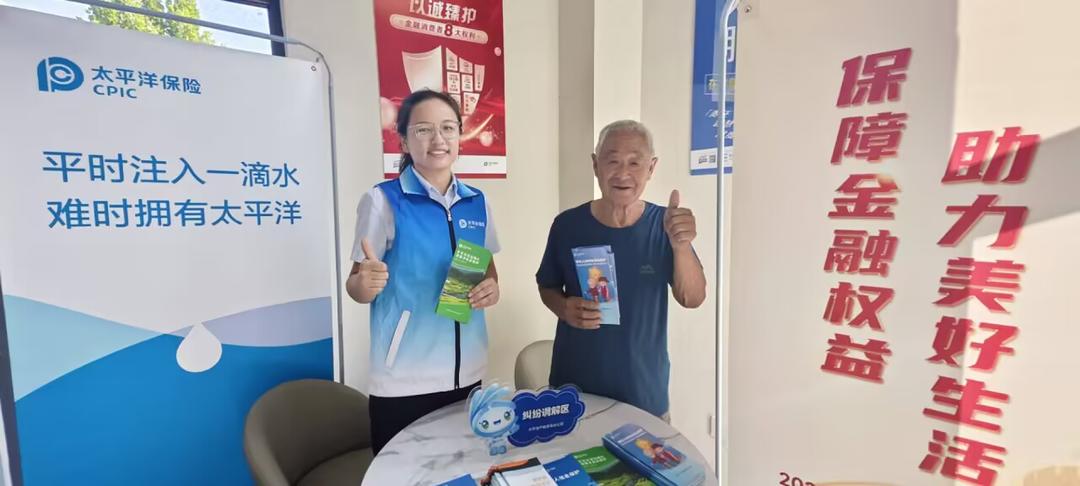
Group 1 - The core viewpoint of the article emphasizes the establishment of a financial consumer protection service station in Qixinghe Village, aimed at safeguarding the rights of rural financial consumers through a collaborative effort involving multiple stakeholders [1][3]. - The financial consumer protection service station is located in a key rural revitalization demonstration area, which allows it to serve as a model for broader implementation and guidance in the region [3]. - The service station integrates various functions, including consumer education, dispute mediation, and policy consultation, to create a comprehensive financial service platform for rural residents [3][5]. Group 2 - The service station has formed a volunteer service team consisting of an expert station manager, an industry mediator, a liaison officer, and multiple volunteers to enhance its outreach and effectiveness [3]. - The station aims to provide immediate assistance for simple procedures and facilitate follow-up for more complex issues, ensuring that financial services are accessible to all, including vulnerable groups [3][5]. - The company plans to further develop a grid-based financial education and outreach network, enhancing the presence and effectiveness of financial consumer protection services in rural areas [5][6].


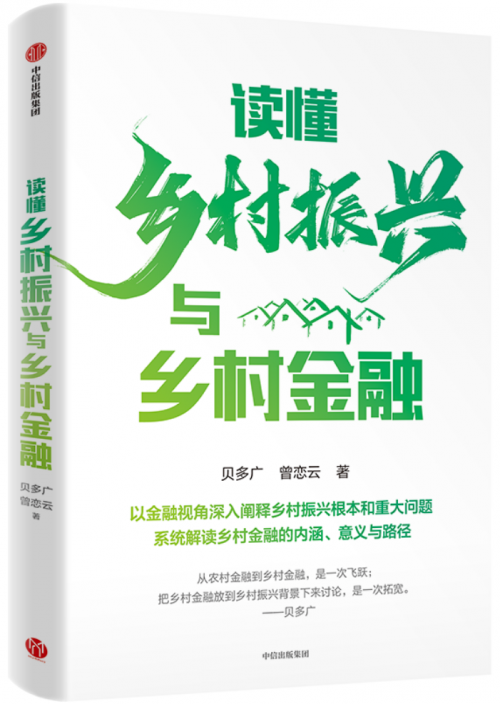
好书推荐·赠书|《读懂乡村振兴与乡村金融》
清华金融评论· 2025-06-20 10:47
Core Viewpoint - The article emphasizes the importance of rural finance in the context of rural revitalization, highlighting its role in addressing fundamental challenges and providing a framework for sustainable development in rural areas [2][6]. Summary by Sections Part One: Reassessing Rural Development - Rural revitalization focuses on what specifically needs to be revitalized, addressing ongoing challenges and questioning the existence of a "one-size-fits-all" solution [7]. - The concept of "rural" is distinguished from "countryside," with counties identified as crucial for implementing rural revitalization strategies [8]. Part Two: Viewing Rural Finance as an Ecosystem - The book defines rural finance and its ecosystem, moving from "rural finance" to "rural finance" and recognizing the complexities involved [8]. - It discusses the potential of "Payment+" services and the need for improved rural payment systems to enhance access to financial services [8]. - The resilience of rural areas is explored, emphasizing the importance of inclusive insurance over loans to protect families from risks [8]. - Wealth management services tailored for rural areas are proposed, suggesting the concept of "rural private banking" [8]. - The role of capital markets in rural finance is examined, including equity markets, bond issuance, and derivatives [8]. Part Three: The Challenges and Techniques of Rural Finance - The "last mile" problem in rural finance is identified, with discussions on service delivery models and the significance of physical outlets in the digital age [9]. - The article questions whether lower interest rates on rural loans are always beneficial, considering the balance between affordability and market sustainability [9]. - It explores how rural finance can achieve scale effects through various supply aggregation models [9]. - The necessity of a dual objective in rural finance is highlighted, advocating for a model that transcends profit maximization to meet rural development needs [9]. - Strategies for creating a high-quality rural finance ecosystem are outlined, including infrastructure development and capacity-building mechanisms [9].

《读懂乡村振兴与乡村金融》|以金融视角深入阐释乡村振兴根本和重大问题
Cai Jing Wang· 2025-05-13 08:07
Core Viewpoint - The transition from rural finance to rural financial services represents a significant leap, particularly when discussed in the context of rural revitalization, which is a crucial national strategy in China aimed at addressing the persistent urban-rural gap and promoting balanced economic development [1][2]. Group 1: Rural Revitalization Strategy - The rural revitalization strategy aims not to revive every village but to promote large-scale agricultural production and facilitate urban-rural integration, addressing the structural changes in rural areas [1]. - The agricultural output accounts for less than 10% of China's GDP, and the income from agriculture is decreasing in farmers' households, highlighting the need for a shift towards non-agricultural income sources [1][2]. Group 2: Financial Services in Rural Areas - The lack of financial services is a significant factor contributing to the relative backwardness of rural areas, with capital flowing from rural to urban areas, necessitating a reconstruction of rural finance to reverse this trend [2][3]. - The existing rural financial system, primarily based on rural credit cooperatives, has been effective in providing basic financial services, especially during the rapid development of inclusive finance [3]. Group 3: Inclusive Finance and Its Essence - Inclusive finance should not merely focus on providing production or consumption funds but should aim to offer equitable opportunities for education, healthcare, and entrepreneurship, thereby fostering social structure adjustments [4]. - Both inclusive finance and rural finance share the goal of transforming a pyramid-shaped society with significant wealth disparity into an olive-shaped society with a larger middle class [4]. Group 4: Challenges and Innovations in Rural Finance - Rural finance requires a dual focus on community balanced development and sustainable market growth, necessitating the establishment of specialized financial institutions that cater to rural needs [5]. - Current shortcomings in rural finance include unclear positioning of financial institutions, the need for broader development of inclusive insurance, and the establishment of more venture capital funds to support entrepreneurship among rural residents [5]. Group 5: Global Perspectives and Local Practices - The exploration of mixed financing models involving social capital and commercial capital is crucial for overcoming market failures in rural areas, with China being a leader in this exploration [6]. - The book aims to stimulate discussion and thought on rural finance, drawing from global experiences to propose methods for building a robust rural financial ecosystem [6][11].
【金融机构财报解读】桂林银行:经营指标稳步增长,深耕乡村金融赋能地方发展
Xin Hua Cai Jing· 2025-04-29 06:03
Core Viewpoint - Guilin Bank demonstrates strong resilience and steady growth in various operational indicators despite a complex macroeconomic environment, with a focus on rural finance and community banking to drive its development [1][2]. Group 1: Operational Performance - As of the end of 2024, Guilin Bank's total assets reached 576.447 billion yuan, a 6.23% increase from the beginning of the year; total deposits were 391.778 billion yuan, up 3.47%; total loans amounted to 360.280 billion yuan, reflecting a 10.93% growth; annual operating income was 12.054 billion yuan, a 4.88% year-on-year increase; and net profit was 2.320 billion yuan, up 5.80% year-on-year [2]. - In Q1 2025, Guilin Bank's total assets grew to 584.780 billion yuan, a 1.45% increase; total deposits reached 409.832 billion yuan, up 4.61%; total loans were 369.003 billion yuan, a 2.42% increase; operating income was 3.154 billion yuan, and net profit was 1.032 billion yuan, reflecting a 1.52% year-on-year growth [2]. Group 2: Rankings and Recognition - Guilin Bank's rankings have improved, placing 295th in the "2024 Global Bank 1000" by The Banker magazine based on core tier 1 capital; 250th in the "2024 China Service Industry Enterprises 500"; and 22nd in the "2024 Guangxi Top 100 Enterprises" [3]. Group 3: Rural Finance Development - Guilin Bank continues to deepen its rural finance efforts, enhancing its rural financial moat through refined management and optimizing asset sinking mechanisms tailored to local conditions. As of the end of 2024, the bank's county loan balance was 109.799 billion yuan, with agricultural loans at 83.379 billion yuan, a 12.66% year-on-year increase [4]. - The bank has established 600 rural revitalization demonstration points, covering one-third of Guangxi's agricultural industrialization leading enterprises [4]. Group 4: Community Financial Services - Guilin Bank is upgrading its community financial services, providing professional and convenient "financial + non-financial" services to residents and small enterprises. By the end of 2024, the bank had set up 683 community/small micro branches, ranking first among urban commercial banks in China [5]. Group 5: Financial Support for Local Economy - As the largest urban commercial bank in Guangxi, Guilin Bank focuses on financial support for key strategies and sectors, with loans in the "five major financial articles" reaching 117.677 billion yuan by the end of 2024, and a total of 99.529 billion yuan disbursed throughout the year [6]. Group 6: Technology and Green Finance - In the technology finance sector, Guilin Bank's loans to tech enterprises reached 30.113 billion yuan, a 32.72% year-on-year increase, supporting 953 high-tech enterprises [7]. - The bank has established 49 green finance specialized institutions, with green loan balances of 41.608 billion yuan, reflecting a 20.08% year-on-year growth, ranking first among local financial institutions in Guangxi [7]. Group 7: Inclusive and Digital Finance - Guilin Bank has optimized its small and micro enterprise loan services, with private loans reaching 165.904 billion yuan and inclusive small micro loans at 42.630 billion yuan, increasing by 5.55% and 13.07% year-on-year, respectively [8]. - The bank is enhancing its digital financial capabilities, with a case study on digital human intelligent financial applications winning an award for innovation in Guangxi's financial system [8].