二战胜利成果和战后国际秩序

Search documents
外交部回应“日本从网络防御转向网络进攻”
证券时报· 2025-12-26 09:46
Group 1 - The article highlights China's serious concerns regarding Japan's shift from cyber defense to cyber offense, as Japan's cabinet has authorized proactive countermeasures against cyber attacks, indicating a significant policy change [2] - Japan's defense budget for the fiscal year 2026 has been approved at approximately 9.04 trillion yen, marking a historical high, which reflects the rising militarization and intentions of Japan's right-wing forces [3] - China urges Japan to confront and reflect on its history of aggression, particularly in light of the 80th anniversary of the victory in the Chinese People's War of Resistance against Japanese Aggression, emphasizing the need for Japan to show remorse for its militaristic past [4] Group 2 - The article mentions that Japan's recent military security moves have drawn increasing criticism from the international community, yet Japan plans to significantly increase its defense budget, revealing its dangerous intentions [3] - China expresses appreciation for Russia's suggestion that Japan should build a memorial for victims of its militarism, reinforcing the call for Japan to acknowledge its historical wrongdoings [4] - The article emphasizes the importance of maintaining international peace and stability by preventing the resurgence of Japanese militarism, with China willing to collaborate with the international community to uphold the outcomes of World War II [4]

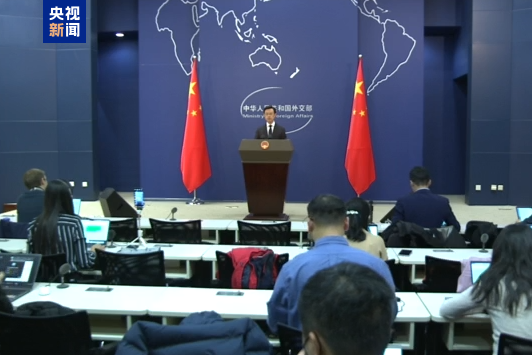
日本领导人可能参拜靖国神社,中方表态
中国基金报· 2025-12-26 07:58
Group 1 - The article discusses the response of the Chinese Foreign Ministry to a statement made by the Russian Foreign Ministry regarding Japan's potential visit to the Yasukuni Shrine and the suggestion to build a memorial for victims of Japanese militarism [2] - The Chinese side appreciates Russia's stance, emphasizing that the Yasukuni Shrine symbolizes Japan's militaristic aggression and honors war criminals responsible for invasions [2] - The article highlights the significance of the 80th anniversary of the victory in the Chinese People's War of Resistance against Japanese Aggression and the need for Japan to reflect on its historical actions [2] Group 2 - The Chinese government expresses its willingness to work with the international community, including Russia, to uphold the results of World War II and prevent the resurgence of Japanese militarism [2] - The statement calls for Japan to take concrete actions to acknowledge its wartime crimes and show respect for the victims [2]

外交部:日方应正视和反省侵略历史,不要错上加错
Ren Min Ri Bao· 2025-12-26 07:43
Group 1 - The Russian Foreign Ministry spokesperson suggested that Japan should build a "memorial hall for victims of Japanese militarism" to atone for its historical crimes, which was appreciated by China [1] - The spokesperson from China emphasized that the Yasukuni Shrine symbolizes Japan's militarism and honors 14 Class A war criminals responsible for aggressive wars [1] - This year marks the 80th anniversary of the victory of the Chinese people in the War of Resistance against Japan and the global anti-fascist war, urging Japan to reflect on its history of aggression and show respect for the victims [1] Group 2 - China expressed its willingness to work with the international community, including Russia, to safeguard the outcomes of World War II and the post-war international order [1] - There is a strong emphasis on preventing the resurgence of Japanese militarism and maintaining international peace and stability [1]
外交部:绝不允许日本右翼势力开历史倒车
Yang Shi Xin Wen· 2025-12-12 08:15
Core Viewpoint - The Chinese government firmly opposes any attempts by Japanese right-wing forces to revise history and emphasizes the importance of maintaining the outcomes of World War II and the post-war international order [3]. Group 1 - The Chinese government will not allow external forces to interfere in Taiwan affairs [3]. - There is a strong condemnation of the resurgence of Japanese militarism, which is described as a common enemy of all people worldwide [3]. - The Chinese side urges Japan to deeply reflect on its history and take concrete actions to sever ties with militarism [3].
台湾属于中国的史实和法理不容置疑
Ren Min Ri Bao· 2025-12-09 22:32
Group 1 - The core viewpoint of the article emphasizes that Taiwan has historically and legally been part of China, and recent statements from Japanese leaders regarding the use of force in Taiwan are seen as a serious infringement on China's sovereignty and territorial integrity [1][2][3] - Wang Yi, the Chinese Foreign Minister, outlined historical documents such as the Cairo Declaration and the Potsdam Proclamation, which affirm that Taiwan must be returned to China after World War II, highlighting the legal basis for China's claim over Taiwan [2][3] - The article mentions that the 1971 UN General Assembly Resolution 2758 restored all rights of the People's Republic of China in the UN and expelled representatives of Taiwan, further solidifying Taiwan's status as a part of China [2][3] Group 2 - Wang Yi stated that the series of historical facts politically and legally confirm that Taiwan is Chinese territory, and any attempts at "Taiwan independence" are viewed as a violation of both Chinese and international law [3] - The article notes that this year marks the 80th anniversary of China's victory in the War of Resistance against Japan, and it calls for Japan, as a former colonial power, to reflect on its past actions and refrain from military threats regarding Taiwan [3] - The article concludes by asserting that all peace-loving people have a responsibility to uphold the principles of the UN Charter and to prevent Japan from militarizing or reviving militarism [3]
王毅:台湾地位已被“七重锁定”
21世纪经济报道· 2025-12-09 00:01
Core Viewpoint - The article emphasizes that Taiwan has historically and legally been a part of China, and any claims or actions suggesting otherwise are seen as violations of China's sovereignty and international agreements [1][2]. Group 1: Historical Context - Wang Yi highlighted that Taiwan has been recognized as Chinese territory since ancient times, citing the Cairo Declaration of December 1943, which mandated Japan to return Taiwan to China after World War II [1]. - The Potsdam Declaration of July 1945 reiterated the conditions of the Cairo Declaration, affirming that Japan's defeat would lead to the return of Taiwan to China [1]. - Following Japan's surrender on August 15, 1945, the Chinese government announced the restoration of sovereignty over Taiwan on October 25, 1945, marking a significant historical event [1]. Group 2: Legal and Political Assertions - The article references the UN General Assembly Resolution 2758 from 1971, which restored all rights of the People's Republic of China in the UN and expelled Taiwan's representatives, reinforcing Taiwan's status as a part of China [2]. - The 1972 Sino-Japanese Joint Statement acknowledged the PRC as the sole legitimate government of China and recognized Taiwan as an inseparable part of Chinese territory [2]. - The 1978 Sino-Japanese Peace and Friendship Treaty confirmed adherence to the principles outlined in the Joint Statement, further solidifying Taiwan's status [2]. Group 3: Current Implications - Wang Yi criticized recent statements from Japanese leaders regarding the use of force in Taiwan, viewing them as a serious infringement on China's sovereignty and a challenge to post-World War II international order [1][2]. - The article stresses that any attempts at "Taiwan independence" are seen as acts of territorial division and interference in China's internal affairs, violating both Chinese and international law [2]. - Wang Yi called for reflection from Japan, especially given its historical actions in Taiwan, and urged the international community to uphold the principles of the UN Charter against militarization and revival of militarism [2].