交通风险预警

Search documents
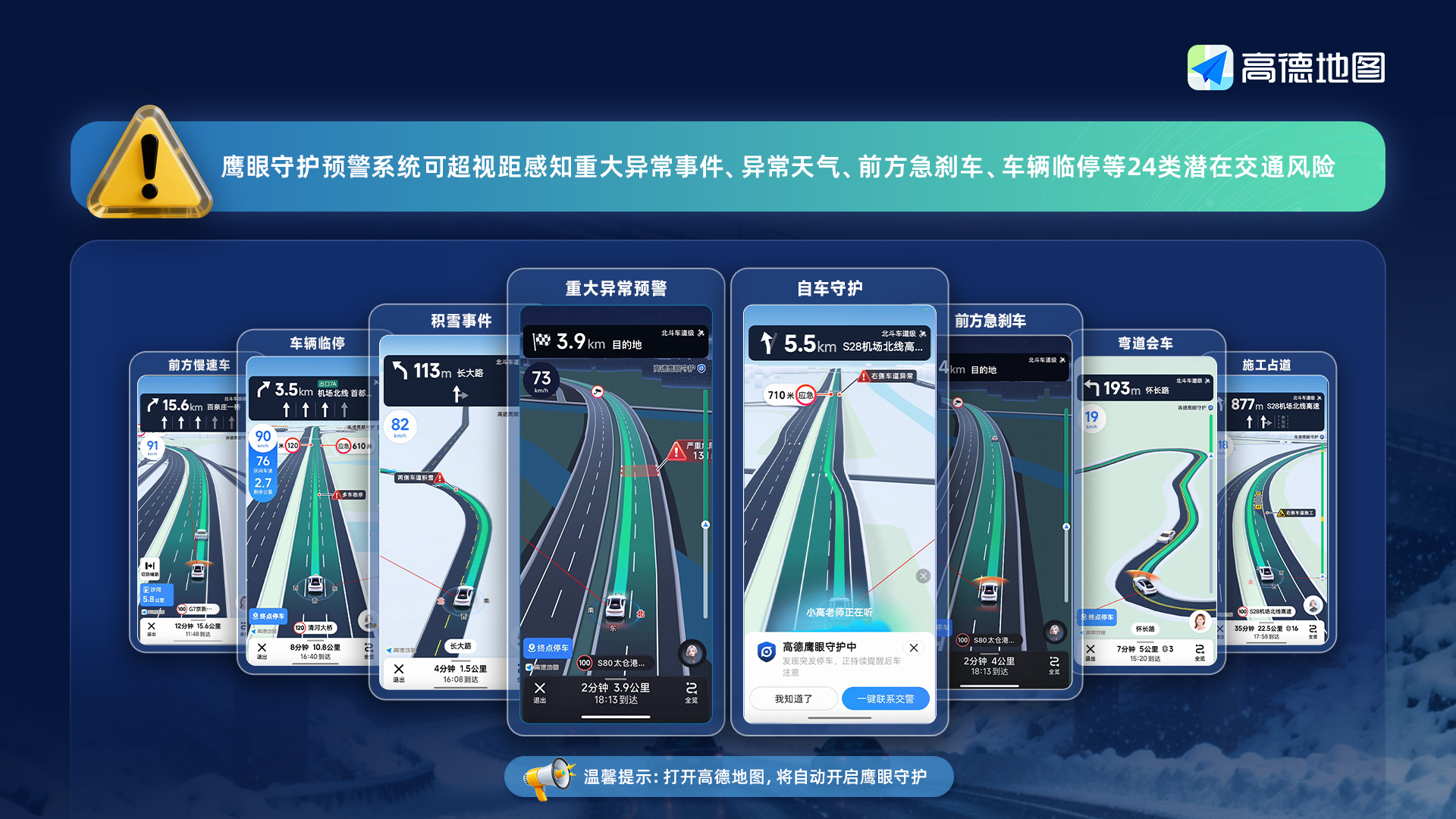
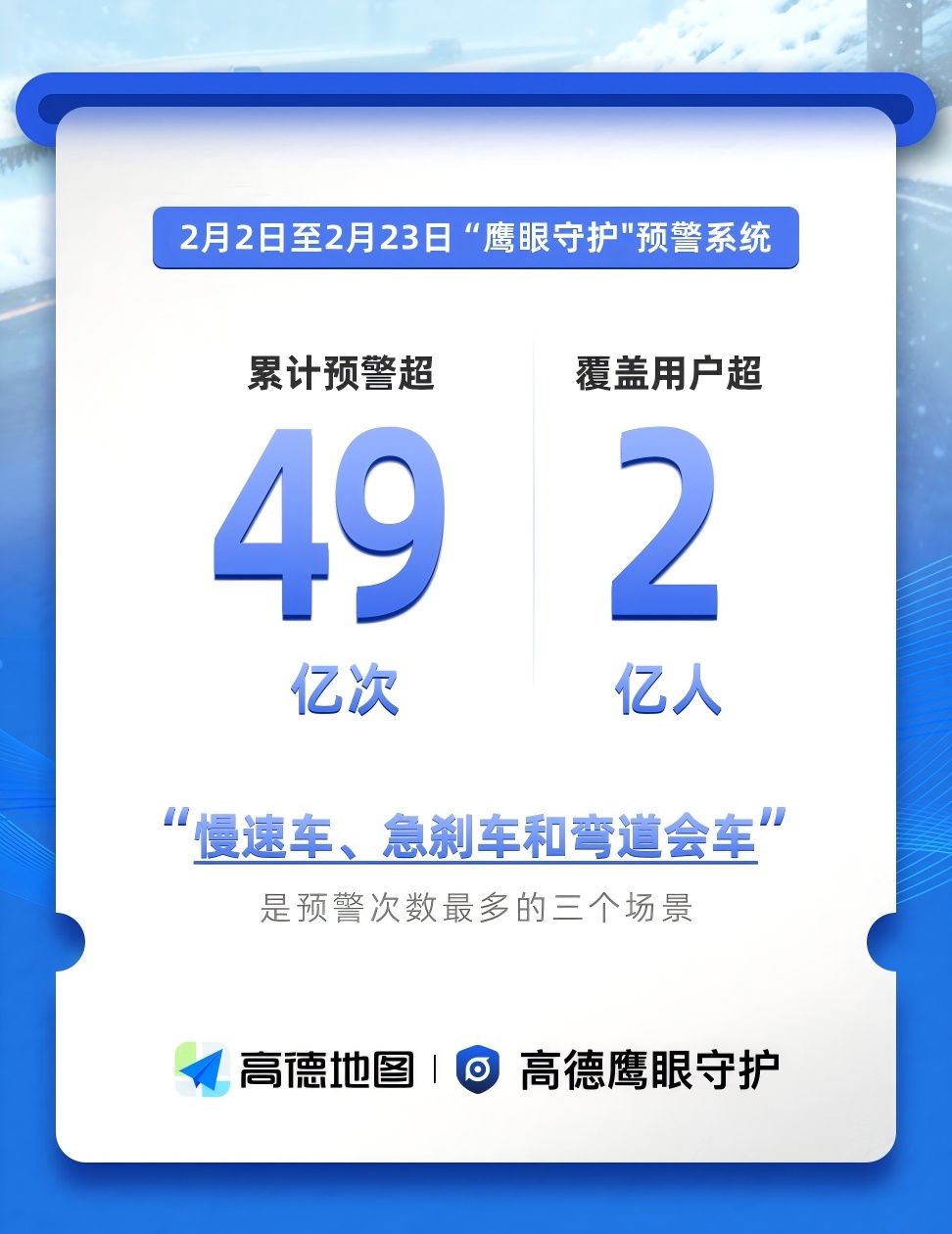
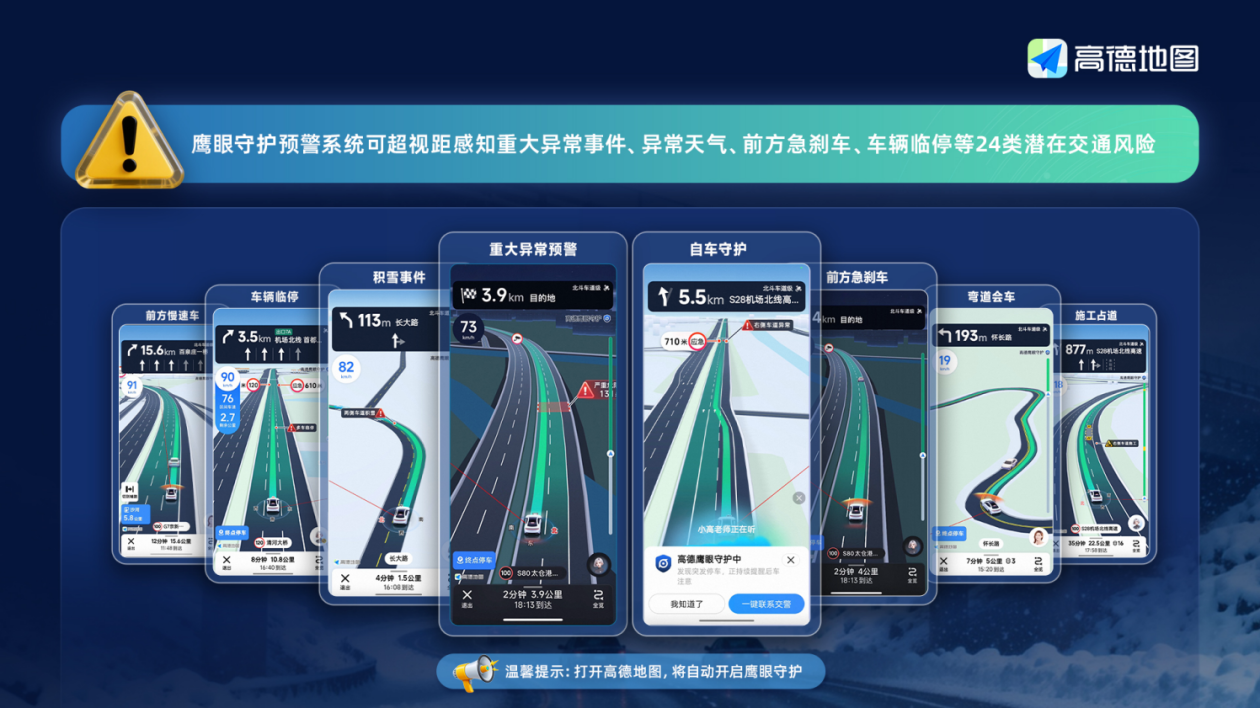
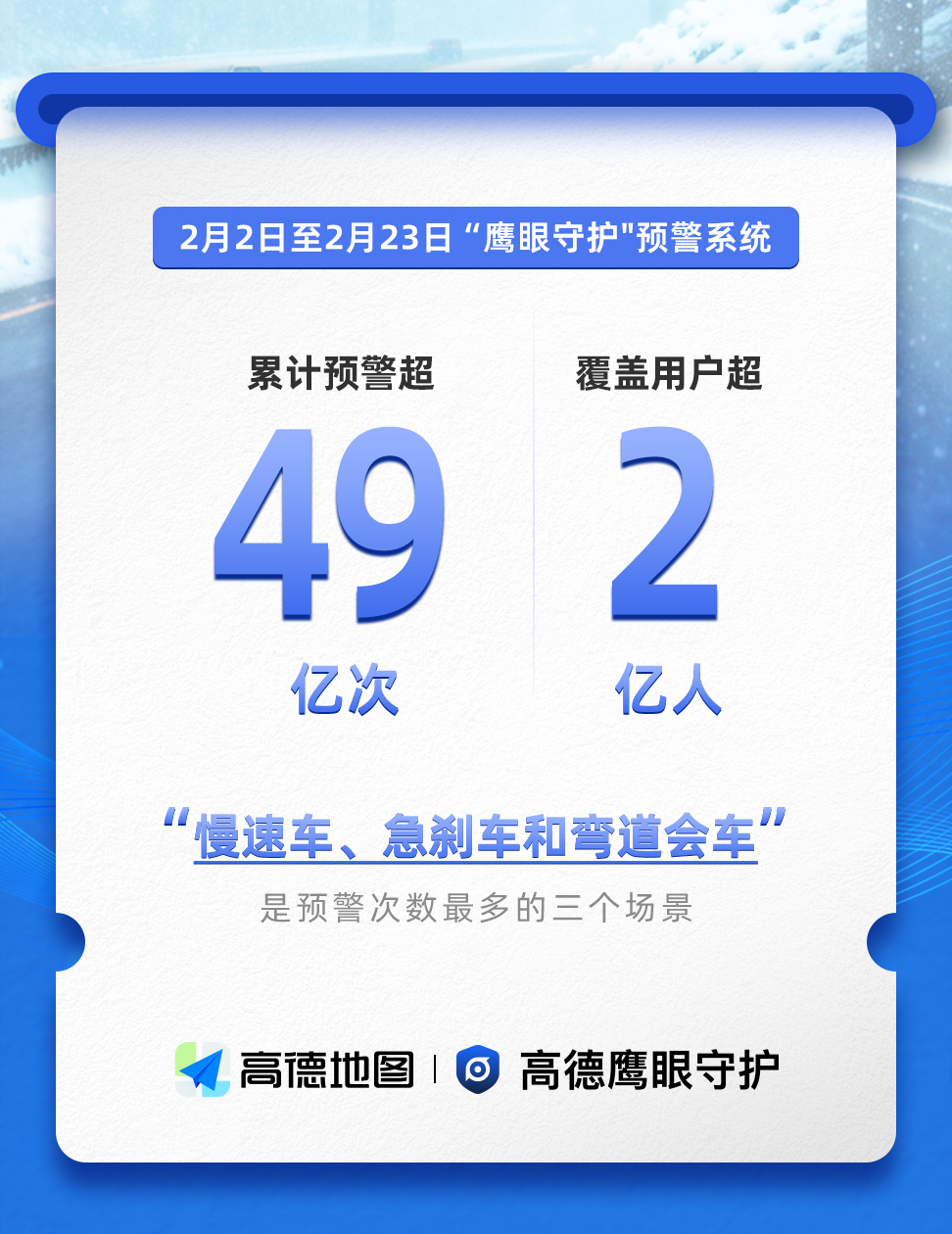
马年春运“鹰眼守护”系统发出49亿次安全预警
Zhong Guo Jing Ying Bao· 2026-02-25 07:00
Core Insights - The "Eagle Eye Guardian" safety warning system by Gaode has played a crucial role in ensuring road safety during the Spring Festival travel peak, with over 4.9 billion safety alerts issued from February 2 to February 23, covering more than 200 million users [1][2]. Group 1: System Performance - On February 22, the peak travel day, the "Eagle Eye Guardian" system issued 480 million alerts in a single day, with slow vehicles, sudden braking, and curve encounters being the top three warning types [2][3]. - The system's new truck warning strategy was significant, with nearly 70 million alerts related to large trucks during the holiday [2][3]. - The system demonstrated effective preemptive and response capabilities during emergencies, such as issuing a warning 10 seconds before a multi-vehicle collision on the Hubei G0422 highway, leading to over 3,000 alerts within an hour to guide vehicles away from danger [2][3]. Group 2: Technological Support - The underlying positioning and navigation technology is vital for the smooth operation of the "Eagle Eye Guardian" system, with Gaode utilizing over 57 trillion calls to the Beidou satellite positioning system during the Spring Festival, supporting a total navigation distance of over 62.7 billion kilometers [2][3]. - The system is expected to provide real-time risk alerts for daily travel, helping drivers identify complex road conditions and sudden changes earlier [4].

春节假期高德调用北斗卫星定位超5.7万亿次,支撑导航总里程超627亿公里
Huan Qiu Wang· 2026-02-24 11:22
Core Insights - The "Eagle Eye Guardian" warning system has effectively managed high travel demand during the Spring Festival travel rush, issuing over 4.9 billion safety alerts and covering more than 200 million users from February 2 to February 23, 2026 [1][3] - The system can perceive 24 types of potential traffic risks and provides alerts in real-time, significantly aiding drivers in making timely safety decisions [1][3] - During peak travel on February 22, the system issued over 480 million alerts in a single day, demonstrating its capacity to enhance public safety during high-traffic periods [1] Group 1 - The top three causes of alerts during the Spring Festival were slow vehicles, sudden braking, and oncoming traffic in curves [3] - The system has introduced truck-specific alerts, which help provide timely risk notifications for both trucks and passenger vehicles, enhancing overall road safety [3] - During the Spring Festival period from February 15 to February 23, the "Eagle Eye Guardian" issued nearly 70 million alerts related to large trucks [3] Group 2 - An incident on February 11 involved a multi-vehicle collision on the G0422 highway, where the system issued its first alert 10 seconds before the accident, allowing vehicles to take precautionary measures [3] - The system had already issued 4,721 alerts for low visibility due to fog one hour before the accident, showcasing its proactive risk management capabilities [3] - The company emphasizes the importance of maintaining navigation and voice alerts for drivers to enhance safety and encourages responsible driving practices [4] Group 3 - The underlying positioning and navigation capabilities are crucial for supporting large-scale travel, with over 57 trillion calls to the BeiDou satellite system during the Spring Festival, facilitating navigation over 62.7 billion kilometers [4]
马年春运背后的“鹰眼守护”,49亿次安全预警,覆盖用户超2亿人
Jin Rong Jie· 2026-02-24 10:23
Core Insights - The "Eagle Eye Guardian" warning system has effectively managed high travel demand during the Spring Festival travel rush, issuing over 4.9 billion safety alerts and covering more than 200 million users from February 2 to February 23, 2026 [1][3] Group 1: System Performance - The "Eagle Eye Guardian" system can perceive 24 types of potential traffic risks and provides alerts in seconds, significantly aiding drivers in making timely safety decisions [3] - On February 22, the peak travel day, the system issued over 480 million alerts in a single day, demonstrating its capacity to handle high alert volumes [3] Group 2: Specific Alerts and Incidents - The top three causes of alerts during the Spring Festival were slow vehicles, sudden braking, and oncoming traffic in curves, with nearly 70 million alerts related to large trucks issued during the holiday [5] - A notable incident occurred on February 11, where the system issued its first alert 10 seconds before a multi-vehicle collision, helping drivers to reduce speed and maintain safe distances, thereby mitigating further risks [5] Group 3: Future Developments and Recommendations - The company plans to continue providing real-time risk alerts to drivers, encouraging safe driving practices and the use of navigation and voice prompts [6] - During the Spring Festival, the system utilized over 57 trillion satellite positioning calls, supporting a total navigation distance of over 62.7 billion kilometers [6]
高德:鹰眼守护预警系统日均预警达8800万次,让高速路段事故率下降10%
Xin Lang Cai Jing· 2026-02-06 08:10
Core Viewpoint - The "Eagle Eye Safety Assurance: Warm Homecoming" initiative has been launched by the China Academy of Safety Science and Technology in collaboration with Gaode to enhance safety during the 2026 Spring Festival travel season [1][2]. Group 1: Eagle Eye Warning System - The Eagle Eye Warning System, launched in September 2025, can perceive 24 types of potential traffic risks, including major abnormal events, sudden braking ahead, night trucks, and vehicles on curves [1][2]. - The system aims to provide drivers with a few extra seconds of reaction time before a danger occurs, contributing to a 10% decrease in daily average traffic accidents during the 2025 National Day holiday on the G2 Beijing-Shanghai Expressway compared to the previous year [1][2]. - As of February 1, 2026, the system has issued over 11.2 billion warnings since its launch, with an average of 88 million warnings per day, including over 147,000 multi-vehicle abnormal warnings [2]. Group 2: System Upgrades for Spring Festival - The Eagle Eye Warning System has undergone comprehensive upgrades to address the dense traffic and complex weather conditions typical during the Spring Festival [3]. - New features include warnings for extreme weather conditions such as ice and fog, as well as alerts for high-risk road segments like those near water, cliffs, sharp turns, long descents, and accident-prone areas, allowing the system to advise drivers on speed control based on weather conditions [3].
秒级预警潜在事故风险,高德“鹰眼”守护春运出行安全
Jin Rong Jie· 2026-02-06 04:49
Core Insights - The 2026 Spring Festival travel period is expected to see a record 9.5 billion trips, with personal vehicle travel accounting for approximately 80% of the total [1] - The "Eagle Eye Guardian" early warning system, developed by the China Academy of Safety Science and Technology in collaboration with Gaode, aims to enhance travel safety during this peak period [2][5] Group 1: Eagle Eye Guardian System Overview - The Eagle Eye Guardian system is a key technological achievement from a national R&D initiative, designed to provide real-time traffic risk alerts and enhance driver safety [2] - The system can perceive 24 types of potential traffic risks and offers second-level alerts, giving drivers critical reaction time to prevent accidents [2][6] - It operates across all road networks and various travel modes, ensuring comprehensive coverage for different types of vehicles and driving scenarios [4] Group 2: System Performance and Impact - Since its launch, the Eagle Eye Guardian system has issued over 11.2 billion alerts, with an average of 88 million alerts per day, significantly reducing accident rates on major highways [7] - For instance, during the 2025 National Day holiday, the system contributed to a 10% decrease in daily vehicle accidents on the G2 Jinghu Expressway compared to the previous year [7] - The system's effectiveness was demonstrated in a real incident where it provided timely alerts that helped over 200 drivers avoid a potential collision [6] Group 3: Upgrades for Spring Festival - The system has been upgraded to include real-time alerts for extreme weather conditions such as snow and fog, enhancing its capability to adapt to changing travel environments [8] - New features include the "Eagle Eye Alarm," which creates a closed-loop response system for accident detection and emergency alerts, improving overall safety during high-traffic periods [9] - The system integrates with emergency response mechanisms, allowing for rapid detection and notification of incidents, thereby reducing the risk of secondary accidents [9]