
产业级AI

Search documents
4068倍超购燃爆港股!AI 新股海致科技剑指季度港股通
Zhi Tong Cai Jing· 2026-02-12 07:47
Core Insights - The Hong Kong stock market is experiencing a continuous surge in AI-related IPOs, with companies like HaiZhi Technology attracting significant institutional interest and achieving record oversubscription rates [1][3][16] - HaiZhi Technology's unique "graph-model fusion" technology addresses core challenges in industrial AI, positioning the company as a reliable investment amid a shift from speculative to value-driven investments in AI [1][9] Institutional Backing - Institutional investors are increasingly backing HaiZhi Technology, with notable firms like Junlian Capital and Hillhouse Capital holding significant stakes, indicating strong confidence in the company's long-term potential [3][4] - The presence of strategic investors from both the private and public sectors enhances the company's credibility and aligns with its technological direction [3][4] Market Dynamics - The AI industry is witnessing a stark contrast between the "general large model" competition and the "industrial AI" sector, with HaiZhi Technology's focus on "graph-model fusion" creating a unique market opportunity [7][8] - The market for industrial AI solutions in China is projected to grow from 65.4 billion yuan in 2025 to 286.1 billion yuan by 2029, with HaiZhi Technology's specific segment expected to see a remarkable compound annual growth rate of 140% [7][8] Company Strengths - HaiZhi Technology has established a strong technical barrier through its innovative "graph-model fusion" approach, which effectively mitigates issues related to AI hallucinations [10][12] - The company has demonstrated solid commercial success, with revenue growth rates of 26.8% from 2022 to 2024 and a significant increase in its core product revenue [13][14] Team and Leadership - The management team combines expertise from Baidu and academic leaders, providing a strong foundation for both strategic direction and technological advancement [15] - The founder's background in technology commercialization and the involvement of a renowned academician in the scientific team enhance the company's competitive edge [15] Market Sentiment - The overwhelming demand for HaiZhi Technology's IPO, with over 4,068 times subscription, reflects a robust market sentiment towards AI stocks, particularly those with unique technological advantages [16][21] - The company's potential inclusion in the Hong Kong Stock Connect program could further attract institutional investment, reinforcing its market position [21]

4068倍超购燃爆港股!AI 新股海致科技(02706)剑指季度港股通
智通财经网· 2026-02-12 07:45
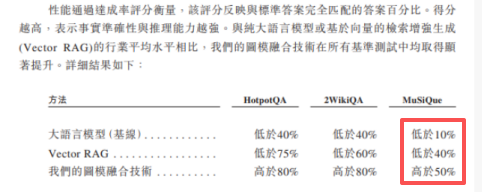
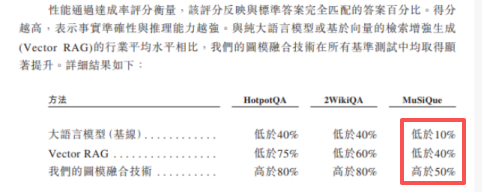
Core Viewpoint - The Hong Kong stock market is experiencing a surge in interest for AI-related IPOs, with HaiZhi Technology becoming a focal point due to its unique technology and strong institutional backing, leading to an unprecedented oversubscription of 4068 times for its public offering [1][4][14]. Group 1: Institutional Backing - HaiZhi Technology has attracted significant investment from top-tier institutions such as Junlian Capital, BAI, and Hillhouse Capital, indicating strong confidence in its long-term potential in the AI sector [3][4]. - The company has completed 13 rounds of financing since its establishment in 2013, with a diverse range of investors, including state-owned funds, enhancing its credibility and strategic value [3][4]. - The presence of high-profile cornerstone investors, including those from leading AI firms, underscores the market's belief in HaiZhi Technology's technological direction and potential for collaboration [3][4]. Group 2: Market Trends - The AI sector is witnessing a shift from generalized AI applications to vertical applications that deliver measurable value, with HaiZhi Technology positioned in a high-demand niche of "graph-model fusion" technology [6][8]. - The market for industrial AI solutions in China is projected to grow from 65.4 billion yuan in 2025 to 286.1 billion yuan by 2029, with a compound annual growth rate (CAGR) of 44.6% [6]. - HaiZhi Technology's specific segment is expected to see even more rapid growth, with a staggering CAGR of 140%, driven by urgent demand in sectors like finance and government [6][7]. Group 3: Company Strengths - HaiZhi Technology has established a robust technical barrier through its innovative "graph-model fusion" technology, which effectively addresses issues related to AI hallucinations [9][11]. - The company has demonstrated strong commercial performance, with projected revenues of 503 million yuan in 2024 and a CAGR of 26.8% from 2022 to 2024, indicating a clear path to profitability [11][12]. - The management team combines expertise from leading tech firms and academic institutions, providing a strong foundation for both strategic direction and technical innovation [13]. Group 4: Market Dynamics - The overwhelming demand for HaiZhi Technology's IPO, with over 4068 times subscription, reflects a broader trend in the market favoring companies that combine scarcity, institutional support, and strong performance [14][20]. - The company is positioned to potentially qualify for rapid inclusion in the Hong Kong Stock Connect program, which could further enhance its visibility and attract additional investment [17][20]. - HaiZhi Technology's unique value proposition as the "first stock of AI graph-model fusion" aligns well with the investment strategies of funds focused on high-growth, technology-driven companies [20].
“能对话”到“能决策”,首个全产业AI大模型“万联摩尔”上线
Yang Zi Wan Bao Wang· 2025-10-27 06:39
Core Insights - The implementation of the "Artificial Intelligence + Action" strategy by the State Council aims to deeply integrate AI with various industries, positioning industrial-grade AI as a core driver for high-quality economic development in China [1][4] - The launch of "Wanlian Mole," the first full-industry AI model in China, is expected to leverage a vast amount of data and cover 97 major industry categories, enhancing the application of AI in the economy [1][3] Group 1: AI Model Features - "Wanlian Mole" distinguishes itself from general-purpose models by utilizing high-quality, credible data from the Wanlian Yida industrial internet ecosystem, enabling it to understand industry pain points and provide accurate answers [3][4] - The model includes specialized functions such as industry knowledge Q&A, AI research report creation, price forecasting, and enterprise insights, marking a significant advancement from mere conversational capabilities to informed decision-making [3][4] Group 2: Application and Performance - The AI research report creation feature offers eight types of professional templates, allowing users to generate high-quality research content through simple natural language input, thus supporting enterprise decision-making [3][4] - The price prediction function boasts an accuracy rate exceeding 90% across various categories, including black and non-ferrous metals, construction materials, energy, and agriculture, aiding procurement personnel in optimizing purchasing strategies [4] Group 3: Industry Context and Future Outlook - The development of industrial AI models is supported by China's comprehensive industrial system and strong policy backing, providing a fertile ground for growth [4] - Experts believe that the advancement of industrial AI will contribute to China's leadership in the next wave of global industrial technology transformation [4]

数新风金句速览丨探索产业级AI如何驱动实体经济全产业链数智跃迁
Di Yi Cai Jing· 2025-10-27 02:01
Core Insights - The article discusses the transformative potential of industry-level AI models in driving the real economy and enhancing efficiency across various sectors [2][4][8]. Group 1: Industry-Level AI Models - Industry-level AI models are designed to address specific pain points within sectors, offering significant advantages in data integration and problem-solving capabilities [3][4]. - These models can effectively reduce hidden costs and improve operational efficiency by leveraging structured data and dynamic industry maps [6][9]. Group 2: Challenges and Solutions - The transition from general AI models to industry-specific models presents challenges, including the need for continuous training to avoid errors in business predictions [5]. - A top-down approach is necessary to establish cross-industry data standards and accelerate the commercialization of AI applications [7]. Group 3: Future Directions - The future of industry-level AI models is expected to involve multi-modal integration, energy-efficient computing, and a shift from isolated applications to interconnected industry chains [9]. - China's rapid advancement in AI applications positions it to lead globally, with a focus on practical implementation and continuous development [8].

数新风|锚定“人工智能+”:探索产业级AI如何驱动实体经济全产业链数智跃迁
Di Yi Cai Jing Zi Xun· 2025-10-27 01:41
Core Insights - The launch of "Wanlian Moore," the first AI model covering all industries, aims to address the professional inadequacies of general AI models by utilizing high-quality data and structured thinking technology [2][6][11] - The Chinese government is promoting the deep integration of AI with industries as a national strategy, with projections indicating that the number of vertical AI models in China will reach hundreds by Q3 2025 [4][11] - The transition from general AI capabilities to specialized industry AI is seen as essential for enhancing data quality, security, and computational power in enterprises [5][11] Group 1: AI Model Development - "Wanlian Moore" is designed to leverage a vast amount of industry data, aiming to cover 97 major industry categories in China [2][6] - The model integrates high-quality data from the Wanlian Yida ecosystem and employs structured thinking technology to provide accurate industry insights [6][10] - The model's price prediction accuracy exceeds 90% across various categories, aiding procurement decisions [10] Group 2: Industry Impact - The development of industry-specific AI models is expected to significantly enhance enterprise profits, industry value, and national GDP [7][11] - The integration of data, AI technology, and application scenarios is crucial for the success of industry AI [8][11] - The model aims to assist traditional industries in transitioning from experience-driven to data-driven decision-making, potentially increasing economic growth by 80% [6][10] Group 3: Future Outlook - The future of industry AI is anticipated to create substantial industrial and commercial value, supported by a complete industrial system and strong policy backing in China [11] - The focus will be on deep integration of software, hardware, models, and applications to adapt to industry needs and promote continuous iteration [11] - Wanlian Moore will continue to enhance its capabilities and foster an open industrial internet ecosystem to support high-quality development in traditional industries [11]

数新风|锚定“人工智能+”:探索产业级AI如何驱动实体经济全产业链数智跃迁
第一财经· 2025-10-27 01:06
Core Viewpoint - The launch of "Wanlian Moore," the first AI model covering the entire industry, aims to enhance the application of AI capabilities in various sectors, addressing the limitations of general AI models in specialized industrial contexts [2][4][6]. Group 1: AI Model Development - Wanlian Moore is designed to utilize a vast amount of high-quality data, integrating over 10 billion data points from the Wanlian Yida industrial internet ecosystem and external trusted sources, with plans to cover 97 major industry categories [2][4]. - The model employs "structured thinking technology based on an industrial dynamic map," allowing for comprehensive data coverage and precise understanding of industry pain points [2][6]. Group 2: Industry AI Trends - The Chinese government has emphasized the deep integration of AI with industry as a national strategy, with projections indicating that the number of vertical AI models in China will reach hundreds by Q3 2025 [5]. - The shift from general AI models to specialized industry AI models is seen as essential for addressing data sourcing, capability matching, data security, and computational power challenges [5][6]. Group 3: Technical Capabilities - Wanlian Moore's foundation is built on a robust and trustworthy data base, which is crucial for its functionality [6][8]. - The model's core technology allows for the disaggregation of complex industrial problems into manageable sub-problems, enabling expert-level analysis [6][8]. Group 4: Economic Impact - The integration of industry AI models is expected to create a 20% increment in the digital economy and potentially contribute 80% to economic growth through the digital transformation of traditional industries [8][12]. - The model's application is anticipated to enhance corporate profits, industry value-added, and national GDP as it becomes more widely adopted [8][12]. Group 5: Future Outlook - The future development of industry AI is expected to generate significant industrial and commercial value, with a focus on deep integration of software, hardware, models, and applications [13][14]. - Wanlian Moore aims to continuously enhance its capabilities across industries while fostering an open and inclusive industrial internet ecosystem to support high-quality development in China [13][14].
