
万联摩尔

Search documents
AI 走进 “实用时代”,全产业链赋能成新命题
Huan Qiu Wang· 2026-02-04 06:07
Core Insights - The article discusses the rapid evolution of artificial intelligence (AI) in the era of large models, emphasizing the need for deep integration of technology across various industries [1][2] - A key focus is on the establishment of the first "Industrial AI Research and Application Expert Committee" to promote the application of AI large models across industries [1] Group 1: AI Development and Challenges - AI technology has shown significant "emergent capabilities," with complex task handling improving dramatically, as evidenced by code models outperforming humans in international competitions [2] - Despite advancements, there are still bottlenecks in technology, particularly in addressing deep industry-specific issues and integrating knowledge across the supply chain [4] - The construction of a "full-industry AI super carrier" is deemed essential for overcoming these challenges, requiring comprehensive data coverage and the ability to provide precise industry solutions [4][6] Group 2: Practical Applications and Innovations - AI applications in industries like electricity and agriculture have demonstrated efficiency improvements and innovative business models, such as AI-assisted fault detection and automated agricultural monitoring [6][7] - The "Wanlian Moer" AI model has been developed to address industry-specific questions more effectively, integrating relevant geographical and market data to enhance its responses [7][9] - The model currently supports over 20 functions and is being utilized by more than 3,000 enterprises, indicating its broad applicability across various business operations [9] Group 3: Future Trends and Human-AI Collaboration - Experts predict that "application landing" will be a key focus for the AI industry moving forward, with a shift from scale competition to efficiency optimization [9][10] - The relationship between humans and AI is framed as one of empowerment rather than replacement, with AI expected to handle repetitive tasks while humans focus on higher-value activities [10] - The article highlights the importance of enhancing digital literacy in society to foster effective collaboration between humans and AI [10]

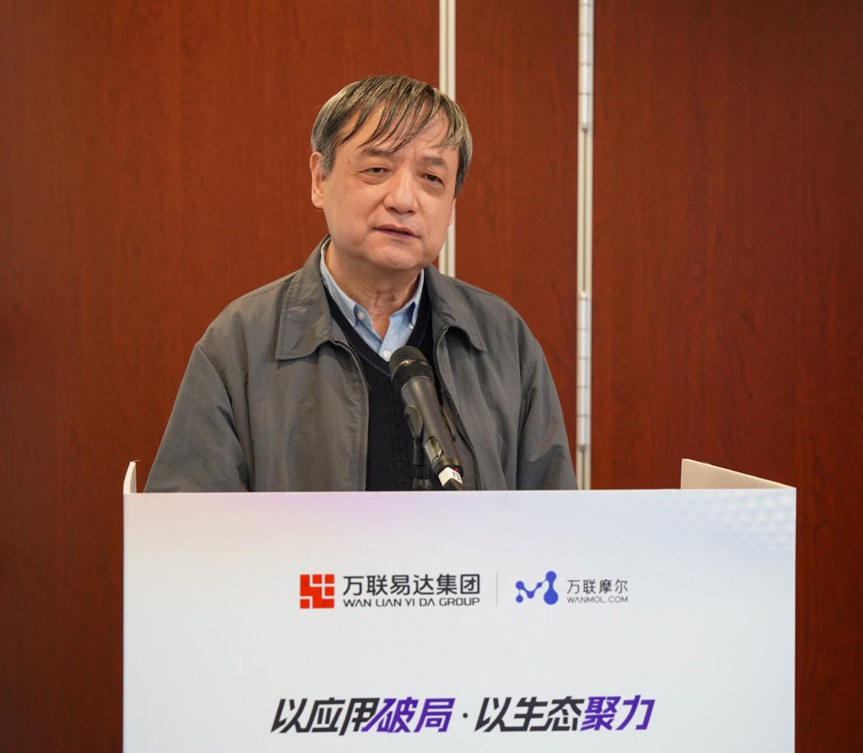
产研“双向奔赴” 全产业AI“破壁生长”
Xin Lang Cai Jing· 2026-02-03 19:46
Core Insights - The integration of artificial intelligence (AI) with various industries is seen as a strategic engine for driving industrial upgrades and shaping new competitive advantages for the country [1][2] - The current phase of AI technology transitioning from laboratory to large-scale industrial application is critical, with a focus on overcoming the "last mile" challenge of value creation [1][2] - A recent seminar highlighted the importance of deep integration between AI and industry, discussing practical paths and future directions for AI to drive the transformation and upgrading of China's real economy [1][2] Policy and Market Context - The "AI + Industry Development" initiative has entered a golden period due to overlapping policy benefits and market demand, with clear roadmaps established by government directives [2] - The State Council's policies emphasize the importance of AI in industrial development, marking it as a core task for future growth [2] Challenges in AI and Industry Integration - Four major challenges were identified in the integration of AI with industry: 1. Mismatch between the speed of AI technology development and actual industrial needs [3] 2. Data silos preventing efficient data flow and value creation [3] 3. Discrepancy between the demand for intelligent solutions and the services available in the market [3] 4. Difficulty in forming sustainable business models due to many AI technologies remaining at the conceptual stage [3] Development of Industry-Specific AI Models - The emergence of industry-specific AI models, such as "Wanlian Moer," aims to address the unique needs of various sectors by integrating comprehensive industry knowledge and decision-making processes [4][5] - These models are designed to provide tailored solutions across multiple industries, breaking the limitations of generic and vertical AI models [4][5] Innovations and Features of Wanlian Moer - Wanlian Moer has launched over 20 intelligent agents and is developing more than 100 functions, covering the entire business chain from R&D to management [5][6] - A notable feature includes the ability to generate visual representations of complex data, enhancing decision-making efficiency [6] - The model boasts an accuracy rate of over 90% in answering industry-related questions, positioning it as a leader in the field [6] Future Directions and Collaborative Efforts - The establishment of the "Industrial Artificial Intelligence Research and Application Expert Committee" aims to promote the development and application of industry AI models [6] - Experts emphasize the need for AI applications to be driven by real-world scenarios, advocating for a shift from reactive to proactive AI systems [7][8] - The future of AI in industry will depend on creating replicable, profitable, and sustainable AI paradigms that effectively integrate industry knowledge and capabilities [7][8]
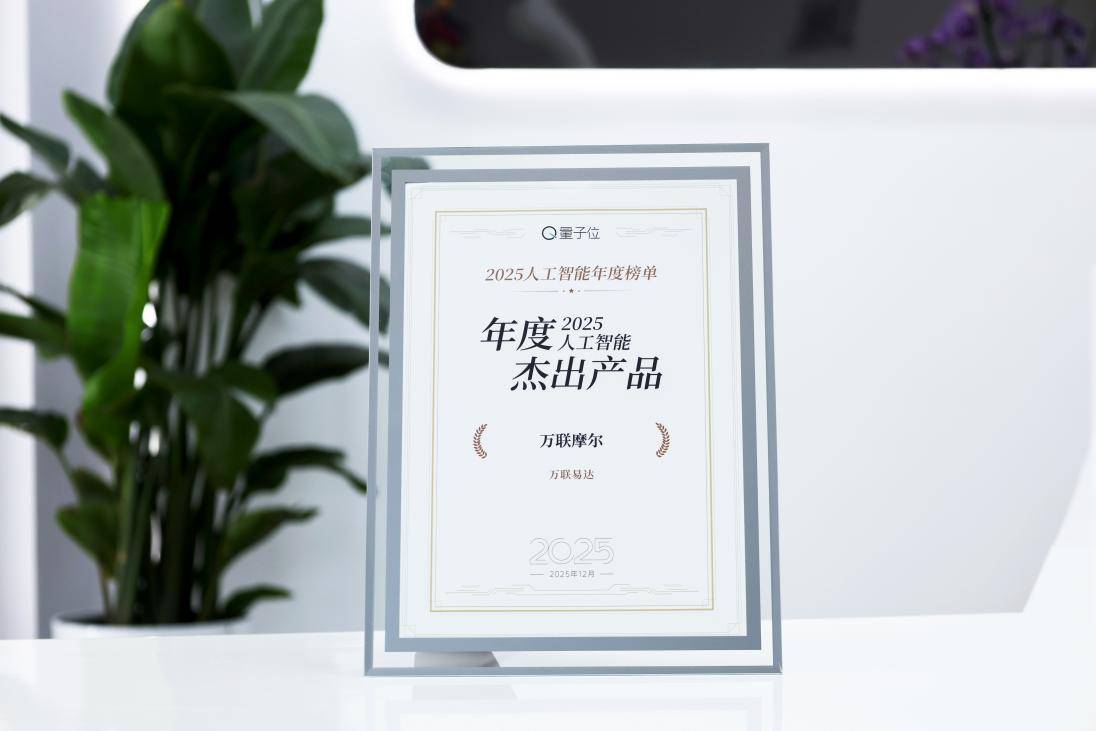
备受行业认可 万联易达旗下万联摩尔获评年度杰出人工智能产品
Sou Hu Cai Jing· 2025-12-26 07:25
Core Insights - The MEET2026 Intelligent Future Conference, hosted by Quantum Bit, gathered experts from academia, industry, and startups to discuss AI technology innovations and applications [1] - The "Wanjun Moer" AI model, developed by Wanjun Yida Group's subsidiary Wanjun Zhihui, won the "2025 Outstanding AI Product" award for its integration of industry knowledge and practical application capabilities [1] Group 1: Product Features - "Wanjun Moer" features three main advantages: comprehensive industry data coverage, deep understanding of industry pain points, and accurate problem-solving capabilities, enabling a transition from mere dialogue to informed decision-making [3] - The report creation function offers eight expert-level templates, facilitating high-quality research report writing for professionals, thus supporting enterprise decision-making and industry insights [3] - The price prediction function covers over 100 major commodity categories, achieving over 90% accuracy in price predictions for various materials such as steel and iron ore [3] Group 2: Company Strategy - Wanjun Moer focuses on real industry needs and core pain points, continuously expanding the application breadth and technical depth of industry-level AI [5] - The company aims to build a comprehensive industrial internet ecosystem through a "platform + service + data + AI" model, enhancing high-quality development and creating diverse industrial value [5] - The core development path relies on "ecological scenarios + credible data + artificial intelligence," driving digital and intelligent transformation across all industry services [5]
万联易达张栋:扎根产业场景,释放AI价值
Zhong Guo Jing Ji Wang· 2025-11-09 10:09
Core Insights - The current development of AI technology is at a critical stage of practical application, with a focus on integrating AI with the real economy to unlock its true value [1][2] - Wanlian Yida Group has developed an industry-level AI model, Wanlian Moore, which aims to empower various industry scenarios and facilitate the transition from general AI to industry-specific applications [1][2] Group 1 - The CEO of Wanlian Yida Group emphasized the importance of a dual model of "entity + internet" to bridge AI and industry [1] - Significant progress has been made in AI foundational research, computing power investment, and model capabilities in China, but challenges remain in commercial application and ecosystem development [1][2] - The company aims to construct a path for industrial empowerment from perceptual intelligence to decision-making intelligence by integrating high-quality, trustworthy data with AI models [2] Group 2 - China possesses the most complete industrial system globally, with 97 major industry categories and 1,382 subcategories, providing a rich environment for AI application [2] - The future trend of integrating industrial internet with AI should be application-oriented, focusing on complex scenarios that enable intelligent interaction and value co-creation [2] - The concept of an "AI super carrier" is proposed, which will unify various intelligent service units and serve as a gateway for more precise intelligent services across agriculture, industry, and services [2]
2025乌镇峰会|万联易达张栋:扎根产业场景,释放AI价值
Zhong Guo Jing Ji Wang· 2025-11-09 08:14
Core Insights - The current development of AI technology is entering a critical phase of practical application, with Wanlian Yida focusing on bridging AI and industry through a dual model of "entity + internet" [1][3] - Wanlian Yida has recently launched its self-developed industry-level AI model, Wanlian Moore, which aims to empower ecological partners and facilitate the transition from general AI to industry-specific applications [3][4] Group 1 - The global AI development is now in a deep-water phase, with significant advancements in basic research, computing power, and model capabilities in China, but challenges remain in commercial application and ecosystem construction [3] - The future of AI lies in its deep integration with the real economy, requiring a focus on industry scenarios to unlock its true value [3][4] Group 2 - Wanlian Moore is designed to cover comprehensive industry data, understand industry pain points, and provide accurate solutions, thus enhancing its competitive edge [3] - The company emphasizes the importance of high-quality, trustworthy data generated from years of industry experience to effectively integrate with AI models [3] Group 3 - Zhang Dong believes that the integration of AI and industry should be application-oriented, creating a super carrier for industry AI that can facilitate intelligent interaction and value co-creation across various sectors [4] - The vision is to enable all industry partners to achieve high-quality development through AI empowerment, highlighting the value of the industrial internet ecosystem [4]
万联易达张栋:让AI与产业双向奔赴
Huan Qiu Wang Zi Xun· 2025-11-08 08:46
Core Insights - Wanlian Yida Group is focusing on the integration of artificial intelligence (AI) with industry, aiming to enhance the quality of the real economy through its dual business model of "entity + internet" [1][3][5] - The company has developed an industry-level AI model, Wanlian Moore, which aims to empower various industry scenarios and facilitate the transition from generalized AI to specialized industry applications [1][8] Group 1: AI and Industry Integration - The Chinese government is promoting the deep integration of AI with industry under the "AI+" strategy, which is crucial for enhancing the quality of the real economy [3][5] - Despite significant advancements in AI foundational research and computational power, challenges remain in commercial application and ecosystem construction [3][5] - Wanlian Yida has a profound understanding of the pain points and challenges faced by industries, leveraging its long-term experience in the sector [3][5] Group 2: Ecosystem Development - The company is building an industrial internet ecosystem by integrating AI, trusted data spaces, and real business scenarios, creating platforms for various functions such as AI applications, commodity trading, logistics services, and smart finance [5][6] - The ecosystem aims to address the issues of "having models but no data" and "having data but no intelligence," enabling partners to move from solving known problems to discovering unknown opportunities [5][6] Group 3: Future Directions - Wanlian Moore is designed to cover all 97 major industry categories in the national economy, facilitating the connection of upstream and downstream industry chains and creating precise industry solutions [8][11] - The concept of an "AI super carrier" is introduced, which will serve as a unified entry point for various intelligent service units across agriculture, industry, and services [11] - The company emphasizes the importance of starting from real scenarios to ensure that AI is rooted in reality, aiming for a collaborative future in industrial development [11]

万联易达集团上线全产业AI大模型“万联摩尔”
Zheng Quan Shi Bao Wang· 2025-10-28 09:13
Core Insights - Wanlian Yida Group has launched the industry-level AI model "Wanlian Moore," marking a significant advancement in China's industrial AI model development [1] - The model leverages over 10 billion units of data from Wanlian Yida's industrial ecosystem and external trusted data, providing comprehensive industry data coverage, deep understanding of industry pain points, and accurate problem-solving capabilities [1][2] - Wanlian Moore aims to cover 97 major industry categories in the national economy in a phased manner [1] Application and Functionality - The model includes specialized functions for industrial knowledge and data Q&A, with breakthroughs in AI research report creation, price forecasting, and deep enterprise insights [1] - For instance, the price forecasting function can predict price trends for nearly 100 types of bulk commodities over the next five weeks, achieving an accuracy rate of over 90% [1][2] - This functionality allows procurement decision-makers to understand raw material price trends clearly, optimizing purchasing strategies and avoiding decision-making errors [1] Data Integration and Impact - Wanlian Moore's 90% accuracy is attributed to its use of reliable data, integrating vertical upstream and downstream relationships and horizontal industry competition dynamics, along with a dynamic updating mechanism [2] - The model's predictions consider various multidimensional data variables, such as supply and demand data for iron ore, and related indicators from steel, machinery manufacturing, and real estate [2] - The application of industry-level AI is expected to facilitate the transition of traditional industries from "experience-driven" to "data-driven" decision-making, potentially creating a 20% increment in the digital economy and 80% increment through empowering traditional industries with digital transformation [2] Future Development - Wanlian Moore will continue to enhance its capability for comprehensive industry coverage and deepen its application in key industries, fostering an open and inclusive industrial internet ecosystem [3]
“能对话”到“能决策”,首个全产业AI大模型“万联摩尔”上线
Yang Zi Wan Bao Wang· 2025-10-27 06:39
Core Insights - The implementation of the "Artificial Intelligence + Action" strategy by the State Council aims to deeply integrate AI with various industries, positioning industrial-grade AI as a core driver for high-quality economic development in China [1][4] - The launch of "Wanlian Mole," the first full-industry AI model in China, is expected to leverage a vast amount of data and cover 97 major industry categories, enhancing the application of AI in the economy [1][3] Group 1: AI Model Features - "Wanlian Mole" distinguishes itself from general-purpose models by utilizing high-quality, credible data from the Wanlian Yida industrial internet ecosystem, enabling it to understand industry pain points and provide accurate answers [3][4] - The model includes specialized functions such as industry knowledge Q&A, AI research report creation, price forecasting, and enterprise insights, marking a significant advancement from mere conversational capabilities to informed decision-making [3][4] Group 2: Application and Performance - The AI research report creation feature offers eight types of professional templates, allowing users to generate high-quality research content through simple natural language input, thus supporting enterprise decision-making [3][4] - The price prediction function boasts an accuracy rate exceeding 90% across various categories, including black and non-ferrous metals, construction materials, energy, and agriculture, aiding procurement personnel in optimizing purchasing strategies [4] Group 3: Industry Context and Future Outlook - The development of industrial AI models is supported by China's comprehensive industrial system and strong policy backing, providing a fertile ground for growth [4] - Experts believe that the advancement of industrial AI will contribute to China's leadership in the next wave of global industrial technology transformation [4]

数新风金句速览丨探索产业级AI如何驱动实体经济全产业链数智跃迁
Di Yi Cai Jing· 2025-10-27 02:01
Core Insights - The article discusses the transformative potential of industry-level AI models in driving the real economy and enhancing efficiency across various sectors [2][4][8]. Group 1: Industry-Level AI Models - Industry-level AI models are designed to address specific pain points within sectors, offering significant advantages in data integration and problem-solving capabilities [3][4]. - These models can effectively reduce hidden costs and improve operational efficiency by leveraging structured data and dynamic industry maps [6][9]. Group 2: Challenges and Solutions - The transition from general AI models to industry-specific models presents challenges, including the need for continuous training to avoid errors in business predictions [5]. - A top-down approach is necessary to establish cross-industry data standards and accelerate the commercialization of AI applications [7]. Group 3: Future Directions - The future of industry-level AI models is expected to involve multi-modal integration, energy-efficient computing, and a shift from isolated applications to interconnected industry chains [9]. - China's rapid advancement in AI applications positions it to lead globally, with a focus on practical implementation and continuous development [8].

数新风|锚定“人工智能+”:探索产业级AI如何驱动实体经济全产业链数智跃迁
Di Yi Cai Jing Zi Xun· 2025-10-27 01:41
Core Insights - The launch of "Wanlian Moore," the first AI model covering all industries, aims to address the professional inadequacies of general AI models by utilizing high-quality data and structured thinking technology [2][6][11] - The Chinese government is promoting the deep integration of AI with industries as a national strategy, with projections indicating that the number of vertical AI models in China will reach hundreds by Q3 2025 [4][11] - The transition from general AI capabilities to specialized industry AI is seen as essential for enhancing data quality, security, and computational power in enterprises [5][11] Group 1: AI Model Development - "Wanlian Moore" is designed to leverage a vast amount of industry data, aiming to cover 97 major industry categories in China [2][6] - The model integrates high-quality data from the Wanlian Yida ecosystem and employs structured thinking technology to provide accurate industry insights [6][10] - The model's price prediction accuracy exceeds 90% across various categories, aiding procurement decisions [10] Group 2: Industry Impact - The development of industry-specific AI models is expected to significantly enhance enterprise profits, industry value, and national GDP [7][11] - The integration of data, AI technology, and application scenarios is crucial for the success of industry AI [8][11] - The model aims to assist traditional industries in transitioning from experience-driven to data-driven decision-making, potentially increasing economic growth by 80% [6][10] Group 3: Future Outlook - The future of industry AI is anticipated to create substantial industrial and commercial value, supported by a complete industrial system and strong policy backing in China [11] - The focus will be on deep integration of software, hardware, models, and applications to adapt to industry needs and promote continuous iteration [11] - Wanlian Moore will continue to enhance its capabilities and foster an open industrial internet ecosystem to support high-quality development in traditional industries [11]
