产业资本投资

Search documents
宁德时代腾讯,出资博裕
投资界· 2026-03-20 08:30
Core Viewpoint - The article discusses the establishment of a new fund, 博裕新智新产, which has attracted a diverse group of investors, including major companies and state-owned enterprises, indicating a renewed interest in fundraising within the investment community [4][5]. Group 1: Fund Overview - 博裕新智新产 has increased its registered capital to 4.001 billion RMB and will focus on investing in growth and mature companies in technology, healthcare, consumer goods, and retail sectors both domestically and internationally [4]. - The fund has a lifespan of 12 years and has successfully gathered a notable lineup of Limited Partners (LPs) from various sectors, including state-owned enterprises and industry giants [4][5]. Group 2: Notable Investors - Key investors include 宁德时代 (Ningde Times) contributing 500 million RMB for a 12.497% stake, along with other significant contributions from companies like 腾讯 (Tencent) and 泡泡玛特 (Pop Mart) [5][7]. - The fund's investor list features a mix of industry capital and local state-owned platforms, showcasing a strong and diverse backing that is rare in the current market [5][6]. Group 3: Recent Investments - 博裕新智新产 has already made an investment in 宁德时代 (Ningde Times)智能科技有限公司 (Intelligent Technology Co., Ltd.), which focuses on key technologies for electric vehicle platforms [8][9]. - The fund's involvement in this investment highlights its strategy to engage with innovative companies in the technology sector, further solidifying its position in the investment landscape [9][10]. Group 4: Company Background - 博裕投资, founded in 2011, has established a diversified investment matrix that includes private equity, strategic investments in listed companies, and ventures in logistics and data centers, with a focus on technology innovation, consumer retail, and healthcare [10]. - Recent high-profile deals, such as acquiring a stake in Starbucks China and investments in other notable companies, demonstrate 博裕's active role in the investment community [10][11].




美元命运早定格?如果美国衰落,犹太资本将转移到中国和这个国家
Sou Hu Cai Jing· 2025-12-20 11:47
Core Viewpoint - The dominance of the US dollar is being challenged, with signs indicating a potential shift in global currency power dynamics, similar to the decline of the British pound [1][3]. Group 1: Historical Context of Currency Dominance - The transition from the British pound to the US dollar was supported by national strength, with the UK leveraging the Industrial Revolution for global trade [3]. - The US dollar gained prominence post-World War II, solidified by the Bretton Woods Agreement, which pegged the dollar to gold until its decoupling in 1971 [3][5]. Group 2: Current Economic Indicators - As of October 2025, the US national debt exceeds $38 trillion, with a trade deficit projected to surpass $1.2 trillion in 2024, indicating a shift towards a consumption-driven economy [5][11]. - The US is increasingly reliant on foreign products, with a declining manufacturing base, raising concerns about the dollar's stability [5]. Group 3: Capital Movement and Investment Trends - Jewish capital is reportedly moving away from the dollar, seeking safer and more profitable investments, particularly in Israel and China [7][19]. - Israel, despite its small GDP of approximately $400 billion in 2023, is recognized for its high density of tech startups, attracting significant venture capital [9][11]. Group 4: China's Economic Landscape - China, with a GDP exceeding $18 trillion in 2023 and a manufacturing ecosystem that includes advanced industries, is positioned as a strategic investment destination [11][13]. - The country is experiencing a trade surplus projected to exceed $1 trillion by 2025, driven by high-tech industries rather than low-cost manufacturing [11][19]. Group 5: Future Implications for Global Finance - The potential withdrawal of Jewish capital from the US could destabilize the US financial markets, leading to increased volatility in debt markets and currency fluctuations [17][21]. - The shift in capital towards China may signify a strategic upgrade in capital structure, focusing on industrial investment and technological innovation rather than speculative real estate [19][21].

香飘飘亿元押注消费基金 产业资本崛起重塑创投格局
Xin Lang Zheng Quan· 2025-07-25 07:08
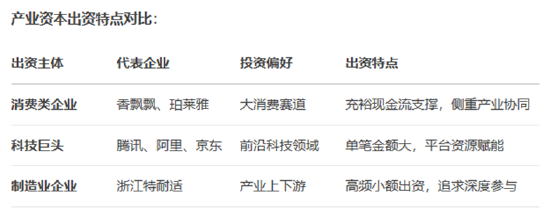
Group 1 - The core point of the article is that Xiangpiaopiao is actively investing in the venture capital space to adapt to the challenges in the bubble tea market, with a recent investment of 100 million yuan in a fund focused on the "big consumption" sector [1][2][3] - Xiangpiaopiao's recent investment marks its second foray into industry funds within three years, with the first being a 50 million yuan fund established in 2022 for the food and beverage sector [1][2] - The company’s investment of 100 million yuan is nearly half of its projected net profit for 2024, and combined with a cash dividend of 103 million yuan, these expenditures account for 80% of the expected net profit [1][2] Group 2 - The bubble tea market is facing significant challenges, with Xiangpiaopiao reporting a 9% decline in both revenue and net profit for 2024, and a further loss of 18.775 million yuan in Q1 2025 [2][3] - Despite the declining performance, Xiangpiaopiao holds 2.206 billion yuan in cash, providing a solid foundation for strategic investments [2][3] - The investment in the fund represents a shift from being an industry investor to a financial investor, with three key upgrades: increased investment size, professional collaboration with Jia Yu Capital, and an expanded focus on the broader "big consumption" ecosystem [2][3] Group 3 - The rise of industrial capital is evident, with traditional enterprises and listed companies actively participating in the venture capital market, particularly in Zhejiang province, where listed companies contributed over 1 billion yuan in June 2025 alone [4][5] - Xiangpiaopiao's investment aligns with a broader trend of industrial capital entering the market, as social LPs are becoming scarce due to market conditions [5][6] - The Chinese government is encouraging the involvement of social capital in the venture capital market, creating a favorable environment for companies like Xiangpiaopiao to invest [6][7] Group 4 - The consumption sector is experiencing a shift, with a four-year bear market in the consumption index, prompting institutional investors to reduce their exposure to this sector [7][8] - Policy initiatives aimed at boosting consumption are becoming a priority for economic growth, with a focus on service consumption as a key area for development [7][8] - Recent trends indicate a revival in the consumption market, with significant growth in the food delivery sector, suggesting potential opportunities for companies like Xiangpiaopiao [8]