
产业链创新链融合

Search documents
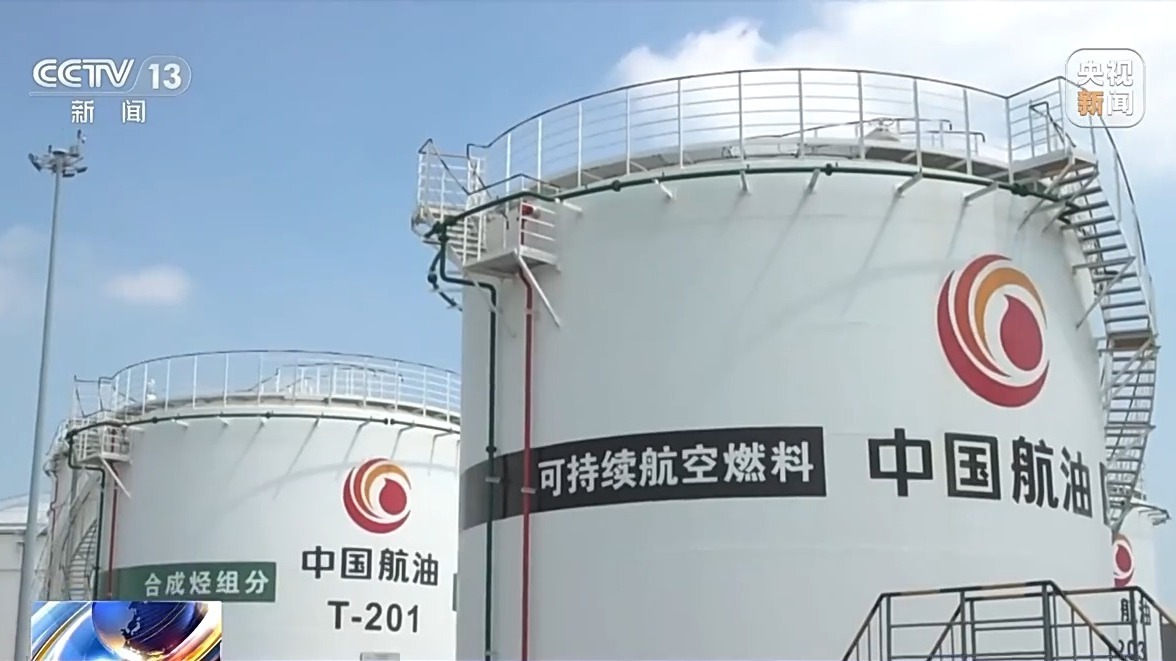
中国石化与中国航油实施重组带来哪些利好?航空业向“新”向“绿”向优发展
Yang Shi Wang· 2026-01-09 01:55
Core Viewpoint - The restructuring of China Petroleum & Chemical Corporation (Sinopec) and China Aviation Oil Group aims to enhance the integration of the aviation fuel industry chain, reduce supply costs, and accelerate the green and low-carbon transformation of aviation energy supply, thereby improving international competitiveness [1][4][8]. Group 1: Industry Growth and Demand - During the 14th Five-Year Plan period, China's aviation fuel demand is expected to grow at an annual rate of approximately 4%, reaching around 50 million tons by 2030 and about 75 million tons by 2040 [3]. Group 2: Innovation and Integration - The merger is expected to facilitate the construction of an innovative system for aviation fuel technology, accelerating the integration of the innovation and industry chains [4][6]. - The restructuring will leverage Sinopec's research and development capabilities in oil products and China Aviation Oil's market supply advantages, promoting the integration of the aviation fuel industry's innovation and supply chains [6]. Group 3: Sustainable Development - The merger will support the high-quality development of sustainable aviation fuel industries and assist the aviation sector in its green and low-carbon transition [8][10]. - Sustainable aviation fuel technology is recognized as a primary route for reducing carbon emissions in the aviation sector, which is one of the most challenging areas for emissions reduction in transportation [8]. - Sinopec is the first company in Asia to have independent research and production capabilities for bio-jet fuel, which will accelerate the research, use, and continuous iteration of sustainable aviation fuel technologies post-restructuring [10][12].



中国石化与中国航油实施重组 助力航空业绿色低碳转型
Huan Qiu Wang· 2026-01-09 01:24
Core Viewpoint - The restructuring of China Petroleum & Chemical Corporation (Sinopec) and China National Aviation Fuel Group Corporation (CNAF) aims to enhance the integration of the aviation fuel industry chain, reduce supply costs, and promote a green and low-carbon transition in aviation energy supply [1][3]. Group 1: Industry Integration and Innovation - The merger will leverage Sinopec's oil product research and development capabilities alongside CNAF's market supply advantages, facilitating the integration of innovation within the aviation fuel industry chain [3]. - Currently, there is a disconnect between the research, production, sales, and application sectors in China's aviation fuel industry, which the restructuring aims to address [1]. Group 2: Green and Low-Carbon Transition - The restructuring is expected to support the high-quality development of sustainable aviation fuel, contributing to the aviation industry's green and low-carbon transition [3][5]. - Sustainable aviation fuel technology is recognized as a key pathway for reducing carbon emissions in the aviation sector, which faces significant challenges in emission reductions [3]. Group 3: Sustainable Aviation Fuel Development - Sinopec is the first company in Asia to develop and commercialize bio-jet fuel production technology, and the restructuring will accelerate the research, usage, and iteration of sustainable aviation fuel technologies [5]. - The global sustainable aviation fuel consumption is projected to reach 6 million tons by 2025 and 18 million tons by 2030, highlighting the growing demand for such fuels [7].
让科技软服务创造发展硬实力
Jing Ji Ri Bao· 2025-05-31 22:02
Core Viewpoint - The recent implementation of the "Implementation Opinions on Accelerating the High-Quality Development of the Technology Service Industry" aims to enhance the technology service sector to support the transformation and upgrading of the manufacturing industry towards the mid-to-high end, emphasizing the importance of technology innovation in driving industrial innovation [1][2]. Industry Development - The development of the technology service industry is crucial for the manufacturing sector to achieve transformation and upgrade, as high-level modern services are necessary to support technological innovation [1]. - A well-developed technology service industry can enhance the integration of the innovation chain and industrial chain, significantly boosting the momentum for technological and industrial innovation [1][2]. Competitive Landscape - The level of development in the technology service industry is now a key dimension for measuring international industrial competitiveness, with technological innovation being central to gaining an advantageous position in global competition [2]. - The combination of hard support (land, infrastructure, funding) and soft support (technology services) is essential for converting technology into productive forces and achieving economic, social, and developmental benefits [2]. Integration of Manufacturing and Services - The integration of manufacturing and service industries is a prevailing trend, with the future level of this integration directly influencing the overall strength of industrial development [3]. - The technology service industry can leverage opportunities arising from the high-quality development of upstream manufacturing to provide precise service support, thereby enhancing its own scale and quality [3]. Policy Recommendations - Policies should focus on specific areas within the technology service industry, promoting local development tailored to regional conditions and encouraging a balanced growth that aligns with the current level of manufacturing development [3][4]. - Establishing long-term mechanisms is necessary to prevent hasty developments that do not consider the actual stages of industrial growth, ensuring a dynamic balance between service supply and technology demand [3]. Talent Development and Standardization - Talent cultivation is a critical aspect, requiring collaboration between research institutions and frontline production to guide human resources into the technology service sector [4]. - The technology service industry, with its diverse categories and significant growth potential, necessitates the establishment of service standards to enhance industry development and responsiveness to market signals [4].
我国北方首个自贸试验区汇聚特色产业集群
Zhong Guo Chan Ye Jing Ji Xin Xi Wang· 2025-04-30 01:01
Group 1 - The Tianjin Free Trade Zone has achieved systematic and integrated institutional innovation over the past 10 years, breaking industrial bottlenecks and gathering a number of characteristic industrial clusters [1] - The financial innovation in the Tianjin Free Trade Zone has formed a scale, exploring 40 leasing models including joint leasing, cross-border subleasing, bonded leasing, and offshore leasing, becoming a hub for the commercial factoring industry in China [1] - The bonded maintenance services in the Tianjin Free Trade Zone cover various categories such as aerospace, engineering machinery, and shipbuilding, with innovative policies and business models [1] - The network freight industry has thrived, integrating 4.266 million drivers and 3.925 million vehicles, completing 53.67 million orders and transporting 580 million tons of goods in 2024, with total freight charges exceeding 90 billion yuan [1] - The biopharmaceutical sector has seen innovation breakthroughs, attracting over 200 key biopharmaceutical companies with a production value of nearly 50 billion yuan through various innovative measures [1] Group 2 - The Tianjin Free Trade Zone aims to cultivate new productive forces and address industrial chain challenges, striving to become a model and leader in high-quality development [2]