
科技服务业

Search documents
十五五规划纲要出炉 | 金融企业如何跨越“数据+AI”的转型鸿沟?
AI前线· 2026-03-19 05:44
Core Viewpoint - The article emphasizes the importance of digital and intelligent transformation in the financial industry as outlined in the 14th Five-Year Plan, highlighting the shift towards an era where artificial intelligence (AI) becomes the core system driving key financial processes such as risk control, investment research, and marketing [1]. Group 1: AI-Driven Scientific and Technological Development - Accelerate the exploration of AI-driven new research paradigms and technology development models, promoting the application of large scientific models and building intelligent research platforms [3]. - Strengthen the collaboration between AI and fields such as quantum technology, life sciences, new materials, new energy, and 6G [3]. Group 2: AI in Industry Development - Promote the application of AI across all stages of industrial design, production, and operations, particularly in energy systems and logistics [3]. - Encourage the widespread use of intelligent terminals and agents in service sectors like biological breeding and logistics [3]. Group 3: AI for Consumer Quality Improvement - Develop efficiency-enhancing and companion-type intelligent applications, including new generations of AI smartphones and computers [3]. - Explore new forms of intelligent products and expand intelligent service consumption scenarios [3]. Group 4: AI for Public Welfare - Innovate teaching models with intelligent companions and teachers, enhancing personalized learning and smart tutoring applications [3]. - Promote high-level health assistants and expand the application of intelligent diagnostic aids in grassroots medical institutions [3]. Group 5: AI in Governance - Enhance the application of AI in comprehensive market regulation, safety production supervision, disaster prevention, and ecological protection [4]. - Explore the construction of a collaborative safety governance system involving natural persons, digital entities, and intelligent robots [4]. Group 6: Global Cooperation in AI - Promote the establishment of a global AI cooperation organization and a multilateral cooperation platform for AI along the Belt and Road [4]. - Accelerate the development of a globally open open-source technology system and community ecology [4]. Group 7: Infrastructure for AI Development - The plan emphasizes the need for a robust foundation for financial digitalization, focusing on the efficient supply of computing power, algorithms, and data [5]. - Propose the construction of a market-oriented operation for computing power facilities to meet demand through various innovative methods [5]. Group 8: Talent and Skills Gap - The financial sector faces challenges in transforming due to gaps in understanding and skills among management regarding new concepts like intelligent economy and trustworthy data spaces [15]. - The lack of composite talents who understand both financial business logic and AI engineering is a significant bottleneck for transformation [15]. Group 9: Challenges in Scene Implementation - Despite encouragement for new intelligent models, the practical application of AI in complex tasks remains challenging, requiring organizational process reengineering [16]. - Many institutions struggle to utilize advanced computing power and services due to a lack of skilled personnel, leading to underutilization of technology [16]. Group 10: Strategic Mission for Financial Sector - The financial industry is tasked with a new strategic mission to develop technology finance, green finance, inclusive finance, and digital finance, aligning with technological innovation [14]. - The plan emphasizes the need for a financial system that adapts to technological innovation [14].


政府工作报告学习:灵活目标和平量政策
China Post Securities· 2026-03-06 02:49
1. Report Industry Investment Rating No information is provided in the given content. 2. Core Viewpoints of the Report - The government work report clarifies the annual growth target and policy focus, with a more concentrated and practical approach. The growth target is set in the range of 4.5% - 5%, leaving room for structural adjustment, risk prevention, and reform. Fiscal policy continues the central government's strengthening approach, while monetary policy maintains a moderately loose stance. Industrial policy emphasizes domestic demand, and risk prevention focuses on key areas. Reform efforts include zero - based budget expansion and consumption tax adjustment [46]. 3. Summary According to Relevant Catalogs 3.1 Target Setting - The economic growth target of 4.5% - 5% is both positive and practical, providing more policy flexibility and leaving room for structural adjustment, risk prevention, and reform. It is in line with the long - term growth potential and the 2035 vision [8]. - The inflation target of around 2% aims to balance growth and price stability, relying on domestic demand recovery and supply - side optimization to achieve a moderate price increase [9]. 3.2 Policy Deployment - The report acknowledges external challenges and domestic structural contradictions, highlighting insufficient domestic demand. It emphasizes the integration of existing and new policies, as well as the synergy between reform measures and macro - policies. Building a strong domestic market and expanding domestic demand are top priorities, along with risk prevention [11][12]. 3.3 Macro - regulation 3.3.1 Fiscal Policy - The fiscal policy maintains an active stance, with a deficit rate of about 4%, a deficit scale of 5.89 trillion yuan, and an increase in central government debt. The general public budget expenditure reaches 30 trillion yuan. Special treasury bonds and local government special bonds are used to support key areas and debt resolution [22][23]. 3.3.2 Monetary Policy - The monetary policy remains moderately loose, with possible but limited room for reserve requirement ratio cuts and interest rate cuts. The focus on reducing intermediate financing costs indicates a shift in the "cost - reduction" orientation. The central bank will maintain the stability of the RMB exchange rate [25]. 3.3.3 Risk Prevention - The report focuses on risk prevention in the real estate, local debt, and financial sectors. In the real estate sector, it aims to stabilize the market and prevent risks. For local debt, it emphasizes resolving risks through development. In the financial sector, it strengthens risk prevention and security capacity building [27]. 3.4 Other Aspects - The report prioritizes building a domestic market, promoting consumption, and expanding effective investment. It also focuses on industrial upgrading, including optimizing traditional industries and cultivating emerging and future industries. Fiscal and financial reforms are more targeted, such as zero - based budget expansion and consumption tax adjustment [30].
辽宁多部门联合发布新举措
Xin Lang Cai Jing· 2026-02-26 23:52
Core Viewpoint - The recent policy measures focus on high-quality development in new fields such as artificial intelligence, low-altitude economy, and technological breakthroughs, emphasizing practical effectiveness through financial support mechanisms [1]. Group 1: New Directions and Measures - The measures can be summarized into four main areas: new directions for industrial transformation, new models for innovative development, new fields for expanding demand, and new initiatives for benefiting enterprises and the public, totaling 20 specific measures [2]. Group 2: Digital Transformation and Support - The provincial industrial and information technology department will establish a provincial "Smart Transformation and Digital Upgrade" diagnostic service platform to provide free assessments for large-scale industrial enterprises, creating tailored transformation plans [3]. - The provincial science and technology department plans to allocate 10 million yuan from the fiscal science and technology special fund to support incubator construction by 2026 [4]. Group 3: Transportation and E-commerce Development - The provincial transportation department will continue the differentiated toll policy for highways until December 31, 2027, focusing on supporting the comprehensive integrated transportation network [5]. - The provincial commerce department aims to accelerate the development of cross-border e-commerce by leveraging industrial belts, parks, overseas warehouses, and key enterprises to cultivate a full-chain ecosystem [6].
合肥庐阳今年将新开工30个亿元以上项目
Xin Lang Cai Jing· 2026-02-25 16:55
Group 1 - The core focus of the Hefei Luyang District is on advancing infrastructure, industrial bases, and urban renewal projects, with a total of 116 key projects planned for the year, including at least 30 projects with an investment of over 100 million yuan [1] - Key projects include the acceleration of the "Chip Luyuzhou" Phase II and the salt company site, along with the ongoing enhancement of 37 projects such as Future Innovation Valley and the Intelligent Sensor Industrial Park [1] - The district aims to attract over 160 key projects this year, focusing on industries like intelligent sensors and next-generation semiconductors, while enhancing collaboration with industry associations and research institutions [1] Group 2 - The district plans to leverage platforms like the Provincial Fusion Industry Association to target future industries such as superconductors and aerospace information, promoting deep integration of technological achievements with industrial needs [1] - There is a strategic emphasis on software and information technology industries, particularly in algorithm development, simulation software, and application services, to strengthen industrial clusters [1] - The district is poised to capitalize on the strategic opportunity presented by the construction of the Hefei Future Science City, enhancing its capacity for technology transfer and focusing on attracting leading enterprises in key sectors [1]
大国首都 腾跃起势
Bei Jing Ri Bao Ke Hu Duan· 2026-02-11 22:42
Core Perspective - The article emphasizes the strategic positioning of Beijing as a capital city, focusing on the development of its "Four Centers" and the need for a coordinated approach to urban growth and functionality [5][6][11]. Group 1: Capital Development Strategy - The core strategy for Beijing's development is centered around its role as a national political, cultural, international exchange, and technological innovation center [5][6]. - The transition from "Beijing development" to "capital development" aims to enhance the functionality of the city while ensuring sustainable growth [6][12]. - The city is undergoing a historical transformation by optimizing its functions and addressing urban challenges through a dual approach of external relocation and internal restructuring [6][13]. Group 2: Economic and Cultural Growth - Beijing's cultural and economic sectors are thriving, with cultural industry revenues exceeding 2.6 trillion yuan, and the city hosting over 60,000 performances annually [12][19]. - The city has seen a 39% increase in inbound tourists, reflecting its growing international exchange capabilities [19]. - The technology sector is a key driver of economic growth, with significant advancements in core technologies and a high number of national high-tech enterprises [19]. Group 3: Urban Planning and Infrastructure - The construction of the urban sub-center is crucial for alleviating pressure on the main city and enhancing the overall functionality of the capital [15][16]. - The sub-center is designed to support the relocation of non-capital functions and improve the quality of urban life through better infrastructure and services [16][17]. - The integration of digital technologies and smart governance is enhancing urban management efficiency and responsiveness to citizen needs [13][14].
《科技服务业标准体系建设指南(2025版)》发布
Ke Ji Ri Bao· 2026-02-11 06:50
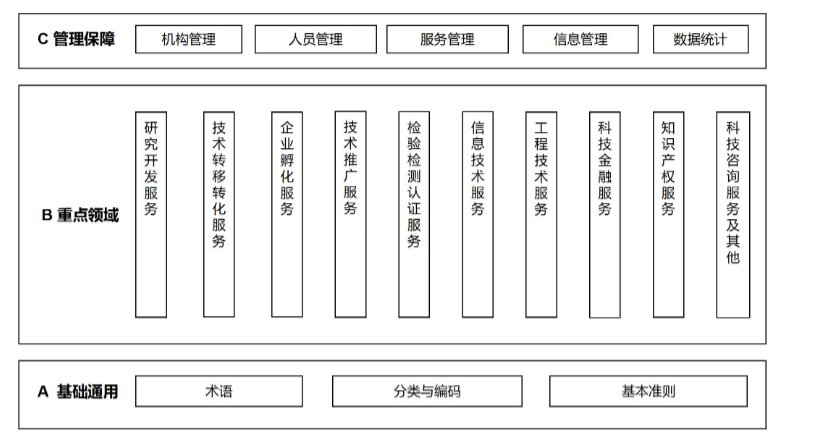
Core Viewpoint - The Ministry of Industry and Information Technology, along with other departments, has issued the "Guidelines for the Construction of the Standard System for the Technology Service Industry (2025 Edition)" to support and lead the high-quality development of the technology service industry [1] Group 1: Overview of the Technology Service Industry - The technology service industry utilizes modern scientific knowledge and technology to provide intellectual services, focusing on the entire chain of technological innovation and efficient transformation of technological achievements [1] - Key services in this industry include research and development services, technology transfer services, enterprise incubation services, technology promotion services, inspection and certification services, information technology services, engineering technology services, technology finance services, intellectual property services, and technology consulting [1] Group 2: Standard System Development Goals - By 2027, the goal is to establish over 40 new national and industry standards for the technology service industry, creating a preliminary standard system that meets high-quality development needs and engaging over 1,000 enterprises in standard implementation [1] - By 2030, the aim is to develop over 80 new national and industry standards, achieving a basic standard system that effectively serves the technology service industry [1] Group 3: Structure of the Standard System - The standard system consists of three parts: basic general standards, key area standards, and management assurance standards [2] - Basic general standards provide foundational technical and requirement guidelines for the technology service industry, while key area standards focus on specific service areas, forming the core of the standard system [2] - Management assurance standards regulate service processes and risk control requirements, providing management and support for the technology service industry [2] Group 4: Implementation and Support - The Ministry of Industry and Information Technology will enhance collaboration among standardization technical organizations and coordinate efforts across industry, academia, research, and application to develop standards that meet industry needs [2] - There will be an emphasis on building a skilled workforce and supporting standardization organizations and professional institutions in training to improve the capabilities of standardization personnel [2]
五部门:到2027年 新制定科技服务业国家标准和行业标准40项以上
智通财经网· 2026-02-10 01:56
Core Viewpoint - The Ministry of Industry and Information Technology, along with other governmental bodies, has issued a notification regarding the "Guidelines for the Construction of the Standard System for the Technology Service Industry (2025 Edition)", aiming to enhance the standardization of the technology service industry and support its high-quality development by establishing a comprehensive standard system by 2030 [1][2][4]. Group 1: Current Development of the Technology Service Industry - The technology service industry is a new sector that provides intellectual services based on modern scientific knowledge and technology, focusing on the entire chain of technological innovation and efficient transformation of technological achievements [5]. - The industry has seen rapid growth in recent years, with new service entities emerging and service formats diversifying, making it a crucial aspect of global technological competition [5]. Group 2: Overall Requirements - The guidelines emphasize a systematic approach, innovation-driven strategies, and open cooperation to promote the formulation, implementation, and internationalization of standards in the technology service industry [6]. - By 2027, over 40 national and industry standards will be established, targeting more than 1,000 enterprises for standard implementation, with a goal of 80 standards by 2030 [6]. Group 3: Construction Ideas - The standard system structure includes three parts: basic general standards, key area standards, and management assurance standards [7]. - Basic general standards will provide foundational support for other standards, while key area standards will focus on specific service domains such as research and development, technology transfer, and consulting services [7]. Group 4: Construction Content - Basic general standards will cover terminology, classification and coding, and basic principles to support standardization activities [11][12]. - Key area standards will address various services including research and development, technology transfer, enterprise incubation, and technology promotion, among others [13][14][15][16][17][18][19][20][21][22][23][24]. - Management assurance standards will regulate aspects such as organizational management, personnel management, service management, information management, and data statistics [25][26][27][28][29][30]. Group 5: Organizational Implementation - The guidelines call for enhanced coordination among standardization organizations and collaboration across academia, industry, and research to develop standards that meet industry needs [31]. - There will be a focus on promoting and training for key standards, guiding enterprises to meet these standards, and fostering international cooperation in standardization activities [31].
2025年朝阳区实现地区生产总值9668.5亿元
Bei Jing Ri Bao Ke Hu Duan· 2026-02-09 05:13
Economic Overview - Chaoyang District achieved a GDP of 966.85 billion yuan in 2025, with a year-on-year growth of 5.2% in real terms [3] - The total retail sales of social consumer goods reached 260.03 billion yuan, with online retail sales in accommodation and catering amounting to 77.12 billion yuan, reflecting a year-on-year growth of 15.5% [4] Key Industries and Leading Enterprises - The financial sector contributed an added value of 181.33 billion yuan, growing by 14.3% year-on-year, accounting for nearly 20% of the district's GDP [4] - The top ten enterprises in sectors such as leasing, business services, information services, and transportation achieved revenue growth rates significantly higher than the city averages, with contributions to their respective sectors reaching 95.3%, 84.8%, 91.4%, and 123.6% [4] Innovation and R&D Dynamics - The number of high-tech and specialized enterprises increased, with revenues growing by 4.6% and 4.5% respectively, while AI enterprises saw an 11.5% revenue increase [7] - R&D expenses grew by 3.0%, and technology revenue increased by 12.9%, making up 36.2% of total revenue, which is 7.8 percentage points higher than the city average [8] Investment and Foreign Capital - Total construction and equipment investment accounted for over half of the district's investments, with an 8.7% year-on-year growth [10] - In 2025, 533 new foreign-funded enterprises were established, marking a 14.4% increase, with actual foreign capital utilization reaching 2.13 billion USD, a 33.9% increase [11]

河北望都:直播聚势 好物出圈
Sou Hu Cai Jing· 2026-02-05 15:16
Group 1 - The core idea of the news is the launch of a live-streaming event in Wangdu County, Hebei Province, aimed at promoting local specialty products during the Spring Festival shopping season [1][2] - The live-streaming event is themed "Experience Wangdu's Specialties, Purchase New Year Gifts," leveraging the advantages of multimedia communication and professional operation to create a collaborative live-streaming matrix [2] - Eight live-streaming rooms were established, each focusing on different aspects of local products, including agricultural products, intangible cultural heritage crafts, and processed foods, ensuring quality and meeting consumer demand for the New Year [2] Group 2 - The live-streaming hosts act as local product ambassadors, using regional dialects and professional explanations to promote Wangdu's specialties, which has led to increased viewer engagement and order volume [2] - This initiative represents a successful integration of media, agriculture, and culture, broadening the sales channels for local products and enhancing the brand influence of Wangdu [2] - Following the "media + industry" approach, Wangdu County has improved live-streaming support services and trained a team of hosts, creating a comprehensive communication matrix to assist farmers [2]

朝阳区科技服务业核心引领作用凸显 实现“拉动力、贡献率”双第一
Sou Hu Wang· 2026-02-04 10:37
Core Insights - Chaoyang District's technology service industry shows strong growth, becoming a key driver for Beijing's technological innovation and industrial upgrading [1] - The "business + technology" dual-drive strategy has proven effective, injecting strong momentum into high-quality industrial development [1] Growth Performance - From January to November 2025, Chaoyang District's technology service industry revenue growth reached 10.5%, surpassing the city's average growth rate by 5.2 percentage points, ranking first among the six urban districts [1] - Chaoyang directly contributed 2.5 percentage points to the city's technology service revenue growth, accounting for 54.4% of the total revenue increase, indicating that it contributed more than half of the city's revenue growth [1] Strategic Importance - As a crucial part of Beijing's international technology innovation center, the high growth and contribution of Chaoyang's technology service industry reflect the continuous enhancement of the district's industrial capacity [1] - The success of the "business + technology" dual-drive strategy highlights the scientific decision-making and practical value, providing solid incremental support for the high-quality development of the city's technology service industry [1]