人工智能+绿色消费

Search documents
9部门发文!中国实施绿色消费推进行动
Xin Hua She· 2026-01-06 00:36
Core Viewpoint - The new trend of green consumption is reshaping lifestyles and promoting sustainable practices across various sectors, driven by a recent initiative from the Ministry of Commerce and nine other departments to advocate for green consumption and low-carbon production methods [1] Group 1: Food Sector - The initiative emphasizes increasing the supply of green agricultural products and developing green dining options, encouraging businesses to procure high-quality items such as organic and geographical indication products [2][3] - It aims to reduce cooking oil emissions, curb food waste, and promote the use of biodegradable and reusable packaging in the food service industry [3] Group 2: Housing Sector - The initiative encourages the purchase of green-certified smart home appliances and eco-friendly building materials, focusing on sustainable and intelligent home solutions [4][5] - It promotes the establishment of green hotels that utilize non-toxic, water-saving cleaning agents and offer refillable toiletries, while also innovating in health-oriented room services [5] Group 3: Transportation Sector - The initiative supports the automotive industry by promoting the replacement of old vehicles with new energy vehicles, which now account for nearly 60% of the market, and encourages cycling as a new trend in tourism [7] - It aims to enhance the automotive aftermarket, including second-hand cars, rentals, and shared mobility services, while advocating for the integration of AI in green consumption practices [7] Group 4: Recycling and Second-hand Market - The initiative promotes green recycling practices and the circulation of second-hand goods, encouraging retailers to provide reusable shopping options and e-commerce platforms to collaborate with logistics for sustainable packaging [8][9] - It outlines the establishment of a three-tier recycling system and encourages the creation of second-hand shops to maximize the value of idle goods, while also addressing the need for standardized green product certifications [9]
吃穿住行用 处处“绿意”浓
Xin Lang Cai Jing· 2026-01-05 22:50
Core Viewpoint - The Chinese government is promoting green consumption through a series of initiatives aimed at fostering sustainable production and lifestyle choices across various sectors, including food, housing, transportation, and recycling [1]. Group 1: Food Sector - The initiative emphasizes increasing the supply of green agricultural products and encourages businesses to procure high-quality items such as organic and geographical indication products [3]. - It aims to reduce food waste by promoting practices like "small portion meals" and the use of biodegradable packaging in the food service industry [3]. Group 2: Housing Sector - The promotion of green living includes encouraging the purchase of certified green appliances and eco-friendly building materials [5]. - The initiative also supports the development of green hotels that utilize non-toxic cleaning agents and provide refillable toiletries instead of single-use plastics [5][6]. Group 3: Transportation Sector - The initiative highlights the growth of the automotive industry, particularly the rise of new energy vehicles, which now account for nearly 60% of the market since the implementation of vehicle replacement policies [7]. - It encourages the exploration of the "aftermarket" potential in areas like used cars, rentals, and shared mobility services, while advocating for the integration of technology to enhance resource efficiency [7]. Group 4: Recycling and Second-hand Market - The initiative promotes a circular economy by encouraging retailers to offer reusable shopping bags and supporting the establishment of a three-tier recycling system [8]. - It also advocates for the development of second-hand markets and the establishment of stores that focus on the resale of used goods, aiming to maximize the value of idle items [8].
商务部等九部门出台关于实施绿色消费推进行动的通知 支持符合条件的项目发行基础设施REITs
Zhong Guo Zheng Quan Bao· 2026-01-05 20:46
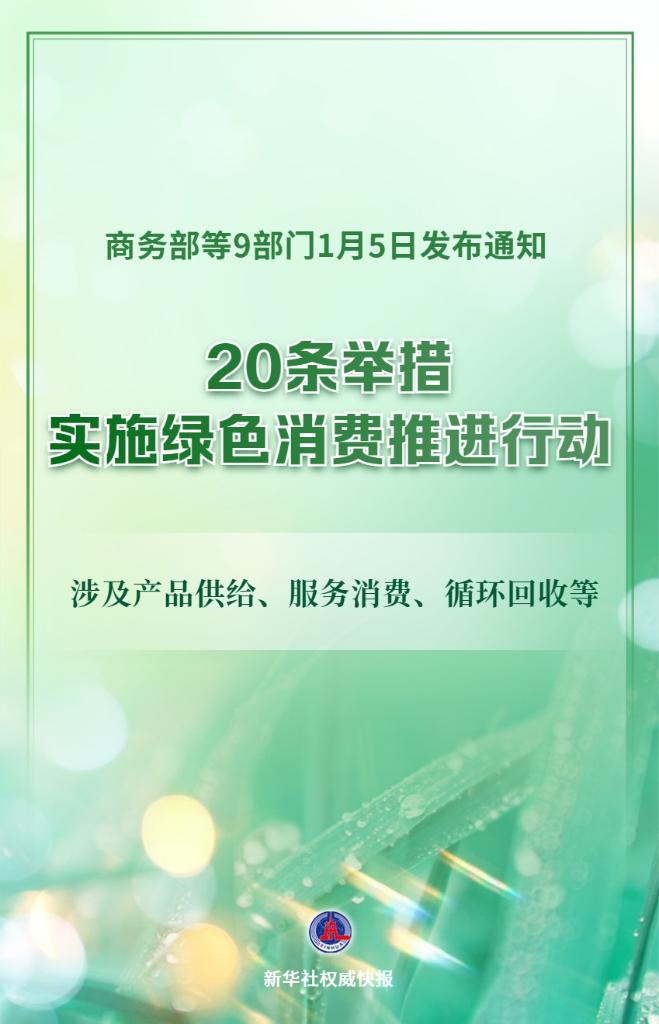
Core Viewpoint - The Ministry of Commerce and nine other departments have jointly issued a notice to promote green consumption, outlining 20 specific measures across seven areas to support the development of a green economy and society during the 14th Five-Year Plan period [1]. Group 1: Green Consumption Infrastructure - Establish a project library for green consumption infrastructure and regularly recommend quality projects to financial institutions [1]. - Support qualified projects to issue Real Estate Investment Trusts (REITs) in the infrastructure sector [1]. Group 2: Promotion of Green Products - Encourage the purchase of new energy vehicles and enhance the automotive industry chain, including the second-hand car market and car-sharing services [2]. - Promote green home appliances and home decoration by encouraging the purchase of certified green products and improving energy and water efficiency standards [2]. - Increase the supply of green agricultural products by encouraging enterprises to expand procurement of organic and high-quality agricultural products [2]. Group 3: Innovation in Green Consumption Models - Promote the integration of artificial intelligence with green consumption to innovate smart products and enhance resource utilization through advanced technology [2]. Group 4: Policy Support and Financial Incentives - Strengthen policy integration by linking green consumption initiatives with modern commerce and retail innovations [3]. - Encourage financial institutions to increase support for green consumption loans and provide convenient services for users with good records [3]. - Innovate financial products to offer insurance for green consumption and establish a project library for green consumption infrastructure [3].
支持符合条件的项目发行基础设施REITs
Zhong Guo Zheng Quan Bao· 2026-01-05 20:05
Core Viewpoint - The Ministry of Commerce and nine other departments have jointly issued a notice to promote green consumption, outlining 20 specific measures across seven areas to support the development of a green economy and society. Group 1: Green Consumption Initiatives - The notice proposes the establishment of a green consumption infrastructure project library to regularly recommend quality projects to financial institutions [1] - It supports the issuance of Real Estate Investment Trusts (REITs) for eligible projects in the infrastructure sector [1] - The Ministry of Commerce will guide localities in implementing green consumption initiatives and summarizing successful practices to further expand green consumption [1] Group 2: Promotion of Green Products - The notice emphasizes promoting green consumption in the automotive sector, supporting the purchase of new energy vehicles, and exploring the potential of the second-hand car market and new consumption models like RV camping and car-sharing [1] - It encourages the purchase of certified green smart home appliances and green building materials, focusing on energy efficiency and sustainability [1] Group 3: Green Agricultural Products - The initiative encourages enterprises to expand the procurement of green food, organic products, and geographical indication products, and to establish dedicated sales areas for these products [2] - It promotes direct sourcing activities between green agricultural production bases and large supermarkets or restaurants to increase market supply [2] Group 4: Innovation in Green Consumption Models - The notice advocates for the integration of artificial intelligence with green consumption to innovate smart products and enhance resource utilization through advanced technology [2] - It calls for stronger policy integration to support green consumption initiatives alongside modern commerce and retail innovations [2] Group 5: Financial Support for Green Consumption - The notice encourages financial institutions to increase support for green consumption loans and to provide convenient services for users with good green consumption records [2] - It promotes the development of insurance products for green consumption and the establishment of a project library for green consumption infrastructure [3]
中国实施绿色消费推进行动
Xin Lang Cai Jing· 2026-01-05 18:44
Core Viewpoint - The Chinese government, through the Ministry of Commerce and nine other departments, has launched a green consumption promotion initiative aimed at fostering a sustainable low-carbon lifestyle and production methods across various sectors [1]. Group 1: Food Sector - The initiative emphasizes increasing the supply of green agricultural products and encourages businesses to expand their procurement of high-quality goods such as organic and geographical indication products [3]. - It aims to reduce cooking oil emissions, curb food waste, and promote the use of biodegradable and reusable packaging in the food service industry [3]. Group 2: Housing Sector - The initiative encourages the purchase of green-certified smart home appliances and eco-friendly building materials, focusing on sustainable and intelligent home solutions [5]. - It promotes the development of green hotels that utilize non-toxic, water-saving cleaning agents and offer refillable toiletries instead of single-use plastic items [5]. Group 3: Transportation Sector - The initiative supports the automotive industry by promoting the replacement of old vehicles with new energy vehicles, which currently account for nearly 60% of the market [7]. - It encourages the exploration of the second-hand car market, car rentals, and shared mobility services, highlighting the role of technology in enhancing resource efficiency [7]. Group 4: Recycling and Second-hand Market - The initiative promotes a circular economy by encouraging retailers to provide reusable shopping bags and collaborating with e-commerce platforms for sustainable packaging solutions [9]. - It outlines the establishment of a three-tier recycling system and encourages the creation of second-hand shops to maximize the value of idle goods [9]. - The initiative also addresses the need for standardized green product certifications and the regulation of the second-hand market to enhance consumer trust and market efficiency [9].
新华鲜报丨9部门发文!中国实施绿色消费推进行动
Xin Hua Wang· 2026-01-05 08:30
Core Viewpoint - The Chinese government, through nine departments including the Ministry of Commerce, has launched a green consumption promotion initiative aimed at fostering a green, low-carbon lifestyle and production methods across various sectors [1]. Group 1: Food Sector - The initiative emphasizes increasing the supply of green agricultural products and promoting green dining practices [3][4]. - It encourages businesses to procure high-quality products such as organic and geographical indication agricultural products, while also advocating for reduced cooking oil emissions and the use of biodegradable packaging [4]. Group 2: Housing Sector - The initiative promotes the purchase of green-certified smart home appliances and eco-friendly building materials [5][6]. - It encourages the development of green hotels that utilize non-toxic, water-saving cleaning agents and provide refillable toiletries, while also innovating in health-oriented guest services [6]. Group 3: Transportation Sector - The initiative aims to strengthen the automotive industry by exploring the potential of the second-hand car market and promoting new consumption models such as RV camping and car-sharing [8]. - It highlights the importance of technology in supporting green consumption through smart products and resource optimization [8]. Group 4: Recycling and Second-hand Market - The initiative promotes green recycling practices and encourages retailers to offer reusable shopping options [9]. - It outlines the establishment of a three-tier recycling system and supports the development of second-hand shops to enhance the value of idle goods [9]. Group 5: Challenges and Future Outlook - The initiative acknowledges existing shortcomings in the green consumption market, such as the lack of unified standards and regulations in the second-hand market [10]. - It aims to align domestic green consumption standards with international ones, fostering deeper integration and cooperation in standardization [10].