人工智能音乐创作

Search documents
又一起“打不过就加入”,传统音乐行业被AI逼入墙角,起诉了SUNO的华纳、环球正寻求和解合作
3 6 Ke· 2026-02-26 12:47
Core Insights - The article discusses the impact of generative artificial intelligence (AI) on the music industry, highlighting the ease of music creation through AI tools and the ensuing legal and ethical controversies surrounding copyright and creator rights [2][4][10]. Group 1: Industry Dynamics - In 2024, major music companies Sony Music, Universal Music, and Warner Music filed copyright infringement lawsuits against AI music startups Suno and Udio, accusing them of using copyrighted recordings without authorization for training AI models [3]. - The lawsuits represent a systematic pushback from the traditional music industry against AI technologies, questioning the legality of using copyrighted music for AI training [4][10]. - The current copyright framework is built around human creators, and the involvement of AI disrupts this framework, raising questions about whether AI-generated content should be classified as "learning" or "copying" [4][10]. Group 2: Legal and Ethical Issues - The concept of "fair use" is central to the debate, with Suno's CEO claiming that their data comes from high-quality music available on the open internet, while the recording industry argues that this usage does not meet fair use criteria [4]. - A recent case involving the AI-generated song "I RUN" illustrates the complexities of copyright issues, as the song was removed from platforms after accusations of unauthorized use of another artist's work [5][10]. - The rise of AI-generated music has led to concerns among professional musicians about the potential erosion of their rights and the lack of transparency in how AI companies utilize their intellectual property [10]. Group 3: Company Strategies - Suno positions itself as a potential disruptor in the music industry, aiming to lower barriers to music creation and encourage public participation in music-making [6]. - Udio adopts a more cautious approach, emphasizing collaboration with creators rather than positioning itself as a revolutionary force [8]. - Both companies are adapting to industry pressures, with Suno's valuation reaching $2.45 billion and attracting nearly 100 million users, while over one-third of new uploads on platforms like Deezer are AI-generated [8][9]. Group 4: Future Outlook - Major music companies are shifting from litigation to collaboration, with Warner Music and Udio reaching settlements to develop legally compliant AI music platforms [9]. - The ongoing evolution of AI in music creation raises questions about the future of creator rights and the quality control of AI-generated content [21]. - The interaction between technological advancement and legal frameworks will continue to shape the future of AI music, with potential changes in regulations anticipated by 2027 [20][21].


昆仑万维发布Mureka V8音乐大模型
Di Yi Cai Jing· 2026-01-28 13:32
Core Insights - Kunlun Wanwei Group announced the official release of the Mureka V8 music model on January 28, which enhances multiple key dimensions such as musicality, arrangement completeness, vocal expression, and overall sound quality, marking a shift from "generable" to "publishable" AI music [1] Group 1 - The Mureka V8 model achieves simultaneous improvements in music quality and production capabilities [1] - Future plans include the launch of AI Studio, aimed at providing advanced creators with a more comprehensive and controllable music creation environment [1] - AI Studio will support deeper editing, structural adjustments, and creative management, integrating AI into professional creative processes [1]

AI能秒产上千种旋律,只缺人类一个好故事
Huan Qiu Wang Zi Xun· 2025-12-03 02:52
Core Insights - The emergence of AI artist Saniya Monet marks a significant milestone as the first AI artist to reach the Billboard Adult R&B radio chart based on radio play, highlighting the growing acceptance and commercial potential of AI in the music industry [1] - The rapid rise of AI artists in charts indicates a shift in music creation, suggesting that AI is not intended to replace human artists but to expand the boundaries of musical expression [1][9] Group 1: AI Artist Development - Saniya Monet represents a new wave of AI artists driven by generative AI, differing from previous voice bank tools like Hatsune Miku [2] - The creator, Teresa Niki Jones, utilized AI to fulfill her unachieved musical dreams, showcasing a personal emotional foundation in her music creation [2][3] Group 2: Creative Process - The songwriting process involves inputting personal poetry into the AI platform Suno, which then generates melodies and arrangements based on detailed prompts [3] - The collaboration between human creativity and AI execution transforms the creative process into a dialogue, where human input guides AI to produce music that resonates emotionally [4][6] Group 3: Emotional Resonance - The song "How was I supposed to know" draws inspiration from Teresa's personal loss, emphasizing the authenticity of the lyrics and their emotional impact on listeners [4] - The AI's ability to misinterpret prompts can lead to unexpected creative outcomes, enriching the emotional depth of the music [5][6] Group 4: Industry Implications - AI's capacity to produce music rapidly reflects the challenges within the music industry, such as formulaic production and emotional detachment [7] - The commercial success of AI artists, exemplified by a $3 million record deal, indicates a recognition of their unique storytelling potential in a market saturated with repetitive content [8] Group 5: Future of Music Creation - AI is seen as both a mirror reflecting industry challenges and a window opening new creative possibilities, allowing for a redefinition of music creation roles [8][9] - The coexistence of AI and human artists is anticipated to evolve into a symbiotic relationship, where AI enhances efficiency while human artists focus on emotional depth and unique storytelling [9]
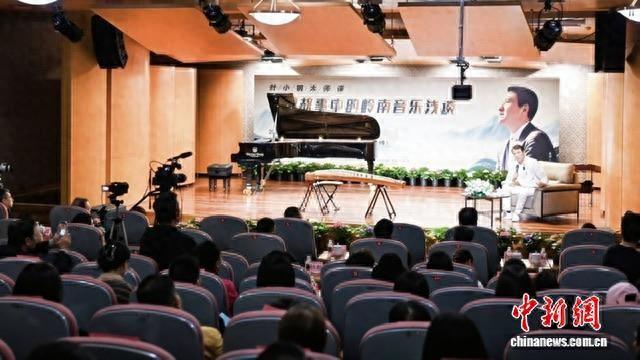
中国音协主席叶小钢:岭南音乐是中国故事的生动载体
Zhong Guo Xin Wen Wang· 2025-11-24 14:09
Core Viewpoint - The lecture by Ye Xiaogang emphasizes the significance of Lingnan music as a cultural treasure and a vibrant carrier of Chinese stories, highlighting its historical evolution and contemporary innovation [1][3]. Group 1: Event Overview - The master class held at the Pearl River Piano Dream Garden featured live performances and discussions, exploring the historical changes and innovations in Lingnan music [3]. - The event is part of a broader initiative to promote cultural exchange and artistic development in the Greater Bay Area, organized by the Guangzhou Pearl River Piano Group, Ye Xiaogang's studio, and the Guangdong Musicians Association [3]. Group 2: Cultural Significance - Ye Xiaogang, a renowned composer and music educator, has dedicated years to the creation and promotion of modern music, emphasizing the openness and inclusiveness of Cantonese, Chaozhou, and Hakka music as reflections of the diverse nature of Chinese culture [3][4]. - The unique geographical and cultural genes of Lingnan music, influenced by the migration of Han people and local maritime culture, provide endless creative inspiration for contemporary composers [3]. Group 3: Innovation and Tradition - Ye Xiaogang advocates for finding connections between tradition and modernity, encouraging young musicians to integrate Lingnan music elements with popular music and film scores [4]. - He emphasizes the importance of preserving traditional forms like Cantonese opera while embracing innovation and modern techniques, including artificial intelligence, to revitalize Lingnan music [4].
《技能五子棋》血洗全网,加入AI好好玩,要爆了
36氪· 2025-10-12 02:08
Core Viewpoint - The article discusses the rise of AI-generated music, highlighting how platforms and tools are democratizing music creation, allowing non-professionals to produce songs easily and quickly, exemplified by the viral song "Skills Gobang" [6][12][21]. Group 1: AI Music Creation Tools - Various AI music creation platforms have emerged, such as Suno, which offers high-quality sound and detailed emotional expression, and Udio, which allows for style transfer in music [13]. - AIVA, an established AI music generator, uses mathematical models based on classical composers to create music, and has gained recognition from major companies [13]. - Domestic platforms like ByteDance's Sponge Music and Kunlun Wanwei's SkyMusic cater to the Chinese market, providing comprehensive music creation services [13]. Group 2: Case Studies of AI Music Success - The song "Seven Days Lover" gained popularity after being created by a programmer using AI tools, demonstrating the potential for non-musicians to succeed in music creation [16]. - The creator of "Seven Days Lover" capitalized on its success by launching a series of similar songs, although subsequent releases did not achieve the same level of popularity [16][20]. - The viral nature of AI-generated songs often stems from their catchy and simple melodies, making them suitable for short video platforms [20]. Group 3: Controversies and Challenges - The rise of AI-generated music has led to debates about copyright and competition, with some traditional musicians questioning the legitimacy of AI-assisted creations [20]. - Despite claims of proper copyright attribution, the creator of "Seven Days Lover" faced scrutiny and legal inquiries from music associations [20]. - The article emphasizes that while AI can help materialize creative ideas, the essence of music lies in the emotional connection it creates with listeners [21].