
人民币国际化结算

Search documents
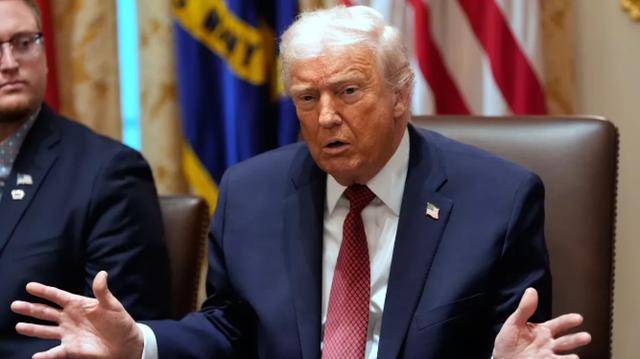
不许买俄油!特朗普祭出3招,连续点名中国,是时候该算总账了
Sou Hu Cai Jing· 2026-01-11 03:30
Group 1 - The core viewpoint of the article is that Trump's administration is implementing aggressive measures to control global oil markets, particularly targeting Russia and its major clients, China and India, to undermine Russia's economy and redirect oil trade to the U.S. [1][3] - Trump has approved a bill to impose sanctions on countries purchasing Russian oil, with China and India being the primary targets, as they account for nearly 90% of Russia's oil exports [1][3] - The U.S. aims to cut off Russia's economic lifeline by pressuring its clients, thereby reducing funding for Russia's military actions and benefiting U.S. interests in the global oil market [3][5] Group 2 - The U.S. is also pressuring Venezuela to sever economic ties with Russia and China, effectively making its oil exports reliant on U.S. cooperation, thus allowing the U.S. to control the production and revenue from Venezuelan oil [5][7] - The U.S. has seized multiple oil tankers involved in trade with Venezuela, asserting control over oil shipments and demanding that Venezuela redirect its oil sales to the U.S. [5][7] - The ultimate goal of these strategies is to establish systemic control over global oil resources and wealth distribution, reinforcing U.S. dominance in the energy sector [7][12] Group 3 - China has responded firmly against U.S. sanctions, emphasizing its commitment to normal economic cooperation with Russia and Venezuela, and asserting its rights to protect its interests [7][10] - China holds significant leverage as the largest energy importer, which could challenge U.S. attempts to dictate oil trade dynamics [10][12] - Additionally, China possesses critical resources and technologies, particularly in rare earth elements, which are essential for high-end manufacturing and defense technologies, providing it with a strategic advantage in the energy sector [10][12]

国际航协清算所新增人民币作为结算货币
Xin Hua Cai Jing· 2025-11-05 04:14
Core Viewpoint - The International Air Transport Association (IATA) announced the addition of the Chinese Yuan (RMB) as a settlement currency for its Clearing House (ICH), set to launch in December 2025, following a trial phase [1][2] Group 1: Currency Addition and Benefits - The RMB settlement option will significantly benefit airlines operating in China by reducing exchange rate risks and simplifying local supplier access processes, leading to cost reductions and efficiency improvements [1] - China Southern Airlines and Xiamen Airlines will be the first to pilot the RMB settlement in November 2025 [1] - The IATA Clearing House currently supports seven currencies, including USD, EUR, GBP, CHF, SGD, AUD, and JPY, with a settlement amount projected to reach $63.8 billion in 2024 [1] Group 2: Industry Response - The Chief Accountant of China National Aviation Holding Company expressed support for the RMB settlement option, highlighting it as a positive development for the Chinese aviation industry [1] - The IATA's Senior Vice President of Products and Services noted that the introduction of RMB settlement is a crucial step in enhancing financial services for member airlines without incurring additional costs [2] - There has been a positive market response to the new settlement option, indicating strong demand for improved financial services within the industry [2]