人身攻击谬误

Search documents
20种常见的逻辑谬误及其识别方法
3 6 Ke· 2025-10-08 23:08
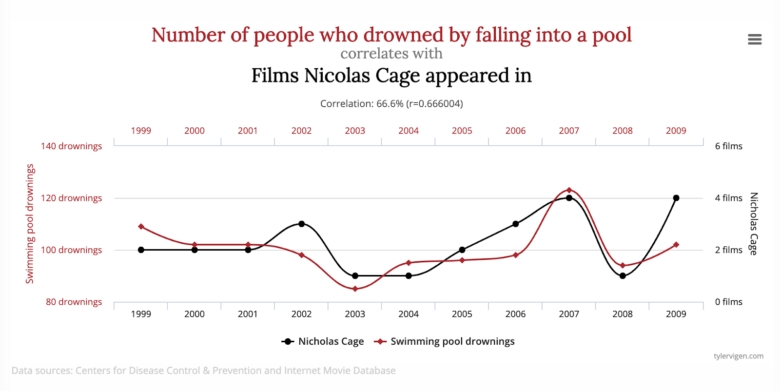
Core Points - The article discusses 20 common logical fallacies and their identification methods, emphasizing the importance of recognizing these fallacies to construct more rigorous arguments [1]. Group 1: Types of Logical Fallacies - Ad Hominem Fallacy: This occurs when the argument is directed against the person rather than the position they are maintaining [2]. - Appeal to Authority Fallacy: This fallacy arises when someone cites an authority figure's opinion without substantial evidence to support the argument [4]. - Appeal to Emotion Fallacy: This involves attempting to win an argument by appealing to emotions rather than facts or logic [6]. - Appeal to Ignorance Fallacy: This fallacy claims something is true simply because it has not been proven false [7]. - Bandwagon Fallacy: This assumes that if many people believe something, it must be true, regardless of the actual evidence [8]. - Causal Fallacy: This occurs when a correlation between two events is mistaken for a cause-and-effect relationship [9]. - Circular Reasoning: This fallacy uses the conclusion as a premise, creating a loop in reasoning [11]. - Post Hoc Fallacy: This involves assuming that because one event follows another, the first event must have caused the second [12]. - False Dichotomy Fallacy: This presents only two options when more exist, oversimplifying the situation [15]. - Ambiguity Fallacy: This uses vague or double meanings to mislead or distort the truth [17]. - Composition Fallacy: This assumes that what is true for a part is also true for the whole [18]. - Division Fallacy: This assumes that what is true for the whole must also be true for its parts [20]. - Gambler's Fallacy: This is the belief that past random events affect future random events [22]. - Genetic Fallacy: This assumes that the origin of a person or idea determines its value or truth [24]. - Hasty Generalization Fallacy: This involves making a conclusion based on insufficient evidence [26]. - Loaded Question Fallacy: This contains a presupposition that leads to a predetermined conclusion [28]. - Red Herring Fallacy: This diverts attention from the main issue by introducing a related topic [29]. - Straw Man Fallacy: This simplifies or misrepresents an opponent's argument to make it easier to attack [31]. - Sunk Cost Fallacy: This involves continuing a behavior or endeavor due to previously invested resources [33]. - Slippery Slope Fallacy: This suggests that a small first step will lead to a chain of related events culminating in a significant impact [34].
最常见的十大逻辑谬误
3 6 Ke· 2025-10-04 00:02
Core Points - The article discusses the ten most common logical fallacies, providing definitions, examples, and methods to avoid them [1]. Group 1: Straw Man Argument - The straw man argument occurs when a debater distorts the opponent's position by replacing it with a fabricated version, making it easier to attack [2]. - This fallacy prevents effective debate as the actual argument is not addressed [2][3]. - To avoid this fallacy, ensure accurate understanding of the opponent's position and confirm it through restatement [4]. Group 2: Begging the Question - Begging the question involves using premises as conclusions without additional explanation, leading to a circular argument [5][6]. - The argument remains at the premise level and does not advance [6]. - To avoid this, ensure that the conclusion is not merely a repetition of the premise [9]. Group 3: Ad Hominem Argument - The ad hominem argument attacks the individual rather than their argument, often seen in political debates [10][11]. - This fallacy ignores the content of the argument itself [12]. - To avoid this, focus on the argument rather than personal characteristics [13]. Group 4: Post Hoc Fallacy - The post hoc fallacy occurs when a causal relationship is inferred from the sequence of events without understanding the underlying mechanisms [14]. - Simply observing event sequences does not establish causation [15]. - To avoid this, critically assess whether the true causal relationship is understood before making judgments [16]. Group 5: Loaded Question - A loaded question embeds a presupposed conclusion within the question itself, creating a biased response [17]. - An example includes questions that imply guilt regardless of the answer [18]. - These questions are often designed intentionally and can be avoided easily [20]. Group 6: False Dichotomy - The false dichotomy presents only two options when more exist, limiting the debate unfairly [21][22]. - This strategy aims to force a choice between two outcomes [22]. - To avoid this, consider whether all possible options have been explored before narrowing down choices [25]. Group 7: Equivocation - Equivocation involves misleading language that obscures the truth or avoids commitment to a position [26]. - This fallacy manipulates language to mislead the audience [27]. - To avoid this, maintain consistent meanings of words throughout the argument [29]. Group 8: Appeal to Authority - The appeal to authority fallacy relies on the authority of an individual rather than the substance of the argument [30]. - Just because an expert states something does not make it true [30]. - To avoid this, do not use authority as the sole basis for validating a claim [32]. Group 9: Hasty Generalization - Hasty generalization occurs when a conclusion is drawn from insufficient evidence [33]. - The lack of a recognized sample size standard complicates this fallacy [34]. - To avoid this, examine the nature and size of evidence before making assertions [36]. Group 10: Argumentum ad Populum - The argumentum ad populum fallacy asserts that a claim is true because many people believe it [37]. - This reasoning is flawed as popular belief can be based on misinformation [38]. - To avoid this, independently evaluate the validity of the argument rather than relying on majority opinion [39].
这8个常见的逻辑谬误,会让我们陷入思维困境
3 6 Ke· 2025-06-02 00:05
Core Points - The article discusses common logical fallacies that can distort reasoning and decision-making processes [4][35] - It emphasizes the importance of recognizing these fallacies to improve critical thinking and logical reasoning skills [35] Group 1: Common Logical Fallacies - Correlation does not imply causation, highlighting that simultaneous occurrences do not necessarily indicate a cause-and-effect relationship [5][10] - The slippery slope fallacy exaggerates the consequences of an action, leading to irrational conclusions [14][15] - False dichotomies present limited choices, ignoring the existence of other possibilities [17][19] Group 2: Additional Fallacies - Begging the question involves using an unproven assumption to support an argument, leading to circular reasoning [20][21] - Red herrings divert attention from the main argument, often used to mislead or distract [23][25] - Appeals to authority, pity, or popularity can manipulate opinions without logical basis [26][28] Group 3: Impact of Logical Fallacies - The prevalence of logical fallacies in everyday reasoning can lead to poor decision-making and misunderstanding of issues [3][35] - Recognizing and addressing these fallacies is crucial for achieving clarity and truth in discussions [35]