滑坡谬误

Search documents
奶茶,成瘾品和“毒品擦边”
虎嗅APP· 2026-01-03 03:13
Core Viewpoint - The article discusses the distinction between legal and illegal addictive substances, emphasizing that legality does not equate to safety, and highlights the historical context and societal acceptance of various addictive products [4][6][11]. Group 1: Legal Addictive Substances - Alcohol, tobacco, tea, and coffee are identified as the three most common legal addictive substances, which, while having similarities in addiction potential with illegal drugs, differ fundamentally in legal status, social acceptance, health impacts, and addiction mechanisms [9][16]. - Legal addictive substances are regulated to varying degrees, with alcohol and tobacco being classified as carcinogens, while caffeine, although less harmful, is also recognized as a controlled substance under certain conditions [11][19]. - The consumption of caffeine through beverages like coffee and tea is generally safe within recommended limits, but excessive intake can lead to health issues and addiction, necessitating consumer awareness and caution [13][14]. Group 2: Distinction Between Legal and Illegal Addictive Substances - Legal addictive substances are characterized by their social acceptance and regulatory frameworks, while illegal drugs are strictly prohibited due to their severe health risks and societal impacts [16][20]. - The health implications of legal substances can be managed with moderate use, whereas illegal drugs often lead to irreversible health damage and severe addiction [16][24]. - The societal roles of legal substances can facilitate social interactions, while illegal drugs typically disrupt social functions and contribute to crime and instability [16][19]. Group 3: Historical Context and Commercialization - The historical trajectory of legal addictive substances shows a pattern of acceptance and commercialization, often linked to economic activities and societal norms, which can lead to their widespread use [22][23]. - The article notes that the commercialization of addictive substances has evolved over centuries, with advancements in production and consumption methods increasing their addictive potential [22][24]. - The rise of illegal drugs is similarly tied to their commercialization and the development of more efficient consumption methods, leading to increased addiction rates [24][25]. Group 4: Future Considerations - The article warns against the potential normalization and legalization of new addictive substances, advocating for proactive measures to control existing legal substances and prevent the emergence of new ones [28][29]. - It emphasizes the importance of historical awareness in addressing addiction issues, suggesting that society must remain vigilant against the risks associated with both legal and illegal addictive substances [27][28].


20种常见的逻辑谬误及其识别方法
3 6 Ke· 2025-10-08 23:08
Core Points - The article discusses 20 common logical fallacies and their identification methods, emphasizing the importance of recognizing these fallacies to construct more rigorous arguments [1]. Group 1: Types of Logical Fallacies - Ad Hominem Fallacy: This occurs when the argument is directed against the person rather than the position they are maintaining [2]. - Appeal to Authority Fallacy: This fallacy arises when someone cites an authority figure's opinion without substantial evidence to support the argument [4]. - Appeal to Emotion Fallacy: This involves attempting to win an argument by appealing to emotions rather than facts or logic [6]. - Appeal to Ignorance Fallacy: This fallacy claims something is true simply because it has not been proven false [7]. - Bandwagon Fallacy: This assumes that if many people believe something, it must be true, regardless of the actual evidence [8]. - Causal Fallacy: This occurs when a correlation between two events is mistaken for a cause-and-effect relationship [9]. - Circular Reasoning: This fallacy uses the conclusion as a premise, creating a loop in reasoning [11]. - Post Hoc Fallacy: This involves assuming that because one event follows another, the first event must have caused the second [12]. - False Dichotomy Fallacy: This presents only two options when more exist, oversimplifying the situation [15]. - Ambiguity Fallacy: This uses vague or double meanings to mislead or distort the truth [17]. - Composition Fallacy: This assumes that what is true for a part is also true for the whole [18]. - Division Fallacy: This assumes that what is true for the whole must also be true for its parts [20]. - Gambler's Fallacy: This is the belief that past random events affect future random events [22]. - Genetic Fallacy: This assumes that the origin of a person or idea determines its value or truth [24]. - Hasty Generalization Fallacy: This involves making a conclusion based on insufficient evidence [26]. - Loaded Question Fallacy: This contains a presupposition that leads to a predetermined conclusion [28]. - Red Herring Fallacy: This diverts attention from the main issue by introducing a related topic [29]. - Straw Man Fallacy: This simplifies or misrepresents an opponent's argument to make it easier to attack [31]. - Sunk Cost Fallacy: This involves continuing a behavior or endeavor due to previously invested resources [33]. - Slippery Slope Fallacy: This suggests that a small first step will lead to a chain of related events culminating in a significant impact [34].
写给产品经理:别让焦虑,毁掉你的产品
3 6 Ke· 2025-08-25 01:13
Core Insights - Anxiety can significantly impair decision-making and product development processes, particularly for B2B product managers in SaaS companies [1][2] - The article emphasizes that anxiety is not the root problem but a signal indicating the need for adjustments in product management practices [3][4] Group 1: Sources of Anxiety - The first source of anxiety is the "Schrodinger's demand" state, where conflicting customer needs arise from multiple stakeholders, leading to unclear requirements [8] - The second source is the "gear misalignment" in collaboration, where misunderstandings between product managers and development teams create operational inefficiencies [9] - The third source is the "ceiling dilemma" of capabilities, where a lack of deep industry knowledge and technical understanding leads to a cycle of confusion and inability to meet customer demands [10] Group 2: Methods to Alleviate Anxiety - Demand management can be improved through a "three-layer filtering method" to clarify core requirements, assess urgency and importance, and define boundaries for product features [11][12] - Collaboration management should adopt a "translator mindset," focusing on user scenarios rather than technical jargon to bridge the gap between technical and business teams [13] - Capability management involves developing a "T-shaped knowledge structure," where product managers gain both deep industry insights and a broad understanding of technical possibilities [14] Group 3: Action as a Solution - Taking action is presented as a key strategy to combat anxiety, as rational thinking can often be lost in stressful situations [15][20] - The article references the ABC theory by psychologist Albert Ellis, which suggests that emotional responses are influenced more by beliefs about events than the events themselves [15][16] - By questioning irrational beliefs and reframing thoughts, product managers can reduce anxiety and focus on actionable solutions [19][26] Group 4: Opportunities Hidden in Anxiety - The article concludes that moments of anxiety often signal critical points for product iteration, revealing market pain points and opportunities for growth [21][23] - Embracing anxiety as part of the product management journey can lead to clearer product visions and better solutions [22][23]
这8个常见的逻辑谬误,会让我们陷入思维困境
3 6 Ke· 2025-06-02 00:05
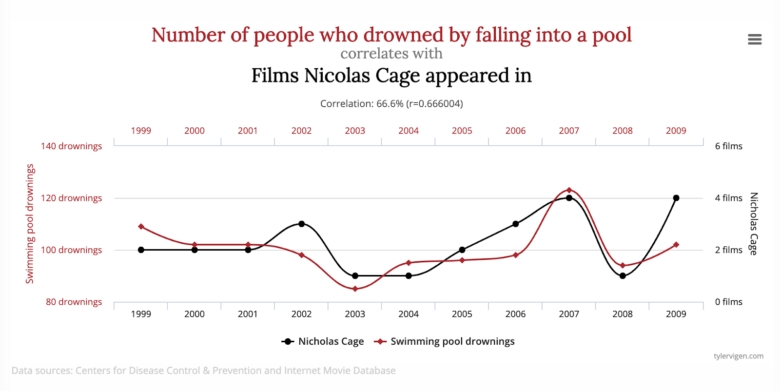
Core Points - The article discusses common logical fallacies that can distort reasoning and decision-making processes [4][35] - It emphasizes the importance of recognizing these fallacies to improve critical thinking and logical reasoning skills [35] Group 1: Common Logical Fallacies - Correlation does not imply causation, highlighting that simultaneous occurrences do not necessarily indicate a cause-and-effect relationship [5][10] - The slippery slope fallacy exaggerates the consequences of an action, leading to irrational conclusions [14][15] - False dichotomies present limited choices, ignoring the existence of other possibilities [17][19] Group 2: Additional Fallacies - Begging the question involves using an unproven assumption to support an argument, leading to circular reasoning [20][21] - Red herrings divert attention from the main argument, often used to mislead or distract [23][25] - Appeals to authority, pity, or popularity can manipulate opinions without logical basis [26][28] Group 3: Impact of Logical Fallacies - The prevalence of logical fallacies in everyday reasoning can lead to poor decision-making and misunderstanding of issues [3][35] - Recognizing and addressing these fallacies is crucial for achieving clarity and truth in discussions [35]