
以需定建

Search documents
海南出台安居房新政:坚持“以需定建”,鼓励“智能建造”
Xin Lang Cai Jing· 2026-01-01 12:11
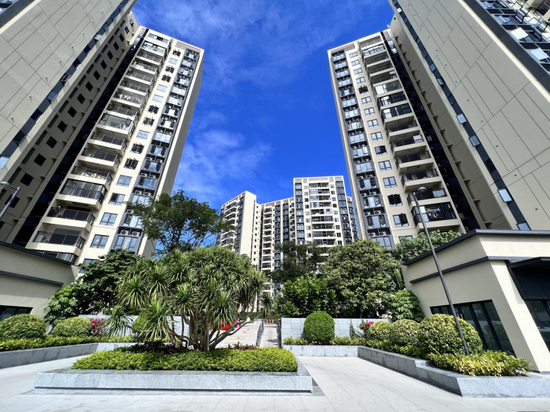
Core Viewpoint - The development of affordable housing in Hainan will transition from large-scale centralized construction to a demand-oriented supply adjustment phase starting January 1, 2026, with the implementation of the new management regulations [3][11]. Group 1: Management Regulations Overview - The new management regulations, titled "Hainan Province Affordable Housing Management Measures," consist of six chapters and forty-eight articles, serving as a specific guideline for the construction and management of affordable housing in Hainan [3][11]. - Key chapters include planning and construction regulations, application and allocation rules, and post-supply management provisions [3][11]. Group 2: Construction and Supply Management - Since 2020, Hainan has initiated over 110,000 affordable housing units, with more than 50,000 units allocated, and a remaining inventory of over 60,000 units to meet the housing needs of local residents and incoming talent [4][12]. - The new regulations emphasize a supply management approach based on demand, requiring local governments to develop annual construction plans that consider supply-demand balance [5][13]. Group 3: Quality Control and Access Conditions - The regulations mandate strict adherence to construction procedures and standards, promoting green building practices and the use of smart construction technologies to enhance the quality of affordable housing [7][15]. - Access conditions for affordable housing have been optimized to include non-local residents with valid residence permits, thereby broadening the coverage of the policy [7][15]. Group 4: Handling of Idle Housing Resources - The regulations detail the handling of idle affordable housing units, allowing for government buybacks or conversion to market housing after certain conditions are met [8][16]. - Post-supply management provisions allow homeowners to apply for full ownership of their affordable housing after five years, with a formula in place to reduce the cost based on the duration of ownership [9][18].

贝好家C2M模式重构“好房子”生长逻辑
Bei Jing Shang Bao· 2025-06-12 13:51
Core Insights - The real estate market is transitioning from an incremental to a stock era, with a focus on "returning to residential attributes" as a core theme of industry transformation [1] - Beike Group's strategic upgrade in 2023 introduced the Beihome business line, centered on the C2M (Customer to Manufacturer) model, marking a shift from developer-led to consumer-participatory development logic [1][2] - The C2M model aims to address issues of supply-demand mismatch and high inventory by utilizing a data-driven approach to real estate development [2][8] Group 1: C2M Model Implementation - Beihome has established partnerships with major developers like China Merchants Shekou and China Overseas Land to implement C2M projects in Beijing [2] - The C2M model emphasizes a data-driven full-chain system that includes demand insight, product definition, and development execution [2][9] - The successful launch of the Chang'an Huaxi Mansion project demonstrated the effectiveness of the C2M model, achieving sales of 1.6 billion yuan within two and a half hours during its first opening [3][4] Group 2: Data-Driven Decision Making - Beihome has developed a project value matrix and scoring model that utilizes big data and algorithms to predict pricing accurately, with deviations of less than 1% between predicted and actual prices [4][10] - The integration of various data dimensions allows for precise modeling of housing types and configurations, aligning closely with consumer preferences [3][5] - The data-driven approach enhances project turnover speed and ensures long-term value and customer satisfaction [5] Group 3: Redefining "Good Housing" - Beihome's concept of "good housing" transcends mere physical structures, focusing on creating living systems that cater to the entire lifecycle of residents [6] - The introduction of flexible housing designs aims to accommodate diverse family structures and life stages, allowing for adaptability over time [6][7] - The "lazy living" concept promotes efficient space design to reduce household burdens and enhance comfort, addressing modern consumers' needs [7] Group 4: Industry Implications - Beihome's C2M model is prompting a reevaluation of development logic, value distribution, and industry collaboration within the real estate sector [8][9] - The shift from land value reliance to user value extraction signifies a fundamental change in competitive dynamics, with data becoming a new production factor [9] - The model fosters a collaborative ecosystem among various stakeholders, enhancing efficiency and reducing risks through specialized roles [9][10]
