
价值观分歧

Search documents
欧美价值观分歧为何越发凸显
Xin Lang Cai Jing· 2025-12-26 06:42
Core Viewpoint - The U.S. government's recent visa restrictions against European officials signify escalating tensions between the U.S. and the EU over digital regulation and freedom of speech issues, particularly in the context of the EU's Digital Services Act [1][2][3] Group 1: U.S. Actions and Responses - The U.S. imposed visa restrictions on five European officials, including EU Commissioner Breton, in response to the EU's Digital Services Act, which the U.S. views as an attack on American tech companies [1] - The U.S. government has been vocal against the EU's Digital Services Act since April, criticizing it for suppressing free speech and targeting American tech firms [2] - The U.S. has expressed strong discontent over the EU's recent $140 million fine against X platform (formerly Twitter), claiming it violates free speech principles [2] Group 2: Underlying Issues and Tensions - The ongoing disputes reflect deeper ideological and value-based differences between the U.S. and EU, particularly regarding digital regulation and freedom of expression [2][3] - The EU's digital legislation aims to assert regulatory sovereignty in the tech sector, highlighting its concerns over the influence of American tech giants on European public opinion [4] - The EU's attempts to regulate digital platforms reveal its struggles in the tech sector, as European companies lag behind their U.S. and Chinese counterparts in innovation and investment [4]
达利欧痛斥:华尔街敢怒不敢言,怕被特朗普报复
Sou Hu Cai Jing· 2025-09-02 08:09
Group 1 - Ray Dalio criticizes the Trump administration, warning that the U.S. is descending into a form of authoritarian politics reminiscent of the 1930s [1][2] - Dalio attributes the rise of extreme policies in the U.S. to increasing wealth disparity, value conflicts, and a breakdown of trust [2][3] - He highlights government intervention in the private sector, such as the acquisition of Intel shares, as a sign of authoritarian leadership [2][3] Group 2 - Dalio's "Big Cycle" theory suggests that during periods of heightened conflict and risk, leaders tend to exert more control over markets and economies [3] - He notes that the widening wealth gap and value conflicts can lead to populism, undermining democratic institutions and strengthening authoritarian leadership [3] - Despite concerns among Wall Street investors regarding Trump's policies, few have publicly criticized him, with Dalio emphasizing the fear of retaliation [3] Group 3 - Dalio expresses concern over Trump's attempts to undermine the independence of the Federal Reserve, warning that this could threaten the credibility of U.S. monetary policy [5] - He predicts that a politically weakened Fed, forced to maintain low interest rates, could lead to a loss of confidence in the dollar and a shift towards gold assets by international investors [5] - Dalio warns that the U.S. is on the brink of a debt crisis due to unsustainable debt growth and significant budget deficits [5][6] Group 4 - The U.S. government currently spends approximately $7 trillion annually while generating only $5 trillion in revenue, leading to a significant budget imbalance [6] - Dalio compares the U.S. debt situation to a circulatory system blocked by a blood clot, indicating that debt servicing is crowding out other expenditures [6] - He anticipates a potential economic crisis within three years due to this debt imbalance, with the Fed facing tough choices that could impact the dollar [6]

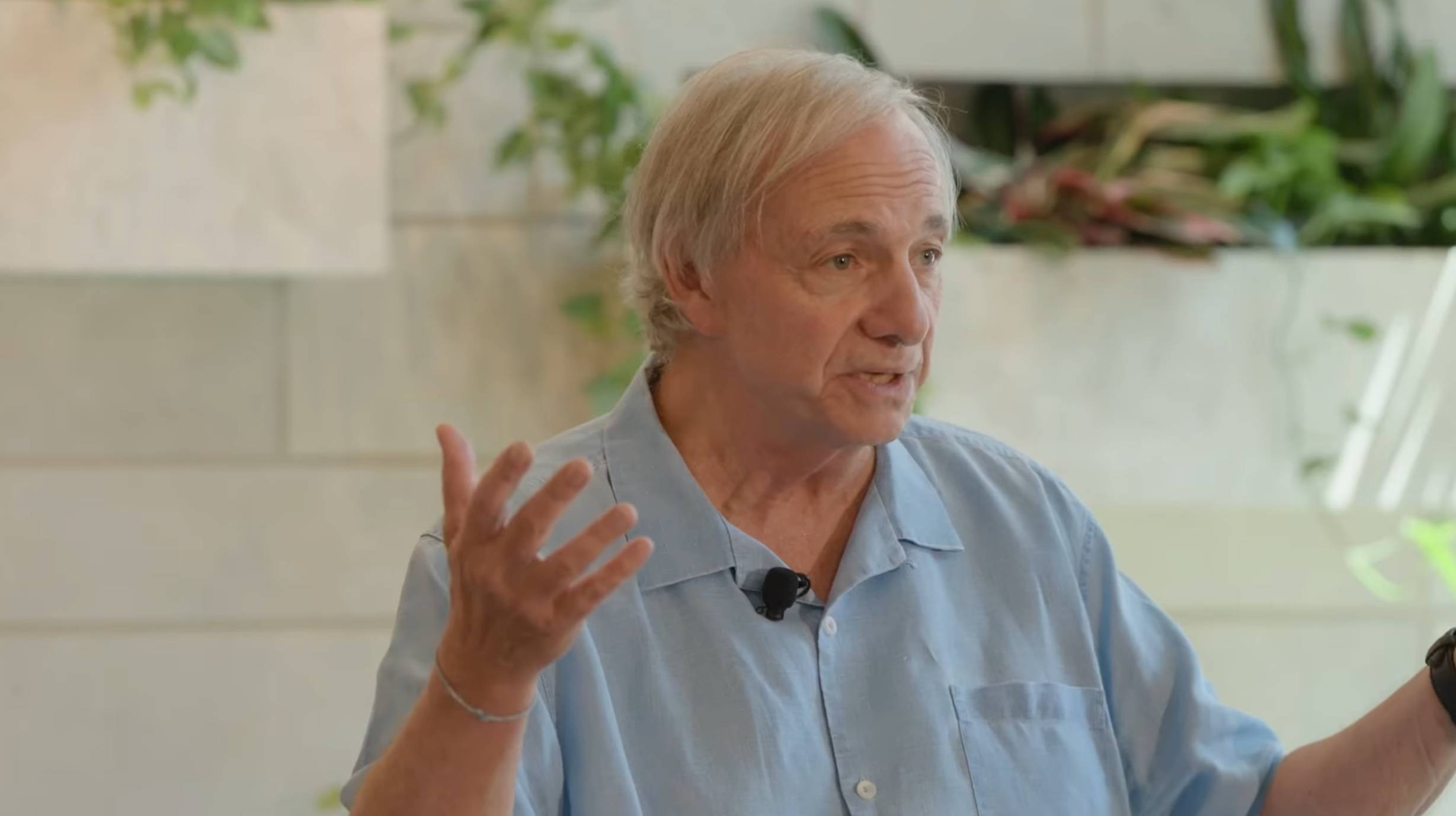
达利欧痛批特朗普“独裁”倾向:美国债务和货币秩序面临崩溃的风险!
Jin Shi Shu Ju· 2025-09-02 05:03
Group 1 - Ray Dalio warns that the U.S. is gradually falling into a style of authoritarian politics reminiscent of the 1930s, driven by wealth disparity, value conflicts, and a collapse of trust [1][2] - Dalio highlights that government intervention in the private sector, such as Trump's 10% stake in Intel, represents a form of strong authoritarian leadership aimed at controlling financial and economic situations [1][5] - International investors are beginning to shift from U.S. Treasury bonds to gold due to concerns over the sustainability of U.S. debt and fiscal policies [4] Group 2 - Dalio expresses concerns that the U.S. economy is on the brink of a debt crisis due to unsustainable debt growth and significant budget deficits, predicting a potential economic "heart attack" within three years [4] - The U.S. government currently spends approximately $7 trillion annually while generating only $5 trillion in revenue, leading to skepticism about the reliability of U.S. Treasury bonds as a wealth storage tool [4] - Dalio critiques the increasing control of the government over the central bank and corporations, indicating a trend towards stronger governmental oversight during periods of high conflict and risk [5][6]