仿生

Search documents
小鹏机器人,为啥真的像人?
36氪· 2025-11-11 00:10
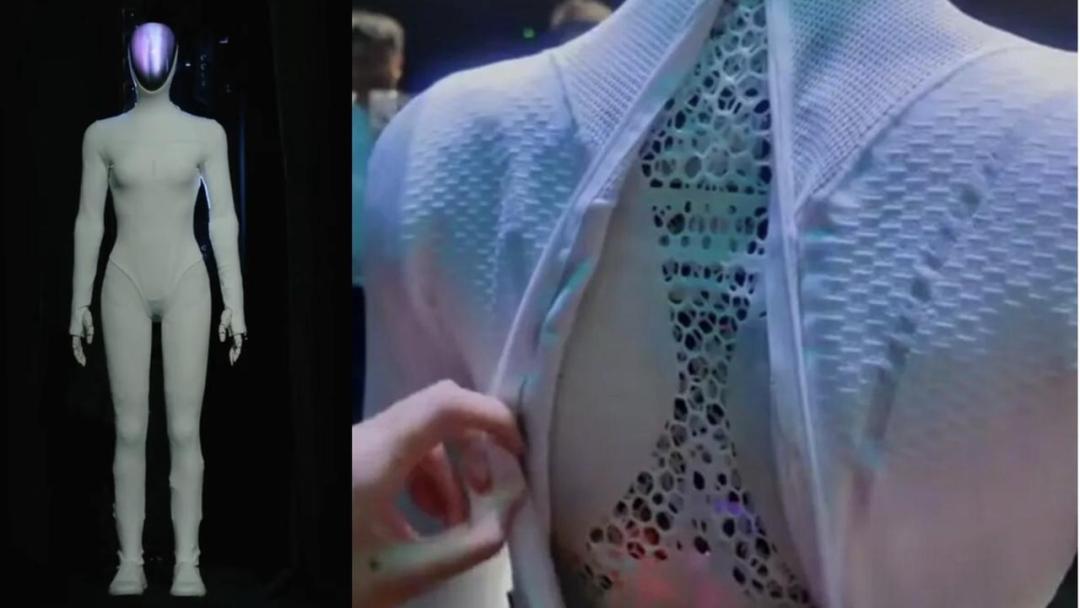
Core Insights - The article discusses the emergence of humanoid robots, particularly focusing on Xiaopeng's humanoid robot IRON, which has sparked significant public interest and debate due to its lifelike movements and design features [4][6][21]. Group 1: Humanoid Robot Development - Xiaopeng's humanoid robot IRON features advanced technologies such as a bionic spine design, 82 degrees of freedom in joints, and large model training for human gait, which contribute to its smooth and human-like walking [6][12]. - The core breakthrough in IRON's design is attributed to a new type of material called elastomer, which is used to create the robot's "muscles," allowing for flexible and coordinated movements [6][9][12]. - The use of elastomer materials reduces the weight of the robot by 60-70% compared to traditional rigid materials, enhancing its efficiency and safety in human environments [12][13]. Group 2: Market Potential and Strategic Vision - Xiaopeng aims to create a closed-loop system where humanoid robots are utilized in automotive manufacturing, enhancing automation and efficiency while collecting valuable operational data for future iterations of robot technology [22][25]. - The humanoid robot market is projected to be a $20 trillion market over the next 10-20 years, potentially surpassing the automotive market, indicating significant growth potential [25][26]. - Xiaopeng's strategy leverages similarities between automotive and robotic technologies, allowing for rapid development and deployment in the humanoid robot sector [25].


小鹏机器人 为啥真的像人?
3 6 Ke· 2025-11-10 06:49
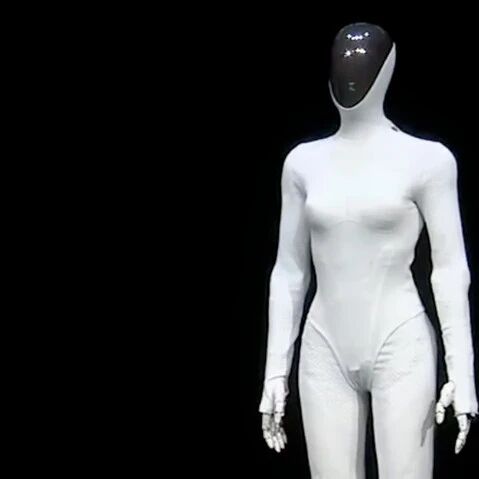
Core Insights - The release of the humanoid robot IRON by Xiaopeng has sparked significant public interest and debate regarding its human-like appearance and movement capabilities [1][11] - The use of elastomer materials in robotics is highlighted as a key innovation that allows for more human-like movement and flexibility, which is essential for the integration of humanoid robots into daily life [2][6] Group 1: Humanoid Robot Development - Xiaopeng's humanoid robot IRON features a bipedal gait that closely resembles human movement, raising questions about its design and technology [1] - The robot's design incorporates a bionic spine, 82 degrees of freedom in joints, and advanced model training for human gait, showcasing significant technological advancements [1][9] - The use of elastomer materials allows for a more flexible and lightweight structure, reducing energy consumption and enhancing safety during human interaction [6][7] Group 2: Material Innovation - Elastomer materials, which are flexible and lightweight, are positioned as a crucial component for the future of humanoid robots, enabling them to mimic human muscle behavior [2][4] - The transition from traditional rigid materials to elastomers represents a significant shift in robotics, allowing for improved movement and adaptability in human environments [5][6] - 3D printing technology is essential for producing elastomer components, enabling precise control over internal structures that traditional manufacturing methods cannot achieve [8] Group 3: Market Potential and Strategy - Xiaopeng aims to create a closed-loop system where humanoid robots are utilized in automotive manufacturing, enhancing efficiency and data collection for further technological advancements [12][13] - The company believes that humanoid robots will become more commercially viable due to their human-like characteristics, leading to increased sales and cost reductions [11] - The market for robotics is projected to reach $20 trillion in the next 10-20 years, potentially surpassing the automotive market, indicating significant growth opportunities [13][14]

小鹏机器人,为啥真的像人?
3 6 Ke· 2025-11-10 05:32
Core Insights - The article discusses the recent launch of the humanoid robot IRON by Xiaopeng Motors, which has sparked significant public interest and debate regarding its human-like appearance and movement capabilities [1][3][9]. Group 1: Technology and Innovation - The humanoid robot IRON features advanced technologies such as a bionic spine design, 82 degrees of freedom in joints, and large model training for human gait, contributing to its fluid and human-like movement [3][6]. - A key innovation in IRON is the use of a new type of material called elastomer, which allows for flexible and lightweight structures, enhancing the robot's ability to mimic human muscle movement [4][6][8]. - The elastomer material is significantly lighter than traditional rigid materials, reducing energy consumption and improving safety in human-robot interactions [6][8]. Group 2: Market and Business Strategy - Xiaopeng Motors aims to create a closed-loop system where humanoid robots are utilized in automotive manufacturing, enhancing automation and efficiency while collecting valuable operational data for further technological advancements [9][13]. - The company believes that humanoid robots will have a more appealing presence in the market, leading to increased sales and cost reductions, thus fostering a positive business cycle [11][13]. - Xiaopeng Motors anticipates that the robotics market could reach $20 trillion in the next 10-20 years, potentially surpassing the automotive market, indicating a strong growth outlook for the industry [13].