
企业流动性

Search documents
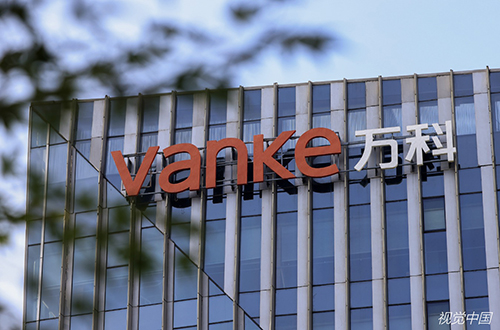
万科股价波动背后
Jing Ji Wang· 2025-12-15 09:17
Core Viewpoint - Vanke A's liquidity issues have led to a downgrade in its credit rating, with significant portions of its equity frozen due to legal actions, raising concerns about its financial stability and ability to meet short-term debt obligations [1][3][4]. Group 1: Financial Health and Credit Rating - Vanke A's credit rating was downgraded to "CCC-" by S&P due to unsustainable financial commitments and risks of default or restructuring [1]. - The company has seen its equity in over 12 enterprises frozen, with the highest value being 570 million yuan related to Shenzhen Vanke Development Co., indicating severe liquidity issues [3][4]. - As of Q3 2025, Vanke A reported cash holdings of 65.7 billion yuan, while its interest-bearing liabilities totaled 362.9 billion yuan, leading to a significant short-term debt gap [4][5]. Group 2: Comparison with Peers - In comparison to peers like Poly Developments and China Merchants Shekou, Vanke A has faced more severe liquidity challenges, with its stock price dropping significantly over the past two years [7][8]. - Other companies in the sector, such as China Merchants Shekou, reported a cash-to-short-term debt ratio of 1.3, indicating better financial health [7]. Group 3: Market Reaction and Stock Performance - Following the news of equity freezes, Vanke A's stock price has experienced multiple declines, with a 15% drop in five trading days after the announcement of the 570 million yuan freeze [8][9]. - The stock has seen a 50% decline from early 2024 to December 11, 2025, making it the worst performer in the real estate sector during this period [8]. Group 4: Potential Solutions and Actions - Vanke A has options to resolve its liquidity issues, including settling debts, negotiating with creditors, or liquidating frozen assets to meet obligations [9]. - The company received a loan of up to 1.666 billion yuan from its largest shareholder, Shenzhen Metro Group, to alleviate short-term financial pressures [9].


银行行业观察:信贷同比多增1.1万亿,M1增速跃升2.3个百分点
Sou Hu Cai Jing· 2025-07-16 06:25
Group 1: Social Financing and Credit - In June, the social financing scale increased by 4.2 trillion yuan, a year-on-year increase of 901.6 billion yuan, primarily supported by government bonds and short-term corporate loans [1] - Net financing of government bonds reached 1.35 trillion yuan, a year-on-year increase of 507.2 billion yuan, indicating sustained fiscal policy efforts [1] - New RMB loans amounted to 2.36 trillion yuan, with corporate loans contributing significantly, particularly short-term loans which increased by 1.16 trillion yuan, a year-on-year increase of 490 billion yuan [1] Group 2: Household Credit and Demand - Household loans increased by 597.6 billion yuan, a year-on-year increase of only 26.7 billion yuan, reflecting slow recovery in household credit [2] - Real estate sales remain under pressure, with new home transaction area in 30 cities down by 2.15% year-on-year and second-hand home prices down by 7.26% [2] - The weak growth in household medium and long-term loans is mainly due to early repayment of mortgages, with leverage willingness still needing policy stimulation [2] Group 3: Loan Rates and Financial Structure - The weighted average interest rate for new corporate loans was approximately 3.3%, showing limited decline since the beginning of the year, while personal housing loan rates remained at 3.1% [3] - There was a year-on-year decrease of 371.6 billion yuan in bill financing, as banks actively compressed low-yield assets, leading to gradual optimization of the credit structure [3] Group 4: Money Supply and Liquidity - M1 growth rate significantly rebounded to 4.6%, driven by last year's low base and improved corporate liquidity [4] - New corporate demand deposits increased by 1.7 trillion yuan, a year-on-year increase of 975.5 billion yuan, indicating enhanced operational cash flow efficiency [4] - The reduction of fiscal deposits by 820 billion yuan, along with the seasonal return of wealth management funds, contributed to the increase in deposits from residents and enterprises [4] Group 5: Savings and Consumption Trends - In the first half of the year, household deposits increased by 10.77 trillion yuan, with a savings-to-loan ratio of 9.21, reflecting conservative consumption and investment sentiment [5] - Despite a slight rebound in short-term loans due to consumption scenarios, new loans from the household sector remained at a historical low of 1.17 trillion yuan [5] - Policy measures are needed to further unleash consumption potential, with declining deposit rates potentially encouraging a shift from savings to consumption [5] Group 6: Policy Outlook and Market Expectations - The third quarter is expected to see a peak in government bond issuance, providing continued support for social financing growth [6] - The central bank may maintain reasonable liquidity through reserve requirement ratio cuts and interest rate reductions, focusing on "moderate easing" and structural tools [6] - Overall, June's financial data reflects a balance between active fiscal support and weak recovery in real demand, necessitating ongoing policy efforts to stabilize expectations, promote consumption, and optimize credit structure [6]