传统戏曲创新

Search documents
传统戏曲如何杀回年轻人视野?
Jing Ji Guan Cha Bao· 2026-02-10 10:07
Core Viewpoint - The recent performance of "Shiyuzhuo·Famen Temple" by Shanghai Jingju Theatre has garnered significant attention online, showcasing the potential for traditional Chinese opera to innovate and attract younger audiences through modern interpretations and creative expressions [1][4]. Group 1: Policy and Support - The "Three-Year Action Plan for Drama Revitalization (2026-2028)" was jointly issued by several government departments, emphasizing policy support for theater troupes and the need for a sustainable development mechanism [1][2]. - The plan encourages local departments to recognize the importance of drama revitalization, coordinate efforts, and integrate these initiatives into broader economic and social development strategies [2]. Group 2: Challenges in Traditional Opera - Traditional opera faces structural challenges, including high survival pressure on troupes, limited marketization capabilities, and a reliance on government funding, particularly among local troupes [3]. - There is a disconnect between creative output and contemporary audience preferences, with many troupes focusing on traditional adaptations rather than original works that resonate with modern themes [3]. - A significant talent gap exists, with young artists often leaving for more lucrative opportunities in film and television, compounded by rigid internal promotion and evaluation systems within troupes [3]. Group 3: Successful Innovations - Successful adaptations, such as the youth version of "Peony Pavilion," demonstrate how traditional opera can be modernized to appeal to younger audiences, combining contemporary aesthetics with classic elements [4]. - The innovative performances by Shanghai Jingju Theatre reflect a broader trend of integrating traditional art forms with modern cultural expressions, helping to bridge the gap between heritage and contemporary tastes [4][5].
一堂昆曲课
Xin Lang Cai Jing· 2026-02-06 06:35
Group 1 - The article highlights the successful integration of traditional Chinese opera with modern aesthetics, particularly through the efforts of figures like Bai Xianyong and Zhang Jun, which has attracted a younger audience [1][2] - Zhang Jun, as the principal of the Shanghai Theatre Academy's affiliated opera school, plays a crucial role in nurturing new talent and revitalizing traditional opera forms [1] - The immersive and interactive approach taken during the "From Kunqu to Peking Opera" event demonstrates a shift towards engaging younger audiences, making traditional art forms more accessible and enjoyable [1][2] Group 2 - The ongoing popularity of traditional opera, such as the youth-driven trend in Yue Opera led by Chen Lijun and Li Yunxiao, indicates that classic art forms can evolve while retaining their core essence [2] - The article emphasizes that traditional opera is not outdated; rather, it can resonate with modern sensibilities when presented in innovative ways [2][3] - The connection between traditional opera and contemporary audiences is closer than perceived, as both share a fundamental pursuit of beauty and emotional resonance [3]
越剧婺剧“青春化”突围 浙江绍剧如何应变?
Zhong Guo Xin Wen Wang· 2026-01-14 00:02
Core Viewpoint - The article discusses the challenges and innovations faced by Shaoxing opera (Shaoju) in the context of competition from other Zhejiang operas, particularly Wuju, which has gained popularity through innovative adaptations of classic stories like "The Monkey King Battles the White Bone Spirit" [2][10]. Group 1: Traditional Opera and Innovation - Shaoju, recognized as a national intangible cultural heritage, is characterized by its vigorous singing style and dynamic performances, particularly excelling in martial arts [3][4]. - The adaptation of "The Monkey King Battles the White Bone Spirit" has historically been a classic for Shaoju, but its recent reinterpretation by Wuju has raised concerns about the preservation and evolution of traditional art forms [2][4]. - The necessity for innovation in traditional opera is emphasized, with the idea that cultural heritage must evolve to remain relevant and vibrant in contemporary society [2][12]. Group 2: Cross-Disciplinary Collaborations - Collaborations between traditional opera and other art forms, such as symphonic music, have been explored, exemplified by the integration of Shaoju elements into a symphony by composer Ye Xiaogang [5][6][7]. - The blending of Shaoju's traditional elements with modern genres, such as rock music, has been considered but faced challenges due to funding and skepticism within the artistic community [8]. Group 3: Audience Engagement and Cultural Shift - The rise of Wuju highlights a shift in audience preferences, particularly among younger demographics, necessitating a reevaluation of how traditional operas engage with contemporary culture [10][11]. - The use of digital platforms and social media is identified as a crucial strategy for traditional operas to reach broader audiences and break down cultural barriers [12]. - The development of new talent and the establishment of initiatives like the "Youth Opera" brand aim to attract younger audiences while maintaining the essence of traditional art forms [16]. Group 4: Future Directions - Shaoju is actively developing its classic IP, such as "The Monkey King," into various formats like comics and children's theater to engage wider audiences [14]. - The Zhejiang provincial government is promoting a series of performances and events to showcase the innovation and transmission of opera, with a focus on youth participation [16].
淮剧《陆秀夫》亮相2025紫金小剧场
Xin Lang Cai Jing· 2025-12-25 17:23
Core Viewpoint - The new historical drama "Lu Xiufu" by the Jianhu County Huai Opera Troupe presents the life and legacy of Lu Xiufu, a historical figure known for his loyalty and sacrifice during the 1279 naval battle, aiming to inspire pride and cultural awareness among audiences in Nanjing [1] Group 1: Performance Details - The play "Lu Xiufu" will be performed at the 2025 Zijin Small Theater on December 24, showcasing the heroic story of Lu Xiufu through Huai dialect [1] - The narrative is structured around five key events: "Taking the Exam with Determination," "Bravely Going to Yangzhou," "Being Exiled to Chaozhou," "Defending at Crags Mountain," and "Drowning with the Emperor" [1] Group 2: Cultural Significance - The production serves as a means of preserving local cultural heritage and innovating traditional opera to resonate with contemporary audiences [1] - The playwright, Yuan Xiaoya, emphasizes the responsibility of local artists to honor hometown heroes and promote their stories for future generations [1] Group 3: Actor Insights - He Minxing, the actor portraying Lu Xiufu, expresses his emotional connection to the role, noting the positive reception and full houses during performances in Jianhu [1] - He aims to convey the passionate spirit of Lu Xiufu through his performance, enhancing audience engagement [1]
新华网文化观察丨破圈融合:传统戏曲的青春进行时
Xin Hua Wang· 2025-09-11 08:47
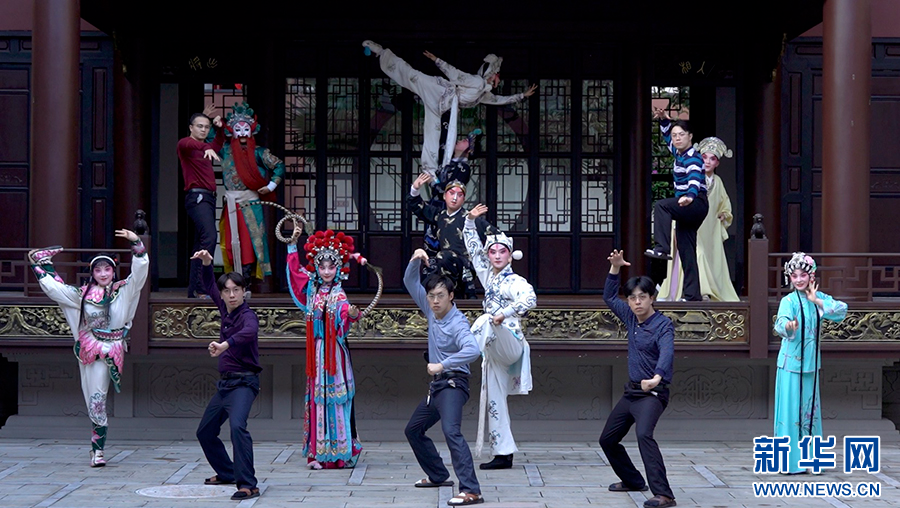
Core Viewpoint - Traditional Chinese opera is embracing modern elements and innovative expressions, leading to a resurgence of interest among younger audiences [2][4][6] Group 1: Innovation in Traditional Opera - The collaboration between Chongqing Sichuan Opera and the Unqi Dance Troupe resulted in a unique performance titled "Yao Bu Dao Tai," blending Sichuan opera with street dance and local dialect rap [3] - Various traditional opera forms are borrowing from each other, creating new artistic effects, such as the integration of Sichuan opera's "face-changing" technique in the Wuju opera "Three Strikes of the White Bone Spirit" [4] - Original works like the modern narrative of "Late Blooming Mountain Dan Dan" retain traditional elements while innovating in storytelling and presentation [4][5] Group 2: Youth Engagement and Development - A new generation of actors, particularly those born in the 1990s and 2000s, is emerging in the traditional opera scene, as seen in performances like the youth version of "Peony Pavilion" featuring a cast of students with an average age under 22 [6][9] - Young performers are increasingly integrating contemporary themes and popular culture into traditional performances, making them more relatable to younger audiences [9][10] Group 3: Technological Integration - The integration of digital technology is enhancing audience engagement, transforming the experience from passive viewing to interactive participation [11][12] - Innovative uses of technology, such as AR and AI, are being employed to preserve and revitalize traditional opera, making it more accessible and appealing to modern audiences [12][13]


破圈融合:传统戏曲的青春进行时
Xin Hua Wang· 2025-09-11 03:47
Core Viewpoint - Traditional Chinese opera is embracing modern elements and innovative expressions, leading to a resurgence of interest among younger audiences and the integration of contemporary culture into traditional art forms [1][2][3]. Group 1: Innovation in Traditional Opera - The collaboration between Chongqing Sichuan Opera and the Unqi Dance Troupe resulted in the unique performance "Yao Bu Dao Tai," which combines Sichuan opera with street dance and local dialect rap, showcasing a successful cross-genre fusion [2][3]. - Various traditional opera forms are borrowing from each other, such as the Wuju opera's adaptation of Sichuan opera's "face-changing" technique, enhancing character portrayal and creating new artistic effects [3]. - Modern adaptations of traditional operas, like the Kunqu opera "Reunion of Peony Pavilion," utilize narrative techniques that resonate with contemporary audiences, reflecting a shift towards more relatable themes [5]. Group 2: Youth Engagement and Development - A new generation of actors, particularly those born in the 1990s and 2000s, is emerging in the traditional opera scene, indicating a trend towards youthfulness in performance [6][8]. - Youth-led productions, such as the Kunqu campus version of "Peony Pavilion," feature teams of young performers, highlighting the increasing involvement of younger demographics in traditional arts [6]. - The integration of popular culture into traditional performances, such as incorporating memes and modern references, is attracting younger audiences and enhancing engagement [8]. Group 3: Technological Integration - The use of digital technology in traditional opera is enhancing audience experiences, shifting from passive viewing to interactive participation [9][11]. - Innovations like AR technology and AI restoration of classic performances are preserving and revitalizing traditional opera, making it more accessible and appealing to modern audiences [11]. - The combination of traditional art forms with cutting-edge technology is fostering a new cultural confidence and attracting a diverse audience [11].