
戏剧振兴

Search documents
【文化评析】让传统戏剧在新时代重焕生机
Xin Lang Cai Jing· 2026-02-25 19:59
Core Viewpoint - The article discusses the "Three-Year Action Plan for the Revitalization of Drama (2026-2028)" issued by multiple government departments in China, aiming to enhance the development, innovation, and quality of traditional drama while addressing challenges in attracting younger audiences and improving the industry ecosystem [1][2][3]. Group 1: Action Plan Objectives - The action plan focuses on promoting the inheritance and development of drama, enhancing creativity, improving the quality of productions, and nurturing a growing talent pool, particularly among youth [1][2]. - It aims to establish a comprehensive service and organizational mechanism for drama creation, leading to improved industry ecology and increased public satisfaction [1][2]. Group 2: Challenges and Solutions - The article highlights structural issues such as insufficient content innovation and talent loss in drama, emphasizing the need for improved production quality and talent development [1][2]. - It suggests creating a classic repertoire database and conducting research and promotion of traditional scripts and literature to preserve cultural heritage [2]. Group 3: Modernization and Technology Integration - There is a need to expand drama dissemination methods by integrating traditional and contemporary media, including the use of the internet and AI to enhance audience engagement [3]. - The article advocates for the use of both traditional and new technologies to broaden the reach of drama and attract new audiences while maintaining the unique qualities of live performance [3][4]. Group 4: Talent Development and Cultural Significance - The action plan emphasizes the importance of respecting and supporting local talent, implementing programs for young drama artists, and fostering collaboration between drama troupes and educational institutions [4]. - It underscores the role of drama as a vital carrier of Chinese civilization and the necessity of protecting and passing on this cultural memory through innovative practices [4].
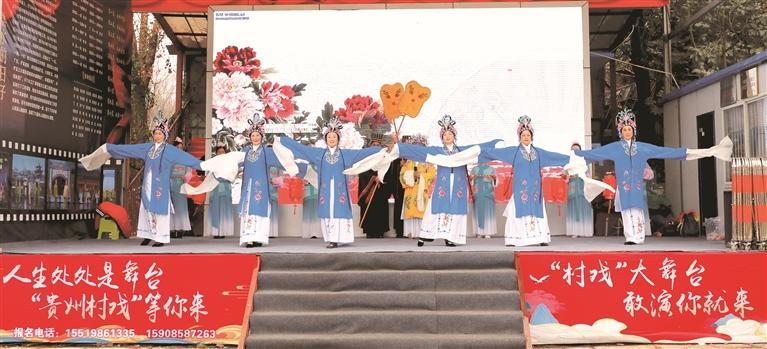
荷城景区端上“村戏”盛宴
Xin Lang Cai Jing· 2026-02-23 22:47
Core Viewpoint - The "Guizhou Village Opera" event aims to promote and preserve traditional non-heritage opera while enhancing cultural tourism integration and stimulating nighttime cultural consumption in Liupanshui City [2] Group 1: Event Overview - The event is held in Liupanshui City at the Hesheng Scenic Area, featuring a five-day showcase of various Guizhou traditional operas and dramas [2] - The opening ceremony included performances of Guizhou's unique operas such as Qian Opera, Di Opera, and Flower Lantern Opera, alongside other theatrical forms like drama and dance [2] - Notable performances included the Peking Opera "The Tang Dynasty's Royal Concubine," the situational drama "Alliance at the Yi Sea," and the mountain song opera "A Fresh Flower," which received enthusiastic applause from the audience [2] Group 2: Objectives and Future Plans - The initiative is organized by the Liupanshui City Drama Association, with the goal of creating a platform for the transmission and protection of non-heritage opera [2] - "Guizhou Village Opera" is set to operate regularly in Liupanshui, with performances planned every Saturday and Sunday, inviting drama enthusiasts to participate and perform [2] - The project aligns with the national "Three-Year Action Plan for Drama Revitalization," aiming to establish a sustainable cultural brand that empowers local cultural tourism development [2]

戏剧百花园将更加姹紫嫣红(艺文观察)
Ren Min Ri Bao· 2026-02-12 01:47
Core Insights - The release of the "Three-Year Action Plan for the Revitalization of Drama (2026-2028)" serves as a strategic response to the challenges faced by the drama sector and aims for high-quality development in the cultural landscape [1][2] - The plan emphasizes a comprehensive governance system that integrates various aspects of drama, including creation, talent cultivation, market development, and heritage protection, moving away from fragmented support models [1][2] - It highlights the importance of protecting endangered drama genres, supporting grassroots troupes, and nurturing young audiences, reflecting a commitment to cultural heritage and social responsibility [1] Group 1: Strategic Framework - The plan positions drama revitalization within the broader narrative of cultural confidence and the construction of a socialist cultural power, emphasizing its role in storytelling and value consensus [2] - It combines cultural strategy with respect for artistic principles, ensuring that policies are both ideologically sound and practically feasible for the high-quality development of drama [2] Group 2: Creative Ecosystem - The plan advocates for breaking away from the "single theme" approach in drama creation, encouraging a return to human-centered narratives that resonate emotionally with audiences [3] - It stresses the importance of prioritizing script quality, asserting that a strong script is fundamental to the success of any theatrical production [4] Group 3: Quality Assurance Mechanisms - A full-process creative guidance mechanism is introduced, expanding quality control from just the script to all key creative aspects, promoting a systematic and collaborative approach to drama production [6] - This mechanism aims to enhance efficiency and cost-effectiveness while fostering deeper collaboration among creators, thereby optimizing the creative ecosystem [6] Group 4: Literary Integration - The plan seeks to integrate drama scripts into mainstream literary evaluation systems, recognizing their significance as both a core component of drama and an important branch of literature [7][8] - This integration is expected to enhance the recognition and motivation of playwrights, while also facilitating a reciprocal relationship between literature and drama, enriching both fields [8]
头条:第九届“金画眉”戏剧展展演80余部剧目,第十届将重磅升级
Bei Jing Ri Bao Ke Hu Duan· 2026-02-11 02:37
Core Insights - The ninth "Golden Huamei" Drama Exhibition concluded, announcing a comprehensive upgrade for the tenth edition [2] - The event showcased over 80 excellent performances from 18 provinces, featuring more than 400 participants across various age groups [2] - The upcoming tenth edition will integrate music with drama, marking a shift to a dual-core model of "drama + music" [3] Group 1 - The exhibition lasted for two days and highlighted the achievements in drama education for all age groups, from preschool children to young professionals [2] - An awards ceremony recognized outstanding performances, original scripts, and quality drama education courses [3] - The tenth edition will focus on "script first" and plans to publish the "Golden Huamei Excellent Original Script Collection (2026 Edition)" [3] Group 2 - The collaboration with the China Children's Music Society aims to enhance the quality of musical theater and establish professional standards for music creation and evaluation [3] - The event will continue to deepen the innovative model of "drama + education," aiming to build a three-in-one ecosystem of "exhibition + incubation + publishing" for youth drama [3] - Future activities will align with the "Three-Year Action Plan for Drama Revitalization (2026-2028)" to expand the reach of drama education and produce more relevant works for youth [3]

描绘戏剧振兴新图景
Xin Lang Cai Jing· 2026-02-10 20:03
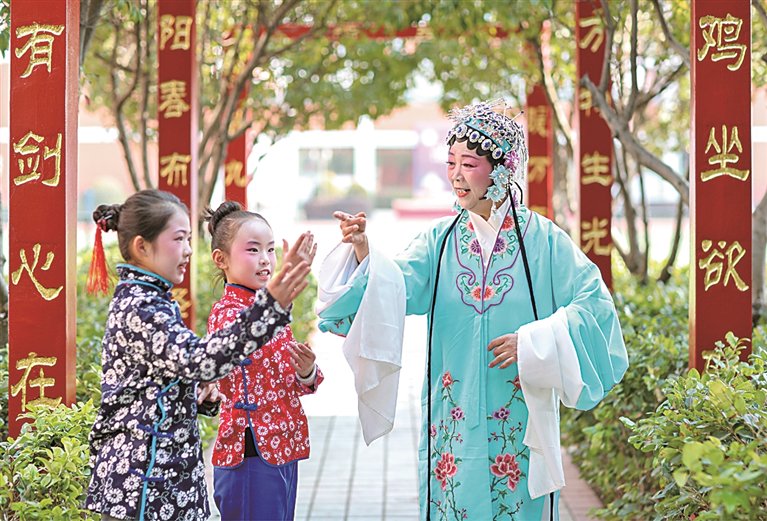
Core Viewpoint - The article discusses the "Three-Year Action Plan for the Revitalization of Drama (2026-2028)" issued by five government departments in China, aimed at addressing the challenges in the drama industry, including the lack of quality works, talent cultivation issues, and insufficient impact of drama awards [1]. Group 1: Talent Development - The plan focuses on a comprehensive talent cultivation system, emphasizing the selection, training, utilization, and retention of talent, particularly in nurturing versatile playwrights and actors who understand both traditional structures and modern narratives [2]. - It encourages drama troupes to establish creative studios and prioritize using their own talent for creative tasks, aiming to shift the focus from performance to original creation [2]. Group 2: Creative Vitality - The plan aims to stimulate creative vitality by encouraging creators to explore diverse content, styles, and techniques, thereby fostering an environment conducive to creativity [3]. - Specific initiatives include the "Seed Fund Plan," which allows renowned playwrights to offer their market-tested works at low prices for grassroots performances, and a reward system for outstanding troupes [3]. Group 3: Technology and Audience Engagement - The plan recognizes the role of new media, such as short videos and live streaming, in expanding the reach of drama and attracting younger audiences, addressing the aging demographic of traditional theatergoers [4]. - It promotes the use of technology in drama creation and dissemination, encouraging troupes to leverage the internet and AI to enhance their outreach and influence [4]. Group 4: Preservation of Rare Drama Forms - The plan includes measures to protect endangered drama forms by implementing a tailored development model for different regions and types of drama, which is crucial for preserving rare theatrical traditions [5]. - It calls for practitioners of rare drama forms to seize opportunities and connect with contemporary aesthetics to attract new audiences and find sustainable pathways for survival [5].
三方合力 出人出戏
Xin Lang Cai Jing· 2026-02-10 20:03
Core Viewpoint - The Chinese drama industry is at a critical juncture, facing both a crisis in traditional art forms and a need for contemporary drama to better meet cultural demands. The introduction of the "Three-Year Action Plan for Drama Revitalization (2026-2028)" is timely and significant [1]. Group 1: Focus on Script Quality - The plan emphasizes the importance of script quality, which is the foundation of drama and essential for its development. It aims to preserve traditional elements while also embracing contemporary themes [2]. - There is a call for the adaptation and refinement of classic plays, as well as strong support for realistic themes that resonate with the public, encouraging creators to tell Chinese stories through drama [2]. - A mechanism for evaluating and incubating scripts will be established, providing funding for original works and ensuring that scripts undergo thorough refinement to avoid superficial creations [2]. Group 2: Role of Artistic Committees - The plan highlights the need to activate the functions of artistic committees, which serve as a crucial link between excellent scripts and talented individuals. This involves integrating the committees into the entire process of script selection, creation discussions, production, and quality assessment [2]. - The goal is to prevent formalism and promote continuous optimization of productions, ensuring that the artistic quality is maintained throughout the process [2]. Group 3: Talent Development - Talent is identified as the primary resource for the revitalization of drama. The successful implementation of scripts and decisions made by artistic committees ultimately relies on skilled individuals [2]. - The integration of scripts, artistic committees, and talent is essential for creating a virtuous cycle where good scripts attract talented individuals, who in turn refine the scripts, with the committees ensuring quality throughout [2].
传统戏曲如何杀回年轻人视野?
Jing Ji Guan Cha Bao· 2026-02-10 10:07
Core Viewpoint - The recent performance of "Shiyuzhuo·Famen Temple" by Shanghai Jingju Theatre has garnered significant attention online, showcasing the potential for traditional Chinese opera to innovate and attract younger audiences through modern interpretations and creative expressions [1][4]. Group 1: Policy and Support - The "Three-Year Action Plan for Drama Revitalization (2026-2028)" was jointly issued by several government departments, emphasizing policy support for theater troupes and the need for a sustainable development mechanism [1][2]. - The plan encourages local departments to recognize the importance of drama revitalization, coordinate efforts, and integrate these initiatives into broader economic and social development strategies [2]. Group 2: Challenges in Traditional Opera - Traditional opera faces structural challenges, including high survival pressure on troupes, limited marketization capabilities, and a reliance on government funding, particularly among local troupes [3]. - There is a disconnect between creative output and contemporary audience preferences, with many troupes focusing on traditional adaptations rather than original works that resonate with modern themes [3]. - A significant talent gap exists, with young artists often leaving for more lucrative opportunities in film and television, compounded by rigid internal promotion and evaluation systems within troupes [3]. Group 3: Successful Innovations - Successful adaptations, such as the youth version of "Peony Pavilion," demonstrate how traditional opera can be modernized to appeal to younger audiences, combining contemporary aesthetics with classic elements [4]. - The innovative performances by Shanghai Jingju Theatre reflect a broader trend of integrating traditional art forms with modern cultural expressions, helping to bridge the gap between heritage and contemporary tastes [4][5].
推出一批优秀作品 不断壮大人才队伍
Xin Hua She· 2026-02-10 00:58
Core Viewpoint - The "Three-Year Action Plan for the Revitalization of Drama (2026-2028)" has been jointly issued by five government departments, aiming to enhance the quality and creativity of drama in China while focusing on the needs of the people [1] Group 1: Overall Requirements - The plan is guided by Xi Jinping's Thought on Socialism with Chinese Characteristics for a New Era and aims to implement the spirit of the 20th National Congress of the Communist Party of China [1] - It emphasizes the importance of creative transformation and innovative development in the drama sector [1] - The plan promotes a people-centered work orientation, ensuring that the outcomes and talent development are interconnected [1] Group 2: Goals and Objectives - The action plan aims to enhance the vitality of drama innovation and creativity, significantly improve the quality of drama productions, and launch a number of outstanding drama works [1] - It seeks to expand the talent pool in the drama industry, with a focus on nurturing young leading talents [1] - The plan aims to establish a comprehensive mechanism for drama creation services, guidance, and organization, leading to a noticeable improvement in the industry ecosystem and increased public satisfaction and sense of gain [1]
立足剧目创作 注重保护传承 戏剧振兴三年行动计划印发
Ren Min Ri Bao· 2026-02-09 23:20
Core Viewpoint - The "Three-Year Action Plan for the Revitalization of Drama (2026-2028)" aims to enhance the vitality of drama innovation and creation, improve the quality of productions, and foster a robust talent pool in the drama industry [1][2] Group 1: Objectives and Measures - The plan emphasizes the need for continuous enhancement of drama innovation and creativity, significant improvement in production quality, and the emergence of a new generation of leading talents [1] - Specific measures are proposed in seven key areas: supporting drama troupes, improving production quality, enhancing evaluation and funding effectiveness, strengthening talent development, increasing the quality and quantity of performances, protecting and inheriting drama, and promoting exchanges and outreach [1][2] Group 2: Current Challenges - The drama industry faces challenges such as insufficient high-quality works, the need for improved talent cultivation and incentive mechanisms, and the optimization of awards and demonstration performances [2] - The plan aims to address these issues by guiding local cultural departments and art troupes to effectively promote the creation of quality works and nurture leading figures in the industry [2]
经济日报财经早餐【2月10日星期二】
Jing Ji Ri Bao· 2026-02-09 22:43
Group 1 - On February 9, Xi Jinping visited the National Innovation Park in Beijing to understand the application of information technology and the acceleration of building an international technology innovation center [1] - The Ministry of Human Resources and Social Security, along with six other departments, conducted administrative guidance on labor rights for 16 companies, emphasizing the need for these companies to fulfill their labor management responsibilities [1] - The Ministry of Finance and the Ministry of Housing and Urban-Rural Development issued a notice on the construction of traditional village protection areas, aiming to summarize previous efforts and enhance central guidance [1] Group 2 - On February 9, the Shanghai and Shenzhen Stock Exchanges announced a package of measures to optimize refinancing for quality listed companies, revising rules to enhance flexibility and oversight in the refinancing process [2] - The China Futures Association reported that in January, the national futures market saw a trading volume of 912 million contracts and a turnover of 100.26 trillion yuan, marking year-on-year increases of 65.09% and 105.14% respectively [2] - Data from online platforms indicated that the pre-sale box office for new films during the 2026 Spring Festival exceeded 60 million yuan, with "Flying Life 3," "Silent Awakening," and "Bounty Hunter: Wind Rises in the Desert" leading the pre-sale rankings [2] Group 3 - The Japan Ministry of Health, Labour and Welfare reported a 1.3% year-on-year decrease in real wages for 2025, marking the fourth consecutive year of negative growth [4] - On February 9, it was estimated that over 230 million people would travel across regions during the Spring Festival, with a 3.4% increase from the previous period [4] - The National Disaster Reduction and Relief Committee warned of high risks of low-temperature rain, snow, and ice disasters in Northeast and North China, urging enhanced emergency preparedness [4]