低效无效投资

Search documents
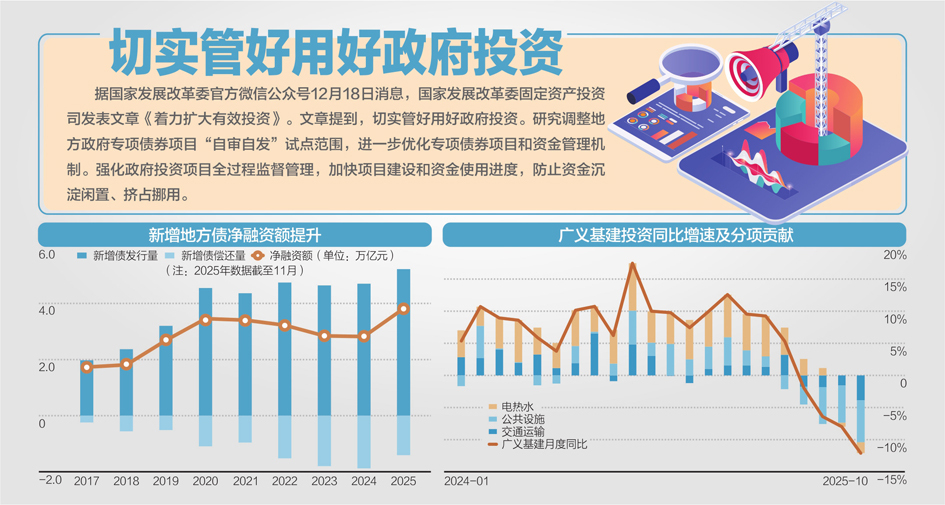
国家发展改革委发文《着力扩大有效投资》:着力增强政府投资引导带动作用
Mei Ri Jing Ji Xin Wen· 2025-12-18 13:02
Core Viewpoint - The National Development and Reform Commission emphasizes the importance of expanding effective investment as a key strategy for economic growth and development during the 14th Five-Year Plan period [1][3]. Group 1: Effective Investment Expansion - The article outlines four key focuses for expanding effective investment: increasing investment growth space, enhancing government investment guidance, stimulating private investment vitality, and deepening investment system reforms [1]. - Effective investment is defined as investments that yield high returns and contribute positively to economic growth, addressing issues of low-efficiency investments that waste resources [5][6]. Group 2: Investment Quality and Structure - The need to improve investment efficiency and precision is highlighted, with a focus on adapting to demographic changes and enhancing infrastructure and public services [5]. - The article stresses the importance of avoiding low-level repeated construction and ineffective projects, which can lead to wasted resources and potential debt risks for local governments and enterprises [5][6]. Group 3: Major Project Planning and Support - Emphasis is placed on strengthening the planning and feasibility studies of major projects, ensuring that local governments prioritize project preparation and resource allocation [7]. - The article advocates for optimizing the management of local government special bonds to support high-quality projects, including those focused on energy efficiency and environmental sustainability [7]. Group 4: Private Sector Involvement - The article calls for the establishment of long-term mechanisms to facilitate private enterprises' participation in major projects, particularly in sectors like railways and energy [8]. - It encourages the promotion of quality projects to private capital and supports private investment in public-private partnership (PPP) initiatives [8].

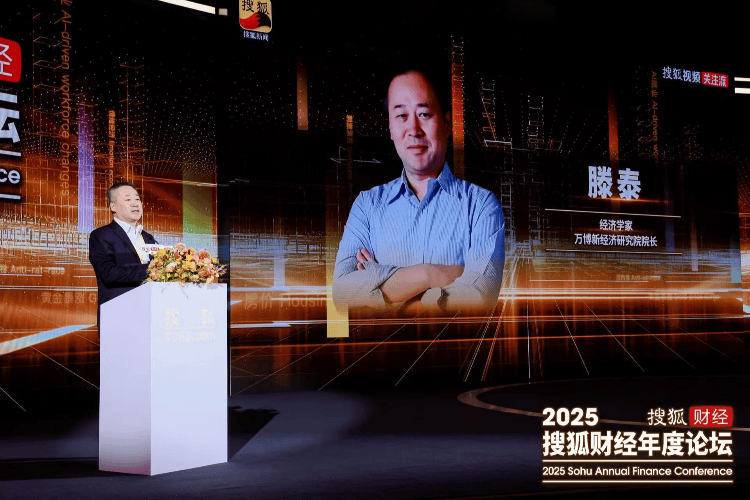
滕泰建言扩消费:发放万亿级消费补贴,提升农村老年人养老金
Sou Hu Cai Jing· 2025-11-27 14:25
Core Viewpoint - The forum emphasizes the need for unconventional measures to achieve a reasonable annual consumption growth target of 6% during the "14th Five-Year Plan" period, including substantial consumption subsidies and the transfer of state-owned equity to social security funds [2][3][4]. Group 1: Consumption Growth Strategies - The proposal includes issuing over 1 trillion yuan in consumption subsidies, which could significantly boost total demand and GDP growth by 2-3 percentage points [3][4]. - A transfer of 10 trillion yuan of state-owned equity to social security funds is suggested to enhance pension levels for low-income groups, thereby increasing their consumption capacity [4]. - The potential wealth effect from capital market expansion is highlighted, with a projection that the market value could reach 200-250 trillion yuan by 2030, supporting increased consumer spending [4]. Group 2: Current Economic Challenges - The current economic issue is identified as severe over-investment, with many projects yielding no effective output, as evidenced by fixed asset investments exceeding local GDP in 14 provinces [2]. - A shift towards accepting lower investment growth rates is recommended, focusing on effective investments in areas like artificial intelligence while reducing inefficient investments [2][3].
中经评论:“大手笔”投资,切勿“半拉子”收尾
Zhong Guo Jing Ji Wang· 2025-06-20 00:20
Core Viewpoint - The revised regulations emphasize the prohibition of wasteful "image projects" and "performance projects," aiming to prevent significant decision-making errors that lead to severe waste [2] Group 1: Current Issues - Despite efforts to prevent inefficient investments, some localities continue to pursue grand projects that are disconnected from reality, resulting in significant resource waste [3] - Examples include museums becoming storage facilities, unfinished "key projects," and luxury charging stations in remote areas lacking proper infrastructure [3] - The phenomenon of "half-finished projects" arises from various causes, including insufficient funding and lack of scientific planning, leading to economic losses and social conflicts [3] Group 2: Underlying Problems - The "half-finished" mentality is more concerning than the projects themselves, characterized by poor policy coordination, short-sightedness, and lack of commitment [4] - The economic losses from "half-finished projects" can be quantified, but the impact on public sentiment is immeasurable [4] - Addressing these issues requires a comprehensive approach, including accountability for project failures and improved management of government investments throughout their lifecycle [4] Group 3: Solutions and Recommendations - Local governments must actively address existing "half-finished projects" by repurposing idle resources for community benefits, such as converting unused office buildings into training centers [5] - All projects should prioritize quality, avoiding large-scale investments that lead to incomplete outcomes, ensuring that every penny is effectively utilized for development [5]