
低波FOF

Search documents
为什么万家FOF能穿越波动?答案藏在“研究驱动”里
Sou Hu Cai Jing· 2025-12-25 08:57
Core Insights - The concept of "free lunch" in investment refers to achieving higher returns without taking on additional risk, which is often overlooked in asset management [1] - Diversification, particularly through non-correlated assets, has been a key development in asset management over the past 30 years [1] Group 1: Low-Rate Environment and Multi-Asset Strategies - In the current low-interest-rate environment, investors are seeking alternatives to traditional bank products that yield around 1% [2] - Multi-asset strategies, particularly low-volatility Funds of Funds (FOF), have emerged as a prominent category, offering better risk-return profiles by incorporating low-correlated assets [2] - Investors with low-risk preferences prioritize limiting maximum drawdown to -1.5% and achieving positive returns within a few months [2] Group 2: Multi-Asset FOF Development - The market is increasingly accepting multi-asset strategies, with 64% of low-volatility FOFs employing this approach as of November 30, 2025 [4] - The total scale of public FOFs surpassed 233.9 billion yuan, with over 10 billion yuan added in 2025 alone [4] Group 3: Manager Selection and Performance - The success of multi-asset strategies relies heavily on the active management capabilities of fund managers, emphasizing the importance of selecting the right managers [5] - A systematic "identification" process for fund managers includes evaluating their investment philosophy, stable processes, and performance metrics [6][7] - The FOF team at Wanji Fund employs a dual approach, focusing on both asset allocation and the selection of fund managers to achieve superior returns [5][6] Group 4: Research-Driven Approach - The Wanji Fund FOF team operates on a research-driven model, integrating both fund manager research and fundamental analysis to maximize information value [9] - The team covers a wide range of sectors, ensuring comprehensive research and analysis to inform investment decisions [9][10] - The internal research system allows for detailed tracking of fund managers and industry trends, enhancing the team's ability to make informed asset allocation decisions [9][10] Group 5: New Product Launch - The Wanji Qitai Stable Three-Month Holding Period FOF is set to launch, aiming to provide stable returns through diversified asset allocation [13] - This product is part of a collaboration with China Construction Bank and is designed to navigate the challenges of the low-interest-rate environment [13]

景顺长城基金江虹:低波FOF产品净值曲线能稳健上行非常重要
Zheng Quan Ri Bao Wang· 2025-11-14 06:40
Core Viewpoint - The performance of FOF products has significantly improved in 2023, with an average annual return of 14.29% for 477 FOFs established for over six months as of October 31 [1] Group 1: Market Performance - As of the end of Q3, the total scale of FOFs in the market reached 187.147 billion, an increase of 57 billion compared to the end of last year [1] - The recovery in the equity market and the gradual restoration of investor confidence have contributed to the positive performance of FOF products [1] Group 2: Investment Strategy - The newly issued FOF by Invesco Great Wall adopts a "fixed income + multi-asset" strategy, aiming to enhance returns while controlling overall volatility [1] - The proposed fund manager, Jiang Hong, emphasizes a "stability first, then diversification" approach in asset allocation [1] Group 3: Performance Metrics - Jiang Hong's low-volatility FOF, Invesco Great Wall Conservative Pension, achieved a net value growth rate of 7.89% since inception, outperforming the pure bond fund index at 3.69% [2] - The maximum drawdown of this product was -0.88%, better than the performance benchmark of -1.39% and significantly superior to the bond FOF index at -2.91%, demonstrating strong drawdown control [2] Group 4: Market Outlook - Jiang Hong maintains a relatively positive outlook on the equity market, expecting a primarily structural market and emphasizing the importance of fundamental analysis [2] - Key investment areas include technology, high-dividend stocks, and pharmaceuticals, while in the bond market, leveraging strategies are encouraged to enhance returns amid a loose funding environment [2]
景顺长城基金江虹:力求低波FOF 稳健收益
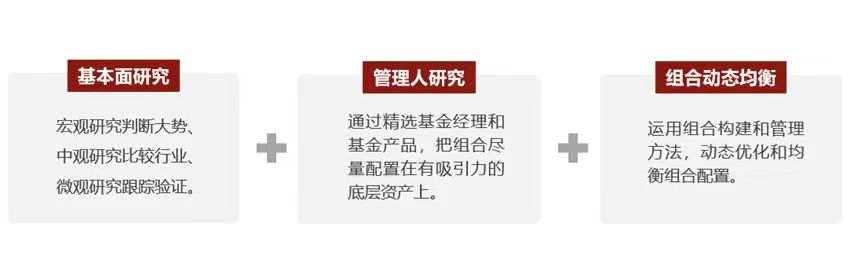
Shang Hai Zheng Quan Bao· 2025-08-17 13:36
Core Insights - The demand for low-volatility products is increasing as investors seek stable returns in the current market environment [1][4] - The management of low-volatility funds prioritizes controlling maximum drawdown and anchoring annual volatility at low levels to achieve steady asset appreciation [1][2] Group 1: Low-Volatility Product Management - The primary focus in managing low-volatility products is to control maximum drawdown, followed by anchoring annual volatility at lower levels [1][2] - The low-volatility fund managed by the company has achieved a net value growth rate of 6.82% since March 20, 2024, with a maximum drawdown of only 0.88% as of August 12 [1] Group 2: Investment Strategy - The company designs low-volatility fund of funds (FOF) products targeting investors with high safety requirements and a pursuit of stable returns [2] - The investment strategy includes a focus on clear underlying assets, primarily investing in pure bond funds and using ETFs for equity assets [2] Group 3: Asset Allocation Strategy - The asset allocation strategy combines both strategic and tactical approaches, with strategic allocation based on macroeconomic and monetary cycle research [3] - Tactical allocation allows for flexible adjustments based on short-term market conditions and economic changes [3] Group 4: Market Outlook - The company anticipates improving corporate earnings and favorable investment opportunities in A-shares, supported by fiscal and monetary policies [4] - The Hong Kong stock market is expected to perform well due to policy support and accelerated technological development [4] - The company highlights the importance of core technology and profitable leading enterprises, as well as the potential for value sectors to experience a rebound [4] Group 5: Bond Market Insights - In the context of steady economic recovery and manageable inflation pressures, the risk of significant interest rate hikes is limited, leading to a range-bound pattern in long-term bond yields [5] - The financing environment for urban investment and real estate sectors is supported by policies, with mid-to-high-grade credit spreads expected to continue narrowing [5]