多资产策略

Search documents
全球三层次流动性风险预警模型
HTSC· 2026-03-15 05:47
Quantitative Models and Construction Methods Model Name: Three-Tier Global Liquidity Risk Warning Model - **Model Construction Idea**: The model aims to dynamically monitor liquidity risk from the policy source to the trading end, capturing the full chain of liquidity risk transmission[1] - **Model Construction Process**: 1. **Central Bank Liquidity**: Monitors central bank policy movements from three dimensions: price, quantity, and expectations. The price dimension uses the global central bank policy rate diffusion index to track the policy movements of 27 major central banks. The quantity dimension uses the Federal Reserve liquidity support indicator to measure the expansion of the Fed's balance sheet through term transformation and credit enhancement channels. The expectation dimension uses the Bloomberg Fedspeak index and market implied interest rate expectations to track the marginal changes in Fed interest rate expectations[2][3] 2. **Funding Liquidity**: Monitors leverage funding tightness through repo financing and cross-border arbitrage indicators. The Secured Overnight Financing Rate (SOFR) represents the short-term financing cost in the interbank market with Treasury collateral. The Risk Reversal (RR) monitors the abnormal jumps in risk reversal options of major carry trade currency pairs to capture the deleveraging pressure in the foreign exchange market[4][5] 3. **Market Liquidity**: Utilizes implied volatility across multiple assets to depict market trading friction. Constructs a multi-period comprehensive stress index using VIX, VXN, RVX, MOVE, GVZ, OVX, VXEEM, and COP to identify abnormal mutation points using a rolling threshold Zscore framework[6][7] - **Model Evaluation**: The model effectively avoids periods of broad asset declines, significantly reduces strategy drawdowns, and optimizes risk-adjusted returns of the strategy. It is universally applicable in global asset allocation[1][8] Model Backtesting Results - **Baseline Strategy**: Annualized return 5.31%, Sharpe ratio 0.56, maximum drawdown -34.55%, Sortino ratio 0.75[9] - **Three-Tier Liquidity Stress Signal Timing Strategy**: Annualized return 8.76%, Sharpe ratio 1.22, maximum drawdown -14.09%, Sortino ratio 1.77[9] Quantitative Factors and Construction Methods Factor Name: Central Bank Liquidity - **Factor Construction Idea**: Monitors central bank policy movements from three dimensions: price, quantity, and expectations[2] - **Factor Construction Process**: 1. **Price Dimension**: Uses the global central bank policy rate diffusion index to track the policy movements of 27 major central banks. The index is constructed by calculating the net easing score of each country using a one-year rolling window and then equally summing the scores to obtain the global central bank policy rate diffusion index. The pressure signal is generated by quarterly differencing the diffusion index[2][3] 2. **Quantity Dimension**: Uses the Federal Reserve liquidity support indicator, defined as the ratio of medium- and long-term Treasury bonds, MBS, and agency bonds to the sum of cash in circulation, reverse repos, and reserves. The pressure signal is generated by quarterly differencing the smoothed series of the indicator[3][10] 3. **Expectation Dimension**: Uses the Bloomberg Fedspeak index and market implied interest rate expectations. The Fedspeak index is constructed by sentiment scoring of Fed officials' speeches using a fine-tuned RoBERTa model. The market implied interest rate expectations are derived from the difference between the 3M1M Swap OIS and the EFFR. The pressure signals are generated by quarterly differencing the series[3][11][12] - **Factor Evaluation**: The comprehensive pressure signal of central bank liquidity effectively distinguishes the performance of liquidity-sensitive assets during stress and non-stress periods, providing early warning of systemic risk accumulation[13][14] Factor Backtesting Results - **Central Bank Liquidity Stress Signal Timing Strategy**: Annualized return 7.55%, Sharpe ratio 1.18, maximum drawdown -14.09%, Sortino ratio 1.67[9][15] Factor Name: Funding Liquidity - **Factor Construction Idea**: Monitors leverage funding tightness through repo financing and cross-border arbitrage indicators[4] - **Factor Construction Process**: 1. **Repo Market**: Uses the Secured Overnight Financing Rate (SOFR) to represent the short-term financing cost in the interbank market with Treasury collateral. The pressure signal is generated when SOFR exceeds at least two of the key rates: IORB, EFFR, FFRU, and OIS[4][16] 2. **Foreign Exchange Market**: Uses the Risk Reversal (RR) of major carry trade currency pairs to monitor the deleveraging pressure. Constructs a comprehensive RR stress index by calculating the Zscore of the RR indicators and averaging the scores of five currency pairs. The pressure signal is generated when the comprehensive score exceeds the rolling threshold upper limit for at least two days within the past ten trading days[4][17][18] - **Factor Evaluation**: The comprehensive pressure signal of funding liquidity effectively identifies liquidity risk at the funding level, providing complementary insights to single indicators[19][20] Factor Backtesting Results - **Funding Liquidity Stress Signal Timing Strategy**: Annualized return 8.43%, Sharpe ratio 0.99, maximum drawdown -21.65%, Sortino ratio 1.38[9][21] Factor Name: Market Liquidity - **Factor Construction Idea**: Utilizes implied volatility across multiple assets to depict market trading friction[6] - **Factor Construction Process**: 1. **Market Liquidity Stress Index**: Constructs a multi-period comprehensive stress index using VIX, VXN, RVX, MOVE, GVZ, OVX, VXEEM, and COP. The index is constructed by calculating the Zscore of the implied volatility indicators and averaging the scores. The pressure signal is generated when the comprehensive score exceeds the rolling threshold upper limit for at least two days within the past ten trading days[6][22] - **Factor Evaluation**: The market liquidity stress signal effectively provides early warning of liquidity crises, enhancing the risk-adjusted returns of liquidity-sensitive asset strategies[23][24] Factor Backtesting Results - **Market Liquidity Stress Signal Timing Strategy**: Annualized return 7.42%, Sharpe ratio 0.91, maximum drawdown -23.65%, Sortino ratio 1.28[9][25]
祛魅“中国桥水”
远川研究所· 2026-03-03 13:13
Core Viewpoint - The article discusses the recent volatility in gold and silver markets, highlighting significant price fluctuations and the impact on various investment strategies, particularly the all-weather strategy popularized by Bridgewater Associates [4][6][14]. Group 1: Market Volatility - Silver experienced a dramatic surge, leading exchanges to raise margin requirements, followed by a sharp decline of 30% [4]. - Gold faced its largest single-day drop since 1983, causing substantial losses for many macro hedge funds and private equity firms, including those modeled after Bridgewater [4][6]. - The article notes that several all-weather products from private equity firms saw significant drawdowns, with some experiencing losses exceeding 20% [4]. Group 2: All-Weather Strategy Performance - The all-weather strategy has gained popularity among high-net-worth individuals seeking low-volatility investment options, but recent market events have challenged its perceived effectiveness [6][14]. - Bridgewater's performance metrics indicate that their all-weather strategy has historically provided stable returns, with a reported net value of 2.7 for one of their funds since its inception [8]. - The article emphasizes that the all-weather strategy's success relies heavily on a favorable macroeconomic environment, particularly low and declining interest rates [14][15]. Group 3: Challenges in Replicating Success - The article points out that many domestic private equity firms attempt to replicate Bridgewater's all-weather strategy but face limitations due to regulatory constraints and a lack of effective inflation-hedging tools [15][20]. - Domestic strategies often lack the necessary leverage and tools to achieve similar risk-adjusted returns, leading to a reliance on traditional asset classes that may not perform well in volatile markets [15][20]. - The article suggests that the domestic all-weather strategies are more about diversifying assets and reducing volatility rather than achieving significant alpha through active management [15][20].


祛魅“中国桥水”
远川投资评论· 2026-03-03 07:06
Core Viewpoint - The article discusses the recent volatility in gold and silver markets, highlighting significant price fluctuations and the impact on various investment strategies, particularly the all-weather strategy, which has faced challenges due to extreme market conditions [2][12]. Group 1: Market Volatility - Silver experienced a short squeeze, leading exchanges to raise margin requirements and limit positions, followed by a dramatic 30% drop in silver prices and the largest single-day decline in gold since 1983 [2]. - Many subjective CTA and macro private equity funds, including notable firms referred to as "China's Bridgewater," faced substantial drawdowns, with some products experiencing declines of over 20% in early February [2]. Group 2: Performance of Investment Strategies - The all-weather strategy, which typically includes low-correlation assets, suffered significant losses during this period, indicating a potential over-allocation to gold and silver [2]. - The article notes that the past year saw the all-weather strategy, quantitative long positions, and public technology beta tools as the most popular categories in the wealth market [3]. Group 3: Bridgewater's Influence - Bridgewater has become a benchmark for all-weather strategies, attracting high-net-worth individuals seeking alternatives to traditional private equity products [4]. - The popularity of all-weather strategies aligns with the market's demand for low-volatility products, but the recent gold and silver turmoil has shattered the idealized perception of these strategies [4][12]. Group 4: Challenges in the Domestic Market - Domestic all-weather strategies face limitations due to a lack of effective inflation-hedged bonds and the impact of policy on commodity liquidity, which can lead to significant market disruptions [12][13]. - The article emphasizes that the domestic macro hedge funds do not strictly adhere to the all-weather framework, often opting for a more flexible approach that does not rely solely on risk parity models [13][17]. Group 5: Future Outlook - The article suggests that as the macro environment becomes increasingly complex, more private equity firms are venturing into multi-asset and multi-strategy approaches to address the allocation anxieties of high-net-worth individuals [17][18]. - The anticipated influx of over 50 trillion yuan in maturing deposits may create new investment opportunities amidst global market volatility [16].

银行理财 2026 年 2 月月报:从财报看理财子如何布局多资产
Guoxin Securities· 2026-02-08 10:45
Investment Rating - The report maintains an "Outperform" rating for the banking sector, indicating expected performance above the market benchmark by more than 10% [4][41]. Core Insights - The banking wealth management sector is experiencing a slight increase in scale, with a focus on loan growth at the beginning of the year, leading to a stable overall scale in January [1]. - The industry is characterized by a significant "Matthew Effect," where leading wealth management companies dominate the market, while smaller firms are still in the early stages of development [1][10]. - The transition from pure fixed income to "fixed income plus" and multi-asset strategies is a gradual but firm trend in the industry, with mixed-asset products becoming the main battlefield for this transformation [1][2]. Summary by Sections Wealth Management Product Layout - As of the end of 2025, there are 191 institutions with active wealth management products, with wealth management companies holding 92.25% of the total market scale [10]. - The mixed-asset and equity products are primarily concentrated among large banks and leading joint-stock banks, reflecting a strategic focus on these areas [10]. Performance Metrics - In January 2026, the weighted average annualized yield of bank wealth management products rose to 3.62%, an increase of 181 basis points from the previous month [11]. - The initial fundraising scale for newly issued products in January was 423.8 billion, with most being fixed-income products [20]. Product Development Strategy - Wealth management subsidiaries are advised to prioritize mixed-asset products to build experience in equity and derivatives management before cautiously introducing pure equity products [2]. - Leading firms like Agricultural Bank Wealth Management and Everbright Wealth Management have established scale advantages in mixed-asset products, leveraging their channel and brand strengths [2]. Market Outlook - The investment strategy for 2026 should shift from focusing on yield elasticity to ensuring yield certainty, emphasizing risk budget management and the use of innovative tools and strategies [3]. - The report suggests increasing the development and application of structured products linked to broad or industry indices to meet the demand for stable returns in a volatile market [3].
银行理财2026年2月月报:从财报看理财子如何布局多资产-20260208
Guoxin Securities· 2026-02-08 08:25
Investment Rating - The report maintains an "Outperform" rating for the banking sector, indicating expected performance above the market benchmark by more than 10% [4][41]. Core Insights - The banking wealth management sector is experiencing a low overall allocation in multi-asset products, with significant individual differences and early-stage development characteristics [1]. - The industry is transitioning from pure fixed income to "fixed income plus" and multi-asset strategies, with mixed products currently being the main battleground for this transformation [2]. - In January 2026, the average annualized yield for bank wealth management products increased to 3.62%, reflecting a recovery of 181 basis points month-on-month [11]. Summary by Sections Market Overview - In January, the wealth management product scale remained stable, with a total scale of 31.6 trillion yuan, showing little month-on-month change [13]. - The mixed product scale reached 6,383.7 billion yuan, significantly higher than the equity product scale of 271.5 billion yuan, indicating a preference for mixed strategies [12]. Product Performance - The newly issued products in January had an initial fundraising scale of 4,238 billion yuan, primarily consisting of fixed income products, with the performance benchmark remaining stable at 2.33% [20]. - Most of the closed-end bank wealth management products that matured in January met their performance benchmarks, demonstrating a strong performance in the sector [29]. Strategic Development - Wealth management subsidiaries are focusing on mixed products first, gradually building a multi-asset allocation framework before introducing pure equity products [2]. - Leading wealth management institutions are leveraging their channel and brand advantages to strengthen mixed products as core tools for wealth management clients [2].
2025年私募基金收益TOP20揭晓!今通、波粒二象等居前!
Sou Hu Cai Jing· 2026-02-02 08:28
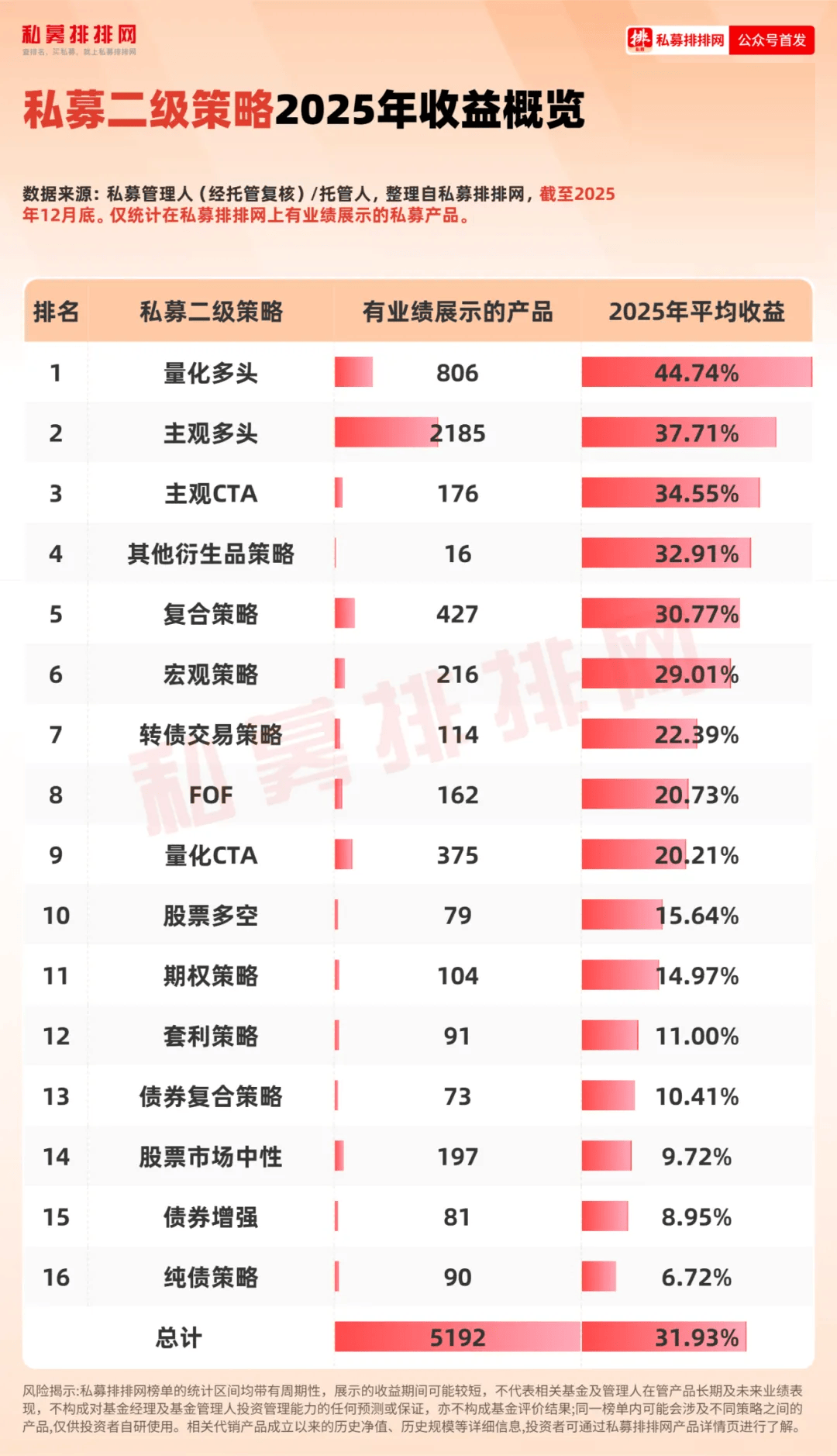
Market Overview - In 2025, the A-share market experienced an overall upward trend, with major indices recording significant gains, including an increase of over 18% in the Shanghai Composite Index and over 49% in the ChiNext Index [1] - The commodity market showed notable differentiation, with precious metals driven by safe-haven attributes and macroeconomic logic, achieving a cumulative annual increase of over 81% [1] Private Fund Performance - By the end of 2025, among 5,192 private funds displayed on the Private Fund Ranking website, the average annual return reached 31.93% [1] - Quantitative long and subjective long strategies performed particularly well, with average returns of 44.74% and 37.71%, respectively [1] - The active rotation in sectors such as consumption, technology, and high-end manufacturing created substantial structural opportunities for equity strategy funds, supported by active market trading and sustained liquidity [1] Strategy Performance Quantitative Long Strategy - The top-performing quantitative long products included 806 funds with an average return of 44.74% [3] - Notable products in this category included Gaia Qingke, Jintong Investment, and Hanrong Investment [4] Subjective Long Strategy - The subjective long strategy had 2,185 funds with an average return of 37.71%, with the highest entry threshold for the top 20 products [4][9] - Leading products in this category came from companies like Nengjing Investment Holdings and Shanghai Ge Ru Private Equity [10] Composite Strategy - The composite strategy saw 427 funds with an average return of 30.77%, with top products from Shuohe Asset and Tianhui Investment [12][15] Macro Strategy - The macro strategy included 133 funds, with the top products from companies like Jiuqi Investment and Luyuan Private Equity [16][18] - Notably, Luyuan Private Equity's product achieved significant returns, highlighting the effectiveness of macro strategies [20] Subjective CTA Strategy - The subjective CTA strategy had 78 funds, with top products from Yizu Investment and Chiying Private Equity [21][24] Quantitative CTA Strategy - The quantitative CTA strategy included 185 funds, with Hua Cheng Private Equity leading with significant returns [25][27] Private FOF Strategy - The private FOF strategy had 56 funds, with an average return of 20.55%, and top products from Shanghai Taiying and Qingdao Hongyun Ruiheng Private Equity [29][31] - The FOF strategy focuses on selecting and allocating multiple private funds to achieve diversified investment [29]
投研能力竞逐赛开场:多家理财公司紧急“招兵买马”
Zhong Guo Jing Ying Bao· 2026-01-29 10:36
Core Insights - The recent surge in recruitment by wealth management companies is focused on equity, quantitative, and multi-asset investment strategies, driven by the declining deposit rates and the need for enhanced absolute return capabilities [1][2] Group 1: Recruitment Trends - Wealth management firms are intensifying their hiring efforts, particularly in equity and multi-asset investment areas, with a notable increase in demand for quantitative talent [1] - Positions such as equity investment managers and senior multi-asset investment managers are being advertised, requiring significant experience in public fund research and multi-asset market investment [1] Group 2: Industry Transformation - The concentrated hiring effort is indicative of a broader industry shift from scale competition to capability competition, highlighting the growing importance of investment research capabilities [2] - There is a mismatch between the talent configuration in equity investment and the business development needs, which is a significant constraint on the expansion of equity business [2] Group 3: Strategic Development - Wealth management companies are exploring differentiated development paths in multi-asset strategies to avoid homogenized competition with public funds, focusing on their unique customer base and risk profiles [3] - The core advantage of bank wealth management in developing multi-asset strategies lies in its customer base and risk positioning, which is more sensitive to net value drawdowns [3] Group 4: Differentiation and Collaboration - Compared to public funds, bank wealth management has institutional advantages in non-standard, alternative, derivative, and foreign currency assets, allowing for deeper exploration of "fixed income + X" strategies [4] - Wealth management firms are encouraged to enhance their research and collaboration with private strategies to improve the risk-return characteristics of their portfolios [4]
资本市场回暖推动私募业绩走高
Xin Lang Cai Jing· 2026-01-25 22:24
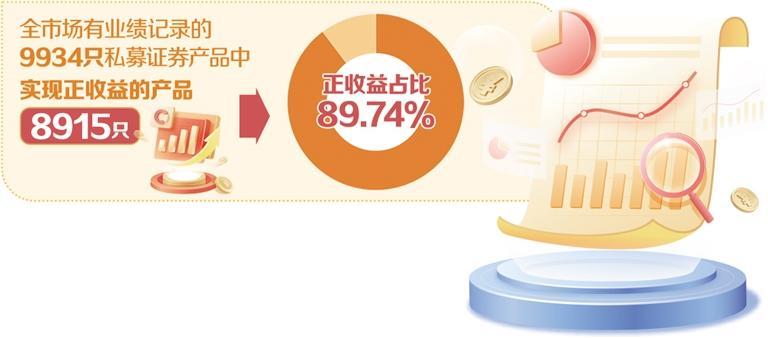
Core Insights - In 2025, private securities products demonstrated strong performance, with 89.74% of 9,934 products achieving positive returns and an average return rate of 25.68% [2] - The management scale of private funds reached a historical high of 22.09 trillion yuan by the end of November 2025, driven by the growth of private securities investment funds [2] Market Environment - The outstanding performance of private securities products in 2025 is attributed to three main factors: a favorable macro environment, strong liquidity support, and strategic alignment with market structure [3] - The A-share market experienced an overall upward trend, supported by innovations in AI and new energy sectors, which boosted market confidence [3] Strategy Performance - Among various strategies, the stock strategy led in returns, with 90.19% of 6,298 products achieving positive returns and an average return rate of 29.99% [3] - Quantitative long strategies showed remarkable performance, with a positive return rate of 95.81% among 1,360 products and an average return rate of 39.51% [4] - Multi-asset strategies achieved a positive return rate of 90.61% among 1,321 funds, with an average return rate of 22.06%, demonstrating strong risk management capabilities [4] Specific Strategy Insights - Combination funds, which diversify investments across different strategies and managers, achieved a positive return rate of 96.19% among 315 funds, catering to conservative investors [4] - Bond strategies maintained stable performance, with 89.93% of 745 bond products achieving positive returns, serving as a reliable asset allocation choice for low-risk investors [5]
成交额超47亿元,公司债ETF(511030)实现3连涨
Sou Hu Cai Jing· 2026-01-21 01:44
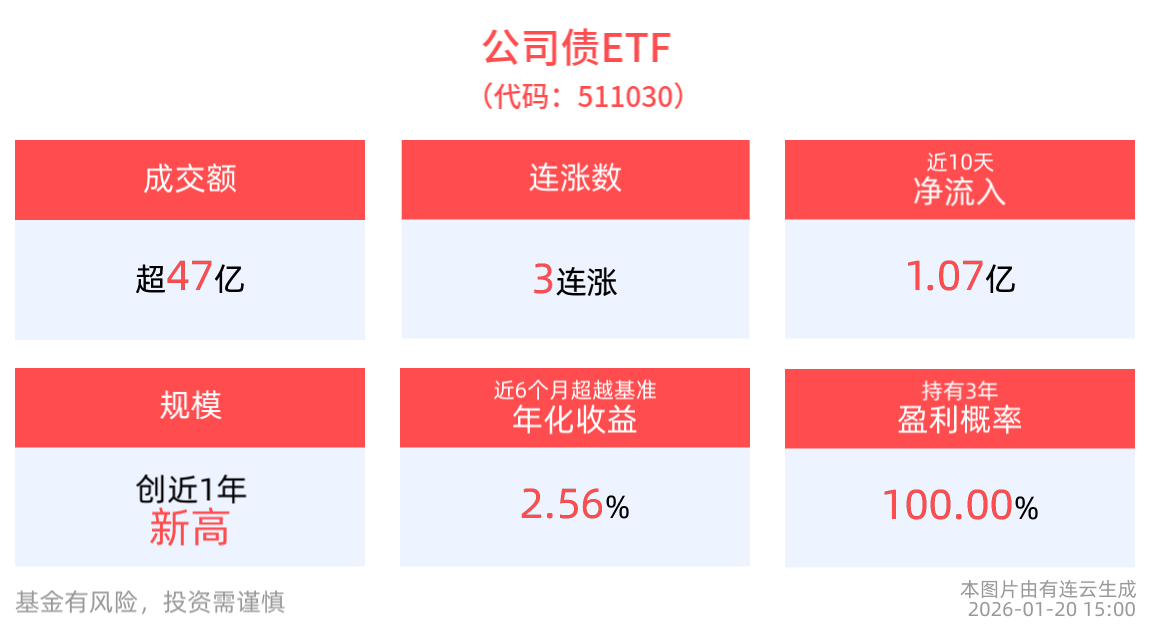
Group 1 - The core viewpoint of the article discusses the potential reallocation of deposits as they mature, particularly focusing on the significant amount of deposits maturing after 2026, estimated to exceed 40 trillion yuan [1] - A large portion of maturing deposits is expected to remain in savings, influenced by various factors such as financial knowledge and macroeconomic perceptions, with a gradual increase in risk appetite [1] - The article highlights that while most funds will continue to be saved, there will be a shift in the structure of savings towards more diversified investment options [2] Group 2 - Some funds are anticipated to migrate towards low-risk asset management, with short-term funds entering wealth management products and long-term funds being allocated to insurance [2] - The growth rates for insurance funds and bank wealth management are projected to be 20.19% and 11.75% respectively in 2024, with traditional savings growing at a slower pace [2] - The article notes that the current interest rate environment favors bank wealth management and insurance products over traditional deposits, catering to different investment horizons [2] Group 3 - A small portion of funds may seek higher returns by gradually flowing into equity markets, although the short-term allocation to equities is expected to remain low [2] - The article predicts that by 2026, the scale of bank wealth management is expected to exceed 35 trillion yuan, while insurance funds may surpass 40 trillion yuan [3] - In a low-interest-rate environment, asset managers will need to adjust their strategies to enhance returns through diversified investment approaches [3]
单年破万!私募新发产品超1.2万,量化产品增长114%,百亿量化私募成主力
私募排排网· 2026-01-10 03:04
Core Insights - In 2025, the private securities product registration surged, with a total of 12,645 products registered, marking a 99.54% increase from 6,337 in 2024 [2] - Equity strategies remain the preferred choice for private equity firms, with 8,328 equity strategy products registered, accounting for 65.86% of all registered products, indicating strong investor enthusiasm for equity assets [2] Group 1: Strategy Performance - Multi-asset strategies and futures/derivatives strategies ranked second and third in registration numbers, with 1,806 and 1,274 products respectively, representing 14.28% and 10.08% of the total [4] - Bond strategies and combination funds had 492 and 512 products registered, making up 3.89% and 4.05% respectively, contributing to a diversified strategy landscape [4] Group 2: Quantitative Products - Quantitative products showed remarkable growth, with 5,617 products registered in 2025, a 114.31% increase from 2,621 in 2024, and accounting for 44.42% of total registrations [4][5] - Within quantitative equity strategies, the quantitative long strategy was the most prominent, with 2,746 products registered, representing 48.89% of the total quantitative products [5] Group 3: Market Trends - The private equity product registration exhibited a clear concentration trend, with 29 private equity firms registering at least 50 products, of which 26 were billion-yuan firms, indicating their dominance in the market [7] - Quantitative investment has become a strategic focus for leading firms, with 24 out of 29 firms employing quantitative strategies, highlighting the market's increasing recognition of quantitative approaches [8] Group 4: Future Outlook - The private securities industry is expected to continue its steady growth, driven by deepening capital market reforms and ongoing advancements in strategy innovation and risk management [11] - The industry is likely to evolve towards higher quality development, offering investors a more diverse range of asset allocation options as market ecosystems improve [11]