低温蚀刻技术

Search documents
3D NAND,靠它了
半导体行业观察· 2026-01-06 01:42
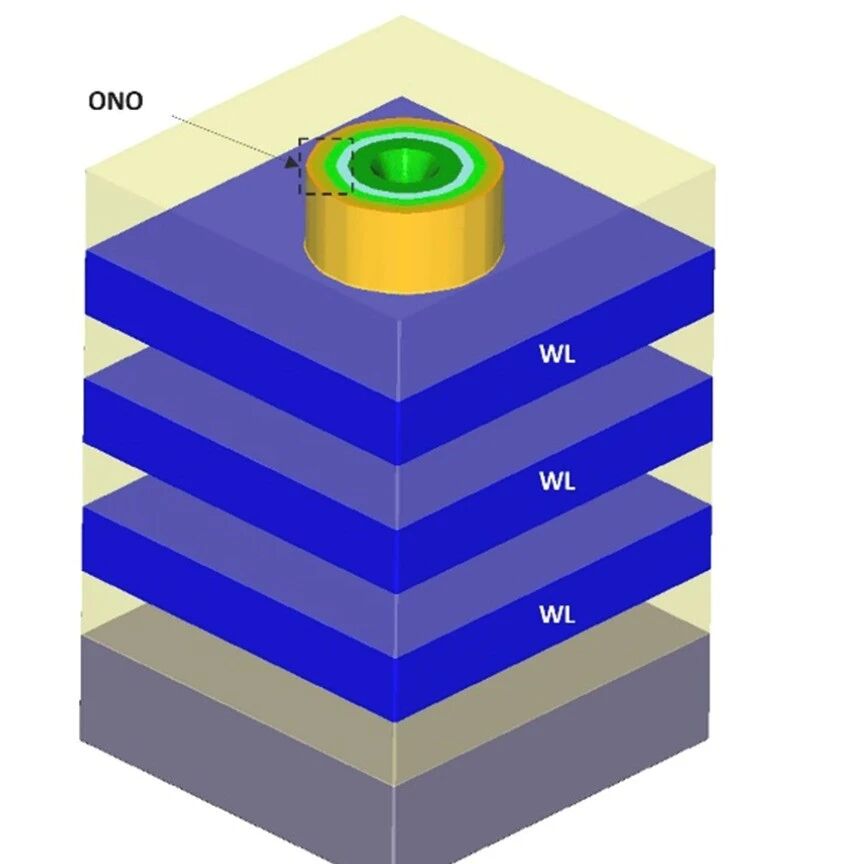
Core Insights - The demand for higher capacity flash memory is driven by the growing storage needs at the edge and in the cloud [1] - 3D NAND flash technology is advancing rapidly, with new generations offering 50% faster read/write speeds, 40% higher bit density, lower latency, and improved energy efficiency [1] - Innovations in etching technology, such as low-temperature etching, are crucial for reducing energy consumption and carbon emissions in the semiconductor industry [1] Group 1: 3D NAND Flash Technology - 3D NAND flash manufacturers stack and connect storage cells using increasingly smaller and deeper channels, achieving remarkable production speeds [1] - Major producers of 3D NAND chips include Samsung Electronics, Western Digital, Toshiba's Kioxia, and SK Hynix, who increase the number of word lines by 30% with each generation [2] - The transition from 2D to 3D NAND has led to a focus on vertical construction, allowing for more compact designs and increased bit storage per cell [5] Group 2: Etching Technology - The etching process for NAND flash faces challenges in maintaining vertical profiles while ensuring reasonable etching rates [2] - AI plays a significant role in optimizing etching profiles, which directly impacts NAND flash performance metrics such as read/write speed and programming/erase efficiency [2] - Low-temperature etching techniques are being explored to enhance etching rates and reduce carbon emissions, with estimates suggesting an 84% reduction in greenhouse gas emissions compared to traditional methods [12] Group 3: Manufacturing Challenges and Innovations - The introduction of low-k dielectric materials and air gaps is being researched to mitigate inter-cell interference and improve data retention [18][19] - The complexity and cost of manufacturing increase as manufacturers aim for higher stacking layers and tighter dimensional control [10][11] - AI-assisted optimization methods are being developed to reduce wafer consumption during the early stages of process development, significantly lowering costs and accelerating product development timelines [16]


设备巨头,决战400层刻蚀
半导体芯闻· 2025-08-13 10:43
Core Viewpoint - Lam Research and Tokyo Electron (TEL) are competing for orders from Samsung Electronics for the next-generation 400-layer NAND Flash manufacturing process, having both passed performance evaluations for new technology [2][3] Group 1: Competitive Landscape - Lam Research has successfully completed quality assessments for Samsung's 10th generation NAND Flash (V10) low-temperature etching equipment, which allows for finer circuit patterns [2] - TEL completed its performance evaluation approximately three months prior to Lam Research, receiving Process of Record (POR) approval in April [3] - Both companies are now in a competitive phase for supply, as Samsung is expected to consider both Lam Research and TEL when building production infrastructure for V10 NAND [3] Group 2: Technological Advancements - The low-temperature etching process operates at -60 to -70 degrees Celsius, which is 30 to 40 degrees lower than traditional methods, making it a highly specialized technology [2] - The increase in NAND layers necessitates deeper channel holes with a higher aspect ratio, prompting the need for new processing technologies [2] Group 3: Market Expectations - With the completion of equipment performance evaluations, Samsung is anticipated to initiate procurement orders soon, aiming to establish V10 NAND production lines in the first half of next year [3] - Following trial production, Samsung plans to commence mass production in the latter half of the year [3]


为了1000层闪存,拼了!
半导体行业观察· 2025-03-15 03:46
Core Viewpoint - The article discusses the advancements and challenges in 3D NAND flash memory technology, particularly focusing on the innovations in etching processes that enhance storage density and production efficiency [2][19][24]. Group 1: 3D NAND Technology Overview - 3D NAND technology has become the mainstream architecture for NAND flash memory, significantly improving storage density and reducing production costs [1][5]. - The transition from 2D NAND to 3D NAND has seen a dramatic increase in the number of layers, with projections of exceeding 1000 layers in the future [11][42]. - The unit bit density of NAND technology has improved by over one million times since its inception [5][6]. Group 2: Etching Technology Developments - Recent innovations in etching technology, particularly the development of a new etching process by Lam Research and partners, have doubled the etching speed and improved precision [2][19]. - Traditional reactive ion etching (RIE) methods face challenges such as slow etching speeds and precision issues, prompting the need for more efficient etching techniques [10][12]. - The introduction of low-temperature etching technologies has shown to enhance etching speed by 2.5 times and reduce energy consumption by 40% [22][35]. Group 3: Challenges in 3D NAND Manufacturing - As the number of layers in 3D NAND increases, manufacturers face significant challenges in maintaining etching speed and consistency, particularly in achieving high aspect ratio (HAR) structures [7][40]. - The complexity of the manufacturing process increases with the number of layers, leading to higher production costs and reliability issues [12][40]. - Environmental concerns are also pressing, with the need for sustainable practices in etching technology to reduce energy consumption and emissions [17][40]. Group 4: Future Outlook - The market for semiconductor etching equipment is projected to grow significantly, with estimates reaching $28.73 billion by 2029, reflecting a compound annual growth rate (CAGR) of 5.3% [42]. - Major players in the NAND flash market, including Samsung and Kioxia, are actively pursuing the development of 1000-layer 3D NAND technology, indicating a competitive landscape [39][42]. - Continuous innovation in etching technology is essential for meeting the increasing demands for high-density storage solutions in the AI and big data era [32][24].