低空飞行器复杂环境效应

Search documents
广东深圳落地投用全球首个低空风洞 低空飞行器在这里“极限测试”(探一线)
Ren Min Ri Bao· 2025-11-21 22:26
Core Insights - The establishment of the world's first low-altitude three-dimensional multi-physical field coupled wind tunnel in Shenzhen marks a significant advancement in testing low-altitude flying vehicles, addressing the challenges posed by complex wind environments below 1000 meters [1][2] Group 1: Low-Altitude Wind Tunnel - The newly developed wind tunnel can simulate urban wind environments and extreme weather conditions, providing essential data for the safety and performance of low-altitude flying vehicles [2] - The wind tunnel features an outer diameter of 18 meters and an inner diameter of 10 meters, capable of supporting aircraft with a wingspan of up to 4 meters, with wind speeds reaching 60 meters per second [2] - Since its launch, the wind tunnel has already provided testing services for several low-altitude enterprises focusing on small flying vehicles [2] Group 2: Future of Low-Altitude Economy - The low-altitude economy is not just about individual technologies but requires collaboration across the entire industrial chain, with a need for original research and the establishment of a self-sufficient research and industrial system [3] - Plans are underway to construct a larger wind tunnel with an outer diameter of 65 meters and an inner diameter of 45 meters, aimed at testing larger low-altitude flying vehicles and drone swarms [3] - The vision for the future includes point-to-point commuting, where individuals can take off from rooftops, transforming urban transportation [2]
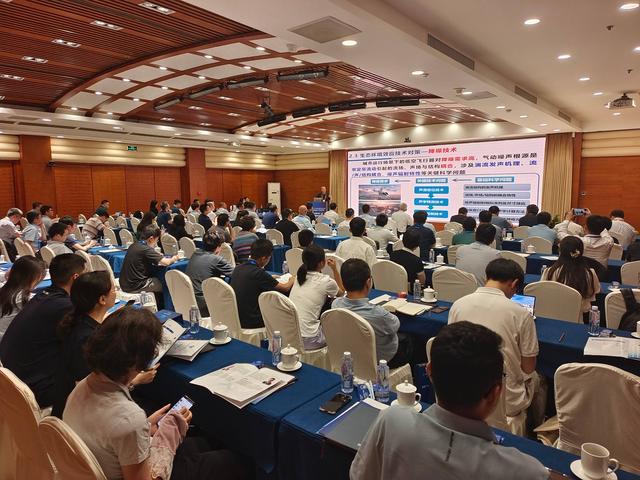
中国科协年会专题论坛聚焦低空飞行器复杂环境效应
Huan Qiu Wang Zi Xun· 2025-07-17 02:39
Core Viewpoint - The forum focused on the complex environmental effects of low-altitude aircraft, highlighting significant technological challenges and the need for collaborative solutions in the aviation sector [1][3]. Group 1: Forum Overview - The 27th China Association for Science and Technology Annual Conference featured a specialized forum on "Complex Environmental Effects of Low-altitude Aircraft," organized by the China Aeronautics Society [1]. - The forum gathered nearly a hundred experts and representatives from research institutions, universities, and enterprises in the aviation field to discuss various non-consensus topics related to low-altitude aircraft [1]. Group 2: Expert Contributions - Five industry experts delivered specialized reports on the background needs, key technological breakthroughs, infrastructure development, and future suggestions regarding low-altitude aircraft [3]. - The reports were presented by notable figures including Professor Xiang Jinwu from Beihang University and Researcher Wu Ximing from the China Aeronautics Research Institute [3]. Group 3: Roundtable Discussion - A roundtable discussion, led by Researcher Wu Ximing, included experts discussing factors affecting flight safety, key safety areas in low-altitude aircraft design, and the challenges of aligning policy support with technological development [5]. - The consensus from the discussion emphasized three main points: collaborative design, data empowerment, and policy innovation [5].