低糖健康

Search documents
数读「糖果、巧克力」:低糖健康、功能功效、IP食玩,是出路吗?
东京烘焙职业人· 2026-03-06 08:33
Core Insights - The article discusses the challenges faced by the candy and chocolate categories in the retail market, highlighting the impact of health trends and rising raw material costs on consumer preferences and pricing strategies [2][4]. Group 1: Market Overview - The candy and chocolate categories account for approximately 9% and 4% of the overall snack market, respectively, with chocolate experiencing a slight decline in market share from 2024 to 2025 [7]. - Both categories have seen negative year-on-year sales growth, with chocolate sales declining by about 7% and candy experiencing a more significant drop of over 10% [7][11]. - The overall market for snacks in traditional retail channels is shrinking, affecting all subcategories, with candy facing more severe pressure than chocolate [7][11]. Group 2: Seasonal Trends - Chocolate sales peak in the autumn and winter months due to higher caloric needs and seasonal holidays like Christmas and Valentine's Day [9]. - Candy maintains a higher quarterly market share than chocolate but has shown a noticeable decline in 2025, reflecting changing consumer preferences and a shift away from traditional candy [9][11]. Group 3: Pricing Trends - The average price per 100 grams for chocolate has been rising, influenced by increased raw material costs, while candy prices have generally declined [13][15]. - The price index for both categories has shown a trend of initial decline followed by recovery, with chocolate performing better than the overall snack category in certain periods [15][17]. Group 4: Regional Insights - In 2025, the Southwest region had the highest market share for candy, exceeding 10%, while the Northeast had the lowest at around 5.5% [17]. - Chocolate market share is higher in East China, North China, and Southwest regions, with some areas showing growth in market share from 2024 to 2025 [19]. Group 5: Market Concentration - The chocolate category has a high market concentration, with the top three brands holding over 70% of the market share, while the candy category remains fragmented with only about 20% held by the top three brands [21]. - The market share of the top ten brands in chocolate remains stable at around 80%, indicating a trend towards increased concentration in this category [21]. Group 6: Brand Dynamics - In the chocolate category, Meiji Group has shown significant sales growth of over 15%, while other brands like Mars and Ferrero have also seen positive market share growth [25][29]. - The candy category's top ten brands have all reported negative year-on-year sales growth, with Mars being the only brand exceeding 8% market share [41][45]. Group 7: Product Innovations - The article highlights the emergence of new product types such as probiotic and sugar-free candies, which are gaining traction among health-conscious consumers [46][57]. - The trend towards IP-themed products in both candy and chocolate categories is noted, with brands leveraging popular culture to enhance product appeal and pricing power [43][45].


苏州稻香村2026年货攻略:美味与健康并存,国潮与经典共享
Zhong Guo Shi Pin Wang· 2026-01-13 07:29
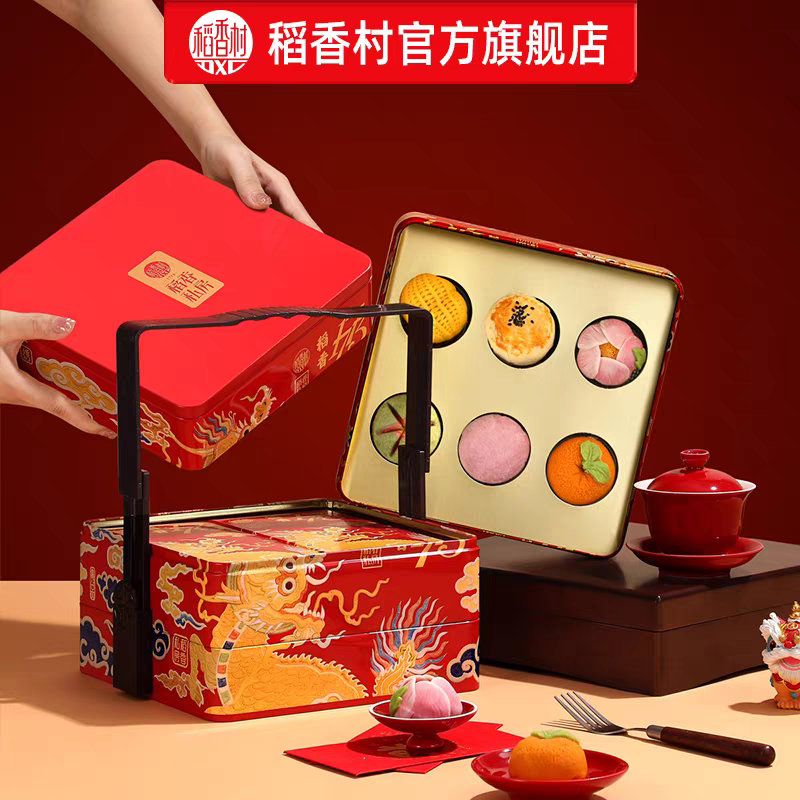
Core Viewpoint - The article highlights the offerings of Suzhou Daoxiangcun, a time-honored brand established in 1773, which is providing a variety of traditional Chinese New Year gift boxes that reflect the essence of Suzhou-style pastries and Jiangnan culture, catering to the festive season and family gatherings [1][18]. Product Offerings - The gift boxes include a range of products such as classic Suzhou pastries, healthy low-sugar options, and trendy garden-themed items, showcasing the elegance of Jiangnan and the festive spirit of the New Year [1][18]. - Specific products mentioned include: - Traditional pastry tin featuring 13 types of pastries, including the orange and peach-flavored peach mountain cake and the two-color lotus flower puff, emphasizing craftsmanship and traditional flavors [4][6]. - The "Fortune Cake" box containing 8 pastries symbolizing good luck and prosperity, such as the fortune bag-shaped cake and the "Everything Goes Smoothly" cake [6][8]. - The "Golden Fortune Gift Box" designed with a red and gold theme, containing 9 types of pastries suitable for the Spring Festival, combining aesthetics and cultural significance [8][9]. Health-Conscious Options - The "Low-Sugar Gift Box" features 10 types of pastries made with low-sugar techniques, allowing consumers to enjoy traditional flavors without the guilt, catering to health-conscious individuals [16][18]. - The "Good Year Gift Box" combines pastries and nuts, offering a balanced selection for all ages, including low-sugar peach crisps and nutrient-rich cashews [14][16]. Cultural Significance - The products are designed to evoke nostalgia and cultural heritage, with each pastry representing a piece of memory and tradition, appealing to consumers' emotional connections to the New Year [4][18]. - The brand emphasizes the integration of traditional craftsmanship with contemporary needs, ensuring that each gift box carries the elegance of Jiangnan and the warmth of New Year blessings [18].
养乐多迎来危机!大陆首家工厂倒闭,消费者不认可销量暴跌
Sou Hu Cai Jing· 2025-11-02 23:51
Core Insights - The article discusses the decline of Yakult in the Chinese market, highlighting the closure of its Guangzhou factory as the second core factory shut down within a year, following the closure of the Shanghai factory [1][10] - Yakult's daily sales in China have plummeted from a peak of 7.6 million bottles to 2.5 million bottles, a staggering 70% drop [1][10] Historical Context - Yakult's origins trace back to Japan in the early 20th century, where it was founded on the pursuit of gut health, leading to the creation of a probiotic drink in 1935 [3] - The company successfully expanded in Japan through a home delivery model initiated in 1963, which significantly boosted sales [3][4] Market Entry and Growth - Yakult entered the Chinese market in the 1990s, leveraging a similar delivery model with "Yakult Ladies" to gain popularity, especially in Guangdong [4] - At its peak, Yakult's production capacity in southern China reached 6 million bottles per day, with Guangdong and Hainan accounting for nearly half of its national sales [4] Decline Factors - The decline in sales is attributed to a loss of consumer trust in Yakult's health claims, particularly regarding its sugar content and the effectiveness of its probiotics [7][8] - The company faced increased competition from local brands offering lower sugar options and better pricing, leading to a significant drop in market share from 35% to 23% [8][11] Strategic Response - In response to declining sales, Yakult announced the closure of its factories to consolidate production and improve efficiency, aiming to increase capacity utilization from 42% to 65% [12] - Industry analysts suggest that without addressing core issues such as product relevance and marketing disconnect, these measures may not be sufficient to reverse the decline [12] Future Outlook - Despite the challenges, the probiotic market in China is projected to grow, with opportunities for brands that can balance taste and health [12][15] - Yakult retains several production bases and distribution channels, but must innovate and adapt to changing consumer preferences to remain competitive [12][15]