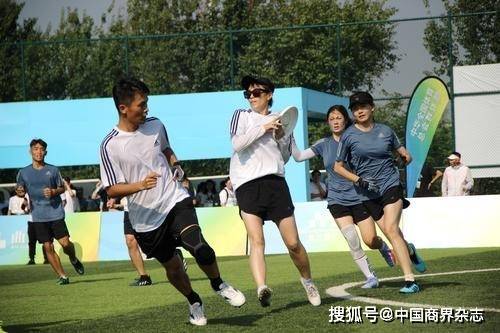
体育+融合模式

Search documents
体育产业如何满足青年消费新需求
Sou Hu Cai Jing· 2025-10-12 06:58
Core Viewpoint - The article discusses the transformation of China's sports industry from a focus on infrastructure to enhancing the quality of sports experiences, driven by increasing public demand for fitness and sports participation [3][4][10]. Group 1: Policy and Industry Transformation - The "31 Document" issued by the State Council emphasizes expanding sports consumption scenarios as a key measure to unlock sports consumption potential, marking a shift towards a more experience-oriented approach in the sports industry [2][4]. - The sports industry in China has evolved from a focus on scale expansion to quality improvement, with the current emphasis on creating diverse and integrated sports experiences [3][4]. Group 2: Economic and Social Context - China's sports industry has grown from 1.36 trillion yuan in 2014 to 3.67 trillion yuan in 2023, with its GDP share increasing from 0.64% to 1.15%, reflecting a significant shift in consumer preferences towards experiential consumption [4]. - The number of people regularly participating in sports has increased from 360 million to 550 million, indicating a growing public interest in fitness and sports activities [4]. Group 3: Urban Sports Space Innovation - The "31 Document" calls for the development of small, community-based fitness facilities and the integration of sports into commercial spaces, enhancing the accessibility and appeal of sports activities [5][6]. - Successful examples of urban sports space innovation include the transformation of industrial sites into sports venues, which not only improve fitness infrastructure but also enhance urban quality [5][6]. Group 4: Consumer Experience and Technology - The integration of sports with commercial, cultural, and tourism sectors creates richer consumer experiences, while the use of digital technologies enhances interactivity and accessibility in sports participation [7][8]. - The emergence of new sports consumption scenarios reflects a shift towards valuing emotional and social experiences over mere functionality, particularly among younger demographics [8][9]. Group 5: Future Goals and Urban Development - The article outlines a vision for a vibrant urban environment where sports are an integral part of daily life, aiming for the sports industry to exceed 7 trillion yuan by 2030 through innovative urban planning and community engagement [10].

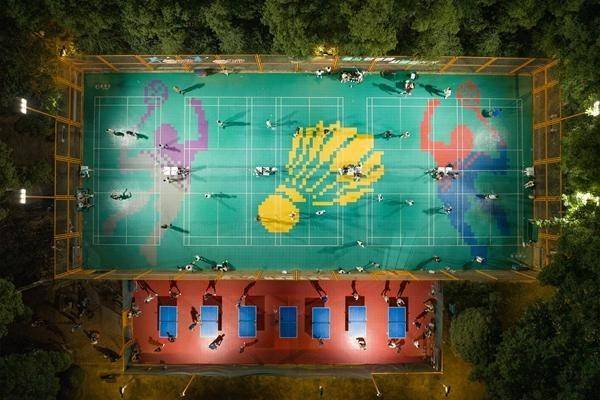
以体育为引擎 激活文旅消费新动能
Qi Lu Wan Bao Wang· 2025-09-16 07:29
Group 1 - The core viewpoint of the article emphasizes the strategic significance of the recent policy issued by the State Council to promote high-quality development in the sports industry and boost sports consumption, highlighting the integration of sports with cultural and tourism consumption as a key driver for economic growth [1][3] - The policy outlines specific measures to enhance sports events as a means to attract tourism consumption, encouraging the development of brand events and international competitions, which will create a multiplier effect on local consumption in areas such as dining, accommodation, and transportation [1][2] - The integration of sports with outdoor activities and low-altitude economy is identified as a new avenue for expanding tourism consumption, leveraging natural resources to create high-quality outdoor destinations and experiences that appeal to younger and high-end consumer demographics [2] Group 2 - The "Sports+" integration model is promoted to foster new tourism consumption formats, advocating for deeper industry convergence between sports and tourism, culture, health, and technology, which enhances consumer experiences and extends the value chain [2][3] - The introduction of the policy signifies a new mission for sports to activate large-scale tourism consumption, with a focus on event-driven traffic, innovative scenarios, and integrated business models, aiming to establish a new development pattern centered around sports as a driving force [3]
中国10人制橄榄球协会杯杭州余杭开赛
Zhong Guo Xin Wen Wang· 2025-09-14 01:31
Group 1 - The 2025 China 10-a-side Rugby Association Cup has commenced in Yuhang District, Hangzhou, with 12 teams from various regions participating, marking the first major rugby event in Yuhang [1] - Yuhang successfully hosted the rugby events during the 2023 Hangzhou Asian Games, where the Chinese women's team won gold, and later hosted the Asian 7s Rugby Series, further establishing its reputation for high-level rugby events [1] - The "Rugby Super Month" in Yuhang includes competitions, local promotion, cultural publicity, and professional training, with the Association Cup featuring three groups and a knockout format to determine the champion [1] Group 2 - Yuhang has supported the establishment of rugby teams in three local schools, with a significant number of participants, including 60 students in Xianlin Primary School's club, and over 130 adults in local communities [2] - The district plans to conduct professional rugby courses and support additional schools in developing rugby programs, aiming for sustainable sports development and collaboration between community sports, competitive sports, and the sports industry [2] - Yuhang will host the Asian 7s Rugby Series, the only event of its kind in China this year, featuring 24 elite teams, and has already organized five high-level events this year, including three national and two provincial competitions [2]
体育产业跑出“加速度” 体育消费打开“新赛道”
Sou Hu Cai Jing· 2025-08-26 09:23
Group 1 - The core viewpoint emphasizes the potential of sports consumption and the need for high-quality development in the sports industry, driven by government policies and market dynamics [2][3][6] - The State Sports General Administration reports that China's sports industry has seen an average annual growth rate of over 10% in the past five years, largely due to policy support and industry upgrades [2][3] - The domestic sports consumption market is projected to exceed 1.5 trillion yuan by 2025, with a multiplier effect where every 1 yuan spent on sports consumption can generate an additional 7.8 yuan in related industries [3] Group 2 - Challenges remain in revitalizing the sports industry, including issues like the focus on hardware over services and the need for traditional sports goods manufacturing to undergo digital transformation [4][5] - There is a concentration of sports facilities and event resources in economically developed cities, leading to a lack of infrastructure in rural areas, which limits the release of consumption potential [4] - The sports industry is encouraged to integrate with tourism and local markets, promoting new consumption models and enhancing the efficiency and quality of sports facilities [5][6]