体医融合

Search documents
全国政协委员厉彦虎:一直在对抗那些压弯孩子脊梁的“力”
Xin Lang Cai Jing· 2026-02-25 23:03
Core Viewpoint - The article highlights the efforts of Li Yanhua, a member of the National Committee of the Chinese People's Political Consultative Conference, in promoting spinal health among children and adolescents, emphasizing the need for early screening and intervention for spinal issues, which have become a significant health threat alongside myopia and obesity [1][2][3]. Group 1: Advocacy and Initiatives - Li Yanhua has successfully advocated for the inclusion of spinal curvature screening in student health check-ups, leading to an extension of recess time in schools from 10 to 15 minutes starting in the fall of 2025 [1][3]. - He has proposed various measures to improve spinal health, including reducing school bag weight, promoting spinal stretching exercises during breaks, and ensuring proper desk and chair ergonomics [3][4]. - His proposals have gained traction, with significant support from other members of the National Committee, indicating a growing recognition of the importance of spinal health in youth [4][9]. Group 2: Health Concerns and Trends - Spinal curvature has emerged as the third major health threat to children and adolescents, alongside myopia and obesity, affecting their physical development and psychological well-being [1][2]. - Li Yanhua notes a concerning trend of spinal issues becoming more prevalent among younger individuals, previously considered an issue primarily for the elderly [2][3]. - The interconnectedness of spinal problems, obesity, myopia, and psychological issues is emphasized, suggesting a holistic approach to addressing these challenges [2][3]. Group 3: Educational and Community Engagement - Li Yanhua actively participates in educational outreach, conducting numerous public health activities and engaging with students to raise awareness about spinal health [1][4][7]. - He has been involved in the establishment of pilot cities for youth spinal health management, creating a comprehensive system from prevention to intervention [3][9]. - His initiatives have included collaboration with various stakeholders, including schools and health departments, to foster a community-wide approach to youth health [9][10].
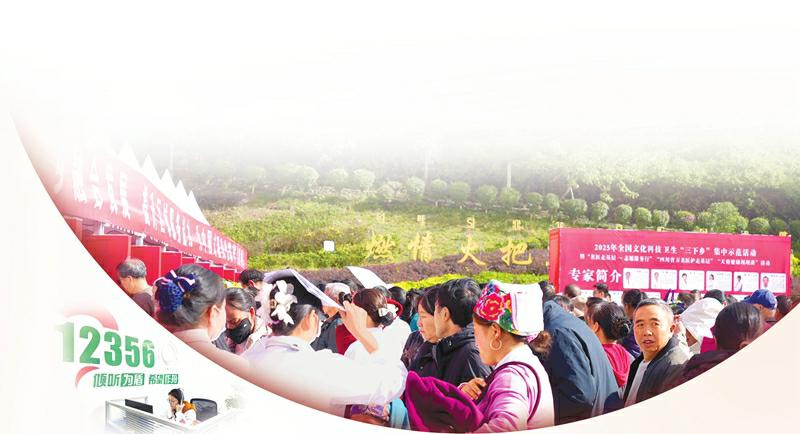
民声所向 健康所系 2025年四川卫生健康“8+8”民生实事温暖落地
Si Chuan Ri Bao· 2026-02-04 03:16
Core Insights - The article discusses the implementation of the "8+8" health and wellness initiatives in Sichuan for 2025, focusing on enhancing public health services and accessibility for residents [16][27]. Group 1: Health Services Expansion - Pediatric services are being improved with a three-year action plan, ensuring all 324 secondary and tertiary public hospitals provide pediatric care [9][18]. - Mental health services are being expanded with 531 psychological clinics and 396 sleep clinics achieving city-wide coverage, and a dedicated psychological assistance hotline has served over 41,000 individuals [9][20]. - Blood dialysis services are now available in all counties with populations over 100,000, ensuring local access to necessary treatments [11][18]. Group 2: Public Health Initiatives - The province has provided health education, vaccination, and chronic disease management services to over 83.5 million people through 12 basic public health services [12][23]. - Newborn screening for congenital heart disease has reached a 99.47% rate, exceeding national targets, while additional screenings for metabolic diseases and hearing impairments are also being conducted [12][23]. - Women's health initiatives have included free cancer screenings for over 102,000 women and the establishment of 2,199 vaccination points for HPV vaccines, administering over 176,000 doses [13][23]. Group 3: Accessibility and Convenience - The province has eliminated outpatient prepayment requirements across 4,345 medical institutions, easing financial burdens on patients [10][19]. - A streamlined blood donation reimbursement process has been implemented, allowing over 100,000 individuals to benefit from direct fee waivers [11][19]. - The "Panda Health Train" initiative provides mobile medical services to remote areas, enhancing healthcare access for underserved populations [15][20]. Group 4: Community Engagement and Education - Health knowledge dissemination has been prioritized, with various educational programs and community activities reaching over 200,000 residents [11][20]. - The "Panda Talks Seasonal Health" series has become popular, promoting health awareness through local cultural contexts [20][21]. - Family doctor teams have engaged with over 800,000 elderly individuals, emphasizing proactive healthcare delivery [24][26]. Group 5: Future Directions - Sichuan aims to strengthen grassroots healthcare institutions while controlling the expansion of higher-tier hospitals, ensuring resources are allocated effectively [25][27]. - The province is developing a dynamic healthcare resource map to better align medical services with population needs [26][27]. - Ongoing initiatives will focus on improving maternal and child health services, as well as enhancing the affordability of childcare and support for young families [26][28].

建议深化医疗机构与体育部门联动
Bei Jing Shang Bao· 2026-01-27 16:46
Group 1 - The core viewpoint emphasizes the importance of promoting healthy lifestyles through education to address the healthcare supply-demand imbalance and meet the public's needs for a better life [1] - In 2025, Beijing plans to implement policies focusing on enhancing student physical fitness, mental health, and curriculum optimization, with initial positive outcomes observed [1] - Despite progress, there are shortcomings in the scientific, standardized, and digital development of physical education in some schools, hindering further advancements [1] Group 2 - There is a significant issue with the public's passive health approach, often seeking medical help only in emergencies, which needs to be transformed [2] - The proposal includes integrating health lifestyle promotion into public cultural dissemination, utilizing media platforms to spread knowledge on preventive health and practical lifestyle tips [2] - Establishing incentive mechanisms in communities and organizations to recognize "health champions" and "fitness demonstration families" can foster a culture that values physical activity [2]
市政协委员张霞:建议深化医疗机构与体育部门联动,推动体医融合
Bei Jing Shang Bao· 2026-01-27 07:12
Core Viewpoint - The meeting emphasized the importance of improving public health and education, integrating sports development into China's modernization strategy, and promoting a healthy lifestyle among the youth [1]. Group 1: Health and Education Integration - The 20th Central Committee of the Communist Party of China highlighted the need to accelerate the construction of a healthy China and improve education to meet public demands [1]. - Zhang Xia, a member of the Beijing Municipal Political Consultative Conference, proposed that schools should take the lead in cultivating healthy lifestyles among students [2]. Group 2: Sports Education and Infrastructure - Recommendations include ensuring sufficient and quality physical education classes, with students engaging in at least 2 hours of exercise daily [2]. - There is a need to enhance the availability of sports facilities in urban areas, making them accessible to the community and promoting resource sharing [2]. Group 3: Public Health Awareness and Community Engagement - The current passive health model, where individuals seek medical help only when ill, needs to be transformed by integrating health education into public culture [3]. - Establishing incentive mechanisms to recognize "health champions" and "fitness demonstration families" can foster a culture that values physical activity [3].
2026北京两会|市政协委员张霞:建议深化医疗机构与体育部门联动,推动体医融合
Bei Jing Shang Bao· 2026-01-27 07:02
Group 1 - The core viewpoint emphasizes the importance of improving public health and quality of life through education and sports, aligning with the strategic deployment of building a healthy China as outlined in the 20th National Congress [3][4] - The Beijing Municipal Committee has proposed specific measures to promote healthy lifestyles and enhance public fitness, focusing on the role of education in addressing healthcare supply and demand issues [3][4] - By 2025, Beijing plans to implement policies targeting student physical fitness and mental health, although challenges remain in the scientific and digital development of physical education [3][4] Group 2 - Zhang Xia, a member of the Beijing Municipal Committee, advocates for schools to take responsibility for cultivating healthy lifestyles among youth, ensuring adequate physical education hours and diverse sports offerings [4][5] - Recommendations include optimizing urban sports facilities, increasing access to fitness resources, and creating a digital platform for fitness services to make scientific exercise more accessible [4][5] - The article highlights the need to shift from a reactive healthcare model to a proactive one, promoting health awareness through public media and establishing incentive mechanisms to encourage community fitness initiatives [5]
履职尽责这一年丨深化体医融合 促进全民健康
He Nan Ri Bao· 2026-01-24 23:01
Group 1 - The core viewpoint emphasizes the importance of integrating sports and medicine to promote health and manage chronic diseases effectively [1][2] - There is a significant gap in public awareness regarding chronic disease prevention, with many individuals relying on medication and rest rather than incorporating scientific exercise into their health routines [1] - The current healthcare service system lacks coordination, as clinical doctors often lack knowledge in exercise intervention, while fitness trainers struggle to identify patients' health risks [1] Group 2 - Scientific exercise is now considered an essential component in the prevention and rehabilitation of chronic diseases, rather than a supplementary option [2] - National policies are increasingly promoting the integration of sports and medicine, aiming to establish a new health management model centered around exercise intervention [2] - There is a call for the development of exercise prescription guidelines and standards tailored to different populations, as well as encouragement for social investment in integrated health service institutions [2]
北京小汤山医院联合多家单位发布运动干预指导手册
Xin Jing Bao· 2025-09-23 09:15
Group 1 - The core idea of the news is the release of a sports intervention guide manual by Beijing Xiaotangshan Hospital, aimed at helping the public achieve health goals through scientific exercise [1] - The manual was developed in collaboration with multiple organizations and includes contributions from experts in clinical medicine, rehabilitation medicine, sports science, and nutrition [1] - The guide covers basic knowledge of exercise prescriptions and intervention methods for chronic diseases such as coronary heart disease, hypertension, diabetes, and obesity, highlighting the benefits of specific sports like pickleball, Nordic walking, and aquatic exercises [1] Group 2 - The "integration of medicine and exercise" is presented as an innovative approach transitioning from a disease-centered model to a health-centered model, becoming a key strategy for chronic disease prevention and health promotion [2] - The Beijing Municipal Health Commission plans to continue initiatives that include reasonable diet and appropriate exercise, aiming to create a supportive health environment and promote health management services [2] - The focus is on shifting from disease treatment to health management, emphasizing the importance of scientific dissemination of health knowledge and skills [2]
运动健康风险评估专委会揭牌成立
Ren Min Ri Bao· 2025-09-18 20:47
Core Viewpoint - The establishment of the Sports Health Risk Assessment Professional Committee aims to promote the integration of sports and medicine, transitioning from "passive healthcare" to "active health" [1] Group 1: Committee Objectives - The committee will focus on building a scientific and systematic sports risk assessment and health promotion system [1] - It has launched a "Sports Risk Detection and Assessment Service" that includes a precise assessment system covering five dimensions and 45 indicators [1] Group 2: Future Plans - The committee plans to promote knowledge of sports risk prevention and implement nationwide sports risk screening and intervention [1] - It aims to assist in optimizing safety regulation for mass sports events to reduce the incidence of sports injuries [1] - The goal is to establish a "hospital-community-enterprise-venue" integrated service network for comprehensive risk coverage [1]
以体育为引擎 激活文旅消费新动能
Qi Lu Wan Bao Wang· 2025-09-16 07:29
Group 1 - The core viewpoint of the article emphasizes the strategic significance of the recent policy issued by the State Council to promote high-quality development in the sports industry and boost sports consumption, highlighting the integration of sports with cultural and tourism consumption as a key driver for economic growth [1][3] - The policy outlines specific measures to enhance sports events as a means to attract tourism consumption, encouraging the development of brand events and international competitions, which will create a multiplier effect on local consumption in areas such as dining, accommodation, and transportation [1][2] - The integration of sports with outdoor activities and low-altitude economy is identified as a new avenue for expanding tourism consumption, leveraging natural resources to create high-quality outdoor destinations and experiences that appeal to younger and high-end consumer demographics [2] Group 2 - The "Sports+" integration model is promoted to foster new tourism consumption formats, advocating for deeper industry convergence between sports and tourism, culture, health, and technology, which enhances consumer experiences and extends the value chain [2][3] - The introduction of the policy signifies a new mission for sports to activate large-scale tourism consumption, with a focus on event-driven traffic, innovative scenarios, and integrated business models, aiming to establish a new development pattern centered around sports as a driving force [3]
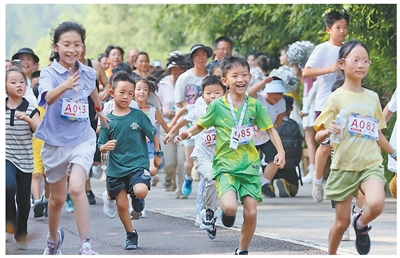
我运动 我快乐 我精彩(新时代画卷)
Ren Min Ri Bao· 2025-08-07 22:40
Core Viewpoint - The increase in the percentage of people regularly participating in sports activities from 28.2% to 37.2% over the past decade reflects the growth of the fitness community and the flourishing of the national fitness initiative in China [17][18][24]. Group 1: Growth of Sports Participation - The proportion of individuals engaging in regular physical exercise has risen by 9 percentage points, indicating a significant expansion of the fitness demographic [17]. - The surge in participation is attributed to the increasing variety of community sports events, which have become more accessible and appealing to the public [18][21]. Group 2: Impact of Community Sports Events - A record attendance of 60,396 at a "Su Super" match highlights the popularity of amateur sports events in China [19]. - Community sports events are characterized by their local flavor and emotional connections, fostering a sense of belonging and engagement among participants [20]. Group 3: Upgrading Public Services - The enhancement of public sports facilities, with 3,050 venues subsidized in 2024, has made sports more accessible to the general public [22]. - The development of convenient sports facilities, such as basketball courts under overpasses and pocket parks, contributes to the establishment of a "15-minute fitness circle" [22]. Group 4: Integration of Fitness and Health - The recognition of exercise as a key component of health has led to the introduction of personalized exercise prescriptions in national health monitoring [24]. - The focus on preventive health measures, such as weight management and sports rehabilitation, reflects a shift in health management from treatment to prevention [24].