体育IP

Search documents
迪士尼Q3营收同比微增2%,流媒体与乐园表现强劲,难掩传统电视业务颓势 | 财报见闻
Hua Er Jie Jian Wen· 2025-08-06 12:18
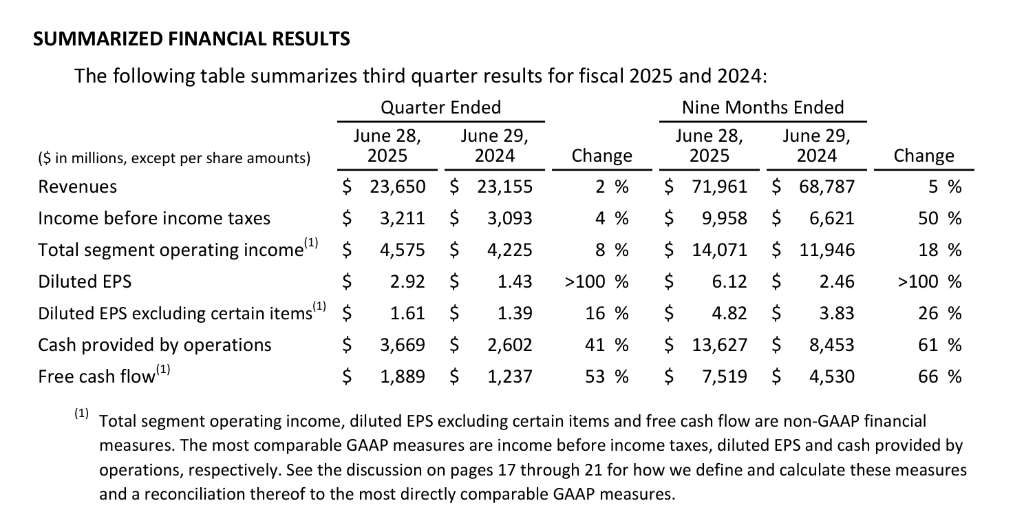
Core Insights - Disney's Q3 revenue increased by 2% year-over-year, driven by strong performance in theme parks and streaming, with streaming achieving a profit of $346 million for the first time [1][4] - The company raised its full-year profit forecast following better-than-expected quarterly earnings, despite a 2% drop in stock price during pre-market trading [1][4] Financial Performance - Q3 revenue for fiscal year 2025 was $23.7 billion, a 2% increase from $23.2 billion in the previous year [4] - Adjusted earnings per share (EPS) rose by 16% to $1.61, exceeding expectations, while GAAP diluted EPS increased from $1.43 to $2.92 due to a $3.3 billion non-cash tax benefit [4] - Free cash flow for the first nine months reached $7.5 billion, a significant increase of 66% year-over-year [4] Business Segments - Theme parks and streaming have emerged as the most reliable growth drivers for Disney, with theme park operating income rising by 13% to $2.52 billion and revenue increasing by 8% [5] - The flagship streaming service Disney+ reached 128 million subscribers, meeting analyst expectations, with projections for an additional 10 million subscribers due to expanded partnerships [5] Challenges - Traditional media networks and film production are under significant pressure, with traditional entertainment television revenue declining by 28% and overall entertainment segment operating income down by 15% to $1 billion [6] - The film segment reported a loss of $21 million, attributed to disappointing box office performances of films like Pixar's "Elio" and Marvel's "Thunderbolts" [6] Strategic Initiatives - Disney is focusing on its sports business through strategic transactions, including NFL acquiring a 10% stake in ESPN, which will integrate NFL media assets into a new ESPN streaming platform set to launch on August 21 [7] - ESPN has also secured a five-year deal worth over $1.6 billion with WWE, becoming the exclusive broadcaster for all WWE pay-per-view events in the U.S. starting in 2026 [7]


苏超,能否下沉到底?
Hu Xiu· 2025-06-05 12:11
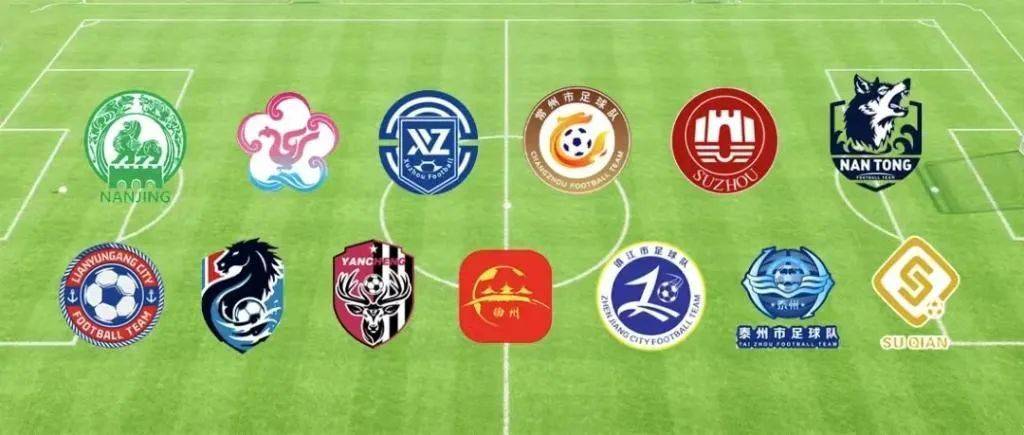
Core Viewpoint - The Jiangsu City Football League (referred to as Su Chao) has gained significant popularity and engagement, becoming a notable sports IP in China, comparable to previous grassroots initiatives like Village BA and Village Super [2][5][25]. Group 1: Event Organization and Participation - Su Chao features a higher organizational standard, with participation from all 13 prefecture-level cities in Jiangsu, creating a league structure similar to professional leagues and reaching a population of over 100 million [3][4]. - The attendance at Su Chao matches significantly surpasses that of professional leagues, with a recent match in Nanjing attracting 15,669 spectators compared to only 3,318 for a recent China League One match [4]. Group 2: Government Involvement and Cultural Impact - The league is heavily supported by local governments, which recognize the social and cultural value of football, using it to foster community engagement and regional pride [6][12][22]. - Su Chao is characterized as a government-initiated cultural event rather than just a sports competition, highlighting its role in enhancing local cultural life [8][12]. Group 3: Economic and Social Benefits - The league generates significant social benefits, including increased local engagement, community identity, and stimulation of local economies through increased consumer spending during events [14][15][22]. - The cost structure of Su Chao is favorable, as it benefits from government support that reduces expenses related to venue rental and security, allowing for low ticket prices [19][20]. Group 4: Unique Positioning and Future Considerations - Su Chao's success may not be easily replicable in other provinces, indicating a unique positioning within the Chinese sports landscape [25]. - The league serves as a model for smaller cities to engage in larger sporting events, emphasizing the need for regional leagues to connect with local communities and fill gaps in the current football structure in China [26][28].