便利店扩张

Search documents
中国连锁经营协会:2025年我国便利店继续保持扩张态势
Jing Ji Guan Cha Wang· 2026-01-26 05:53
Group 1 - The core viewpoint of the article highlights that convenience store companies are facing multiple challenges in 2025, including increased consumer price sensitivity, competition from discount snack stores, and the substitution of convenience needs by instant retail [1] - Despite these challenges, convenience store companies continue to show an expansion trend, indicating strong resilience and an optimistic outlook [1]
How Casey's became one of America's largest pizza chains
CNBC· 2025-09-10 15:07
Core Insights - Casey's General Stores has become the third-largest convenience store chain in the U.S. by targeting small towns, particularly in the Midwest [1][2] - The company operates 72% of its stores in communities with populations under 20,000, which are considered "underserved" markets [2] - Casey's is known for its food service, especially its pizza, which is made from scratch daily, contributing to its success [3] Financial Performance - In the fiscal first quarter of 2026, Casey's net profits increased by 19.5% year-over-year, while total inside sales grew by 14.2% [4] - The company's stock has appreciated over 190% since September 11, 2020 [4] Expansion Strategy - Casey's has been expanding through new store openings and acquisitions, including the recent purchase of Fikes Wholesale for $1.15 billion, marking its largest acquisition to date [5] - This acquisition allows Casey's to enter new markets in Alabama and Florida and expand its presence in Texas [5] - The convenience store sector is experiencing increased competition, which may impact future growth [5]



从东莞小超市混成全国“店王”——“怂王”美宜佳的逆袭
Hu Xiu· 2025-08-11 03:07
Core Viewpoint - Meiyijia has become the leading convenience store chain in China, with a staggering number of 37,943 stores as of last year, indicating its dominance in the industry and aggressive expansion strategy [1] Company Summary - Meiyijia originated in Guangdong and has rapidly expanded its presence across various locations, including airports, train stations, business districts, and even small towns [1] - The brand's logo is widely recognized, showcasing its extensive reach and visibility in the market [1] Industry Summary - The convenience store sector in China is experiencing significant growth, with Meiyijia leading the charge through high-density store openings [1] - The sustainability of profitability from such aggressive expansion remains a question, raising concerns about the long-term financial viability of this strategy [1]
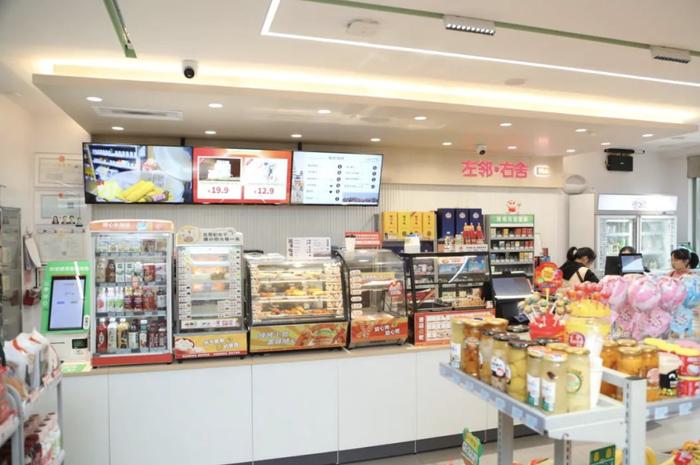
便利店赛道杀出一匹黑马“左邻右舍”
Xin Lang Cai Jing· 2025-05-08 00:07
Core Insights - The convenience store industry in China is witnessing significant changes, with the latest CCFA TOP100 list highlighting the stability of leading brands while showing volatility among lower-ranked brands [1][3] - The rapid growth of the "Left Neighbor Right Neighbor" brand under Chicheng Holdings is notable, with a total of 5,310 stores as of the latest report, marking a significant increase from previous years [1][4] Industry Overview - The top six convenience store brands in China have remained largely unchanged, with Meiyijia leading with nearly 40,000 stores for three consecutive years [1] - The entry threshold for the top ten has increased, with the tenth-ranked store now requiring 3,447 locations, up from 2,800 the previous year [1] - The 100th ranked store's entry threshold has decreased from 165 to 129, indicating a more dynamic lower tier in the industry [1] Company Performance - Chicheng Holdings' "Left Neighbor Right Neighbor" and "Life Station" brands have shown impressive growth, with an average of over 400 new stores opened annually over the past four years [3] - As of the end of 2024, "Left Neighbor Right Neighbor" is projected to exceed 5,800 stores, having opened 1,200 new stores in the past year [3][4] - The company reported a revenue of 1.065 billion yuan in 2024, a year-on-year increase of 15.39%, with a net profit of approximately 18.77 million yuan, up 181.18% [8] Competitive Landscape - The fastest-growing brands in the convenience store sector include Lawson and Meiyijia, with additions of 1,175 and 3,840 stores respectively in the past year [4] - "Left Neighbor Right Neighbor" is positioned as a strong competitor to "Furong Xingsheng," which has 5,838 stores, indicating a close competition in the community-focused convenience store segment [8][9] - The brand's unique selling proposition includes providing community services such as bill payments and package collection, differentiating it from other convenience stores [5][6] Business Model - The franchise model employed by "Left Neighbor Right Neighbor" allows for rapid expansion, with low initial investment costs for franchisees, estimated at 120,000 to 140,000 yuan for a 30-40 square meter store [4][5] - The brand focuses on essential goods and services, avoiding high-priced imported items, which appeals to local consumers [5][6] - The operational strategy emphasizes a localized approach, targeting lower-tier cities and gradually expanding into first-tier cities [6][8]