债市抛售

Search documents
美债日债领跌!关税担忧与财政压力引发全球债市抛售潮
Hua Er Jie Jian Wen· 2026-01-20 05:58
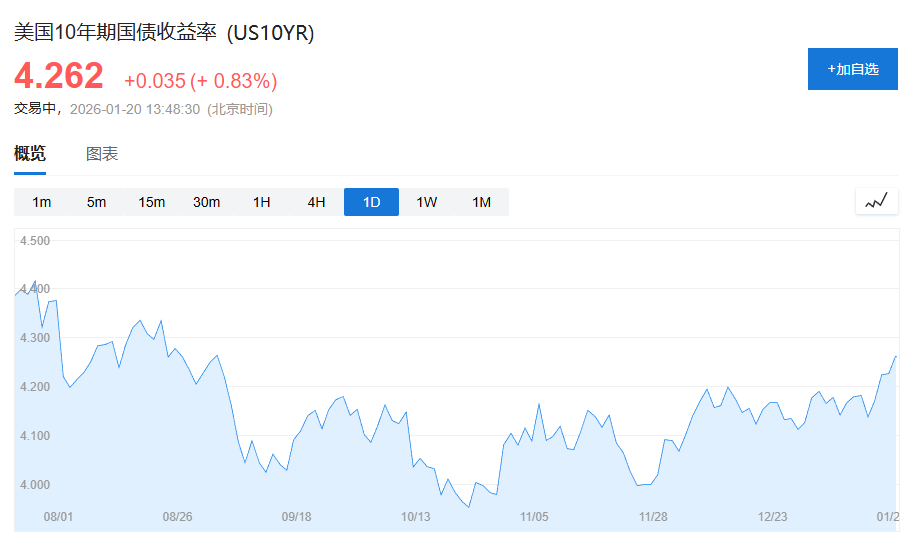
Core Viewpoint - The global bond market is experiencing a significant sell-off, driven by concerns over U.S. fiscal spending, renewed tariff threats, and doubts about the safe-haven status of U.S. Treasuries [1][5]. Group 1: Market Reactions - U.S. 10-year and 30-year Treasury yields have risen by at least 4 basis points, while Japan's 10-year yield increased by 8 basis points [1]. - The sell-off has affected major global bond markets, with Japan's 40-year bond yield reaching 4%, the highest since its introduction in 2007 [2]. - Australian and New Zealand bonds have also seen declines, alongside a drop in German government bond futures [2]. Group 2: Tariff Threats and Policy Uncertainty - President Trump's plan to impose tariffs on certain European countries has reignited concerns about the unpredictability of government policies, potentially exacerbating inflation and fiscal deficit worries [2][6]. - The tariff threats are seen as a catalyst for the current bond market sell-off, leading to a reassessment of policy stability [6]. Group 3: Fiscal Deficit and Investor Sentiment - The expanding U.S. fiscal deficit is diminishing the appeal of Treasuries as a safe haven, with fears that European countries may sell off U.S. bonds in response to the tariff conflict [5][7]. - Japanese investors may withdraw from U.S. debt due to rising domestic yields, further pressuring the U.S. bond market [7][8]. Group 4: Structural Market Pressures - The rise in Japanese bond yields is making U.S. Treasuries less attractive for Japanese investors, who may prefer to repatriate funds for better returns domestically [8]. - This trend could create structural pressures on the U.S. bond market, especially given the reliance on foreign capital for financing deficits [8].