债市负反馈

Search documents
永煤冲击难再现,债市难以复刻2020年末行情
Hua Er Jie Jian Wen· 2025-12-02 07:25
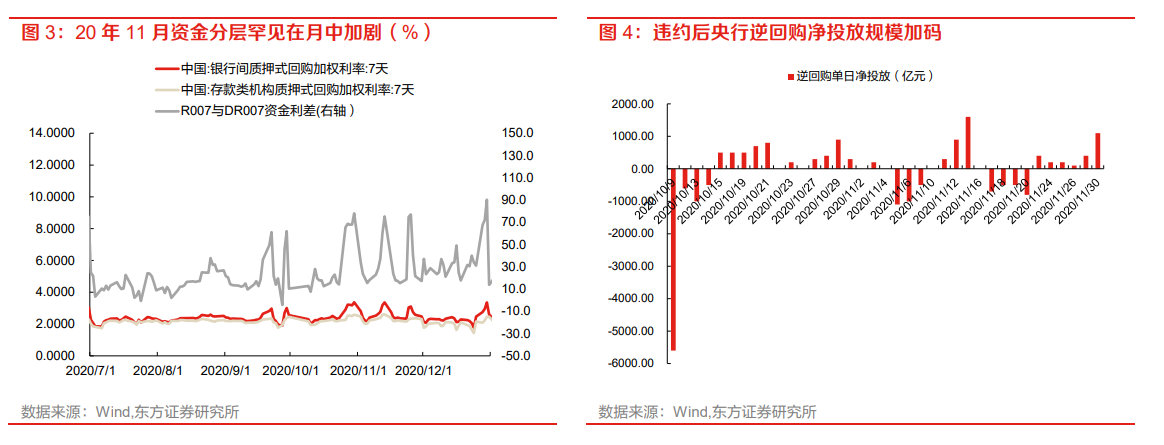
Core Viewpoint - The recent extension of Vanke's debt has drawn comparisons to the 2020 Yongmei default event, raising concerns about a potential repeat of significant adjustments in the bond market. However, Dongfang Securities argues that the current situation differs fundamentally from that of late 2020, suggesting that Vanke's extension will have a limited impact on market fundamentals and is unlikely to trigger systemic risks [1][2]. Group 1: Comparison with Yongmei Default - The market's tendency to draw parallels between Vanke's extension and the Yongmei default lacks a solid foundation, as the latter caused a collapse of "faith" in AAA-rated provincial state-owned enterprises, leading to a severe emotional shock and subsequent negative feedback from fund redemptions [2][3]. - The Yongmei default resulted in a rapid increase in yields for AAA and AA+ rated medium-term notes, with one-year yields rising by 14.4 and 17.4 basis points respectively during the week of the default, and reaching maximum increases of 28 and 54 basis points for the month [3]. - The central bank's swift response to the Yongmei event, including significant liquidity injections, helped stabilize the market quickly, contrasting with the current situation where the risk spread is minimal and does not necessitate similar interventions [8][9]. Group 2: Current Market Conditions - The weakening trend in the real estate sector is already a market consensus, and while Vanke's extension may have surprised some investors, it has not shattered any prevailing "faith," resulting in lower panic levels compared to the Yongmei event [9]. - The current credit risk diffusion is limited, and the negative feedback pressure on the funding and bond markets is manageable, meaning there is no need for large-scale central bank interventions [9][10]. - Looking ahead to December, the funding pressure is expected to remain controllable, with a decrease in the issuance scale of interest rate bonds and seasonal fluctuations in the funding market anticipated [10].