
儿童智能手表市场

Search documents
“贩卖社交”的小天才手表,快被反噬了
首席商业评论· 2026-01-09 04:51
Core Viewpoint - The article discusses the evolving landscape of children's smartwatches, highlighting their increasing popularity and the competitive dynamics among brands in the market [4][5][8]. Market Overview - The market penetration rate of children's smartwatches in China is projected to rise from 20% in 2021 to 35% by 2025, indicating that one in three children will own a smartwatch, with urban areas seeing rates close to 50% [5]. - Sales data shows that in the first 11 months of 2025, the sales revenue of children's smartwatches reached 5.25 billion, surpassing the total sales of 4.63 billion in 2024 [6]. Brand Competition - The leading brand in the children's smartwatch sector is 小天才 (Xiaotianzi), holding a market share of 53.7% in the first ten months of 2025, significantly outpacing its competitors [9]. - Other notable brands include Huawei and Xiaomi, which are leveraging their existing mobile ecosystems to enhance their smartwatch offerings [9][18]. Product Features and Differentiation - Children's smartwatches are designed with features such as precise location tracking, safety assurance, and video calling, functioning as a "call locator" for children [5]. - 小天才 focuses on social features and a closed social network, while Huawei emphasizes parental control and anti-addiction features [15][18]. Consumer Insights - Parents prioritize essential functions like accurate location tracking and instant communication, with concerns arising over social features that may lead to peer pressure and potential scams [22][24]. - The social dynamics surrounding children's smartwatches have created a culture where owning a 小天才 watch is seen as a status symbol among peers [26]. Historical Context and Future Outlook - The evolution of children's smartwatches began around 2007, initially offering basic functions like location and calling, and has since transformed into multifunctional devices that also serve social purposes [28]. - The future of children's smartwatches will depend on understanding new consumer needs and balancing functionality with real-world usage scenarios [28].

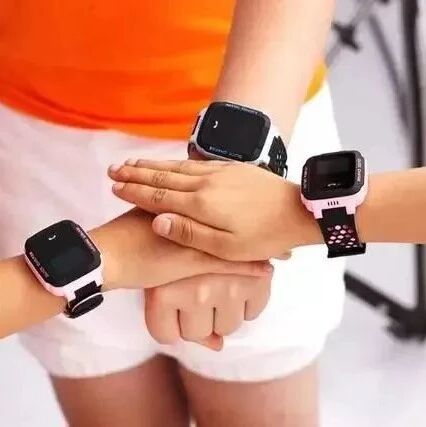
卖疯了!收割中国小孩的智能手表,有哪些芯片机会
芯世相· 2025-05-16 03:53
Core Viewpoint - The children's smart watch market has rapidly grown into a significant segment of the smart wearable industry, with notable sales figures and market share, particularly dominated by the brand "小天才" (Xiaotianzi) [2][3][11]. Group 1: Market Performance - In 2024, children's smart watches accounted for 31.5% of sales on traditional e-commerce platforms, nearly matching adult smart watches and smart bands, both at 34.4% [2]. - Xiaotianzi captured nearly half of the global children's smart watch market share in Q2 2024, positioning itself among the top five wearable device manufacturers globally [2]. - The online sales of children's smart watches reached 863.7 million units in 2024, generating a revenue of 38.4 billion yuan, with an average price of 444 yuan [13]. Group 2: Market Growth and Trends - The demand for children's smart watches has been on a steady rise, with a compound annual growth rate (CAGR) exceeding 30% from 2015 to 2020, and projections indicating the market size will surpass 200 billion yuan by 2026 [8]. - In 2018, the shipment of children's smart watches in China reached 21.67 million units, three times that of adult smart watches, with a market size exceeding 8.6 billion yuan [7][8]. - The market has evolved from low-cost, low-functionality products to high-end devices with advanced features, indicating a shift towards premiumization and brand differentiation [11][12]. Group 3: Competitive Landscape - Xiaotianzi holds a market share of 26.6% in the children's smart watch segment, with a year-on-year sales increase of 178.9%, significantly outperforming competitors like Xiaomi and Huawei [14]. - The competitive focus has shifted from basic functionality to enhanced user experience, with brands investing in performance, quality, and service [13]. - The children's smart watch market is characterized by a strong brand loyalty and ecosystem, with Xiaotianzi leveraging its marketing strategies and product segmentation to maintain a competitive edge [14]. Group 4: Supply Chain and Components - The children's smart watch industry consists of three main segments: upstream component suppliers, midstream manufacturers, and downstream consumers [16]. - The cost structure indicates that around 60% of a 600 yuan children's smart watch is attributed to components like modules, straps, and screens, while the most profitable segment is the midstream brand manufacturers [18]. - Key components include various chips and sensors, with a notable trend towards the adoption of domestic chips, indicating a shift in the supply chain dynamics [28]. Group 5: Technological Advancements - The integration of advanced chips and modules has significantly improved the functionality of children's smart watches, enhancing features like positioning accuracy, video clarity, and battery life [19]. - Major chip manufacturers for children's smart watches include Qualcomm and Unisoc, with a growing trend of domestic chips replacing imported ones [22][28]. - The evolution of technology in children's smart watches is expected to continue driving demand for core components, benefiting domestic chip manufacturers [30].


