
儿童用药研发

Search documents
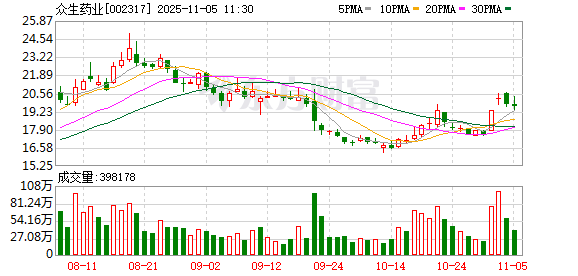
众生药业:目前昂拉地韦颗粒III期临床试验正在积极推进中
Mei Ri Jing Ji Xin Wen· 2025-11-05 03:49
Core Viewpoint - The company is actively addressing the clinical needs for pediatric patients suffering from influenza, particularly in light of the rising cases of influenza A among children and associated health concerns [2]. Company Response - The company has acknowledged the significant clinical demand for pediatric medication and is currently advancing the Phase III clinical trial of its drug, Olanidavir granules [2]. - The company aims to complete the relevant research promptly and intends to apply for drug registration in compliance with applicable laws and regulations, thereby providing more treatment options for affected children [2].


我国儿童用药超90%非儿童专用药
第一财经· 2025-10-13 13:19
Core Viewpoint - The article emphasizes the growing focus on pediatric drug development in China, driven by regulatory incentives and the need to address unmet medical needs for children [3][5]. Group 1: Current State of Pediatric Drug Development - In the first five months of the year, China approved 57 pediatric drugs, significantly surpassing the previous year's figures, yet pediatric drugs still represent a small fraction of total drug approvals [3]. - Over 90% of pediatric medications are not specifically designed for children, with only about 60 out of over 3,500 approved chemical drug formulations being pediatric-specific [5][6]. - The pediatric drug supply system faces critical issues such as drug shortages, lack of evidence-based clinical use, and irrational clinical applications [5]. Group 2: Regulatory Support and Guidelines - The National Medical Products Administration (NMPA) has issued guidelines to encourage the development of modified new drugs for pediatric use, focusing on improving safety, efficacy, and adherence [3][6]. - The guidelines specify that pediatric drug development should prioritize the protection of children's rights and reduce unnecessary repetitive studies [7][11]. - The NMPA encourages the use of real-world evidence and extrapolation from adult data to address recruitment challenges in pediatric clinical trials [11][12][13]. Group 3: Challenges in Pediatric Drug Development - The development of pediatric drugs is complicated by difficulties in recruiting child participants for clinical trials, ethical considerations, high costs, and lengthy timelines [10]. - The NMPA emphasizes the importance of ensuring participant safety in pediatric clinical trials, advocating for the use of existing research evidence to minimize unnecessary studies [11]. - Ethical constraints often lead to reliance on adult data for pediatric drug trials, which may not accurately predict adverse reactions specific to children [12]. Group 4: Importance of Modified New Drugs - Modified new drugs are crucial for children due to their unique physiological characteristics and metabolic differences from adults, offering a lower-cost and shorter development cycle compared to innovative drugs [6][7]. - The NMPA's guidelines highlight the need for drug formulations that are suitable for children, including considerations for dosage, taste, and ease of administration [6][8].

我国儿童用药超90%非儿童专用药,“改良型新药”如何破局
Di Yi Cai Jing· 2025-10-13 12:28
Core Insights - The development of pediatric drugs has become a focal point in the market due to current policies promoting priority reviews and approvals [1] - There is a significant unmet demand for pediatric medications, with only a small percentage of drugs specifically designed for children [2] - The National Medical Products Administration (NMPA) has issued guidelines to encourage the development of modified new drugs for children, emphasizing the importance of protecting the rights of child participants in clinical trials [3][4] Industry Overview - Over 90% of pediatric medications in China are not specifically designed for children, highlighting a critical gap in the pediatric drug supply system [2] - The market for pediatric drugs is expanding, but issues such as drug shortages and lack of evidence-based clinical use remain prevalent [2] Regulatory Developments - The NMPA's recent response outlines the need to encourage the development of modified new drugs for pediatric use, which can include expanding existing adult drugs to children [3] - The guidelines stress that clinical value for pediatric drugs may differ from adult applications, allowing for a broader interpretation of clinical benefits [4] Clinical Trial Considerations - The NMPA emphasizes the importance of minimizing unnecessary repetitive studies in pediatric drug development, advocating for the use of existing research evidence [6] - Ethical considerations are paramount in pediatric clinical trials, with a focus on ensuring the safety of child participants [6][7] Research Methodologies - Real-world studies (RWS) are highlighted as a valuable complement to randomized controlled trials (RCT) in pediatric drug development, especially when ethical challenges arise [8] - The use of adult data extrapolation is acknowledged, but caution is advised as safety data may not fully predict adverse reactions in children [7]
创新药企加码儿科用药研发新突破
Xin Hua Wang· 2025-06-22 01:47
Group 1: Industry Overview - The production of pediatric medications has historically faced challenges, including a lack of manufacturers, limited varieties, and insufficient suitable formulations, referred to as the "three shortages" [1] - Recent government policies have been introduced to encourage and support the research and production of pediatric medications [1][9] - The approval of pediatric medications has been increasing, with 106 new pediatric drug varieties approved in 2024, along with 35 additional varieties expanding pediatric indications [9] Group 2: Challenges in Pediatric Medication - There are significant challenges in pediatric drug development, including difficulties in recruiting child patients for clinical trials and determining appropriate dosages and administration methods [8][10] - The issue of "disease waiting for drugs" and the prevalence of off-label use of adult medications for children pose risks to pediatric medication safety [8][10] Group 3: Importance of Education and Awareness - There is a need for enhanced public awareness and education regarding children's growth and development, as many parents still hold misconceptions that prevent timely medical consultations [2][3][4] - Strengthening educational efforts among healthcare professionals and the public is crucial for improving the diagnosis and treatment of growth-related issues in children [3][4][7] Group 4: Innovations in Pediatric Medication - Companies are increasingly focusing on the pediatric growth and development sector, with innovations such as long-acting growth hormones that reduce the frequency of administration from daily to weekly [5][6] - The introduction of user-friendly devices, such as smart electronic injection pens, aims to improve the safety and comfort of pediatric patients during treatment [6] Group 5: Future Directions - There is a call for further research into various causes of growth disorders and the development of specific treatment plans for rare syndromes and genetic defects [7] - Collaboration between enterprises and public organizations is essential to enhance the accessibility and precision of pediatric medications, ensuring that children receive timely and appropriate treatment [10]
