先进半导体制造

Search documents
台积电海外建厂加速!
国芯网· 2026-03-24 12:43
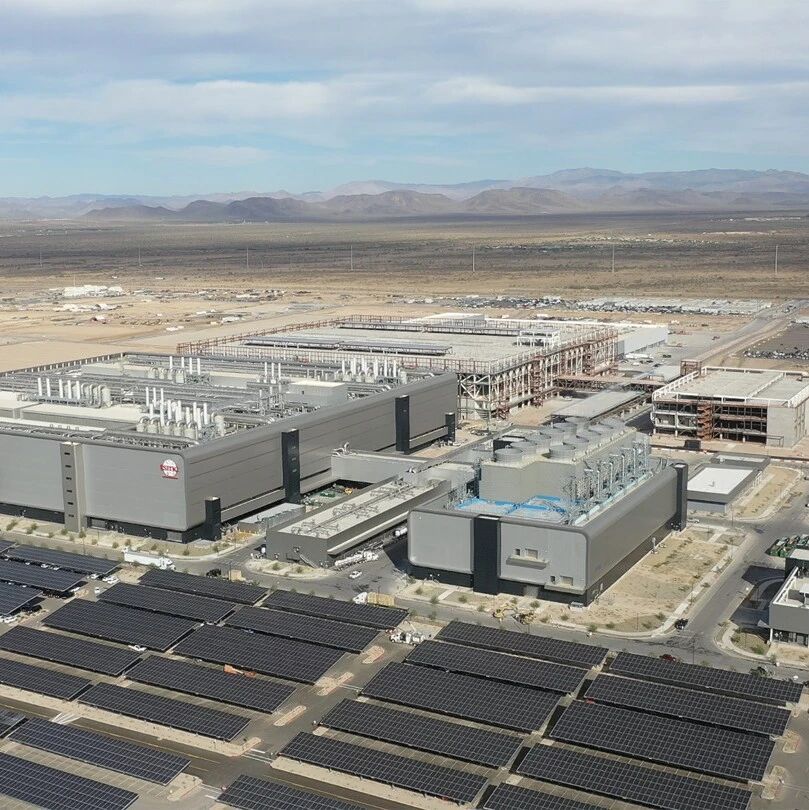
Group 1 - The core viewpoint of the article emphasizes the rapid development of TSMC's overseas wafer fabrication plants, particularly in the U.S., where construction timelines have been significantly reduced from 6 quarters to 4-5 quarters [2] - TSMC's Arizona facility (Fab21 P2) is expected to achieve 3nm mass production by the second half of 2027, with the subsequent Fab21 P3 also anticipated to enter the main system installation phase around the same time [4] - TSMC is concurrently expanding its advanced process capacity in Taiwan, with the third phase (P3) of the 2nm and below production bases at Hsinchu Fab20 and Kaohsiung Fab22 set to begin equipment installation in Q3 2026 [4]


永太科技(002326) - 2025年6月25日-6月26日投资者关系活动记录表
2025-06-26 08:48
Company Overview - Zhejiang Yongtai Technology Co., Ltd. was established in 1999 and listed in 2009, headquartered in Taizhou, Zhejiang Province, specializing in fluorine fine chemicals manufacturing [2][3] - The company covers new materials (lithium battery and fluorinated liquid materials), pharmaceuticals, plant protection, and trade, with a comprehensive product range across the upstream and downstream supply chain [2][3] Performance and Financials - In 2024, the company achieved a revenue of CNY 458,939.78 million, a year-on-year increase of 11.18%, with a net profit loss reduced by 36.26% [4] - The lithium battery materials segment showed significant improvement with a gross margin increase of 23.07 percentage points; the plant protection segment's revenue grew by 91.79% [4] - In Q1 2025, the company reported a revenue of CNY 105,995.92 million and a net profit of CNY 1,057.75 million [4] Business Segments Trade Segment - The trade segment, led by subsidiary Shanghai Nonghui, focuses on the sale of pesticide raw materials and formulations, holding over 1,500 overseas pesticide registration certificates [5] Plant Protection Segment - The growth in the plant protection business was driven by three factors: market recovery post-inventory adjustment, new production lines coming online, and proactive customer expansion [6][7] Lithium Battery Technology - The company prioritizes the development of medium and long-term lithium battery technology, enhancing collaboration with industry partners for application research [8] - The commercialization timeline for this technology remains uncertain, dependent on R&D progress and market conditions [9] Fluorinated Liquid Products - The fluorinated liquid business has established a small-scale order base, with plans for rapid growth through product optimization and market expansion [10] - The market for fluorinated liquids is expanding due to advancements in AI, high-performance computing, and semiconductor manufacturing, though challenges remain [11] Future Growth Strategies - Profit growth will be driven by expanding lithium materials capacity, stable demand in pharmaceuticals, global expansion in plant protection, and breakthroughs in new businesses like fluorinated liquids [12] - The company is exploring solid-state battery technology, maintaining communication with industry partners to adapt to market needs [12] Pharmaceutical Business Development - The pharmaceutical segment will focus on high-value formulations, leveraging procurement opportunities to penetrate the domestic market, and enhancing market development capabilities through specialized teams [13] Financing Plans - Currently, there are no plans for additional financing; future decisions will be based on project progress and funding needs [15]

台积电:关税将“杀死”亚利桑那州1650亿美元先进制造投资
news flash· 2025-05-23 02:02
Core Viewpoint - TSMC warns that proposed tariffs on foreign-made chips could jeopardize its $165 billion advanced semiconductor manufacturing investment in Arizona [1] Group 1: Investment Impact - TSMC highlights that tariffs may lead to a decline in demand, affecting the feasibility of its U.S. operations [1] - The Arizona facility is expected to account for approximately 30% of TSMC's global capacity for cutting-edge 2nm and more advanced chips, sufficient to meet anticipated U.S. demand [1] Group 2: Facility Development - TSMC confirms the commencement of construction on a third wafer fab in Arizona, which will initially produce 2nm chips and later adopt its next-generation A16 process technology [1]
台积电南京厂,去年大挣260亿,美国厂巨亏
半导体行业观察· 2025-04-21 00:58
Core Viewpoint - TSMC's overseas operations reported significant losses in 2022, particularly in Arizona, while its operations in mainland China showed strong profitability [1][2]. Group 1: Financial Performance - TSMC's Arizona facility incurred a loss of nearly 14.3 billion yuan in 2022, marking the largest loss since its establishment, with cumulative losses exceeding 39.4 billion yuan over four years [1]. - The Japanese subsidiary, JASM, reported a loss of 4.375 billion yuan in 2022, the highest since its establishment, with total losses of 7.933 billion yuan over the past three years [2]. - The European joint venture, ESMC, also faced losses exceeding 500 million yuan in 2022 [2]. - In contrast, TSMC's Nanjing operations in mainland China generated a profit of 25.954 billion yuan in 2022, continuing a trend of stable profits above 20 billion yuan for three consecutive years [2]. Group 2: Investment Strategy - TSMC announced plans to expand its investment in the U.S. to a total of 165 billion yuan, with the Arizona facility expected to contribute approximately 30% of its 2nm and more advanced process capacity in the future [2]. - The company is set to build three additional wafer fabs, two advanced packaging plants, and one R&D center in Arizona, with the first fab already producing at a yield comparable to its facilities in Taiwan [2]. - TSMC's chairman emphasized that investments in Japan and Germany will continue as planned, with the first special process technology fab in Kumamoto already achieving good yields [3].