光伏行业价格战

Search documents
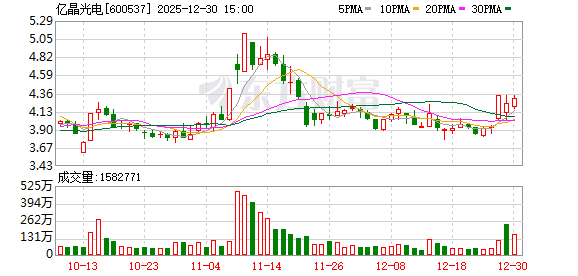
亿晶光电被“追账”1.4亿元 这几家光伏企业亦被责令退还投资款
Di Yi Cai Jing· 2025-12-30 13:33
Core Viewpoint - The consequences of blind expansion in the photovoltaic industry are becoming evident, as companies face challenges in fulfilling investment agreements and are subject to financial penalties [2][5]. Company Summary - Yicheng Photovoltaic (600537.SH) announced that its Chuzhou photovoltaic project is facing a potential recovery of 140 million yuan due to non-fulfillment of investment agreements [2]. - The company has only completed 7.5GW of the planned 10GW capacity for its photovoltaic battery project, with further phases of the project not yet constructed [4]. - The company plans to gradually halt production at its Chuzhou base starting in October 2024 due to industry-wide downturns [4]. Industry Summary - The photovoltaic industry is experiencing a significant downturn, with component prices dropping sharply from 1.8-1.9 yuan/W at the beginning of 2023 to below 1 yuan/W by the end of the year, and further declining to below 0.6 yuan/W in 2024 [3][4]. - Many companies in the industry, including Yicheng Photovoltaic, are facing similar challenges with project compliance and financial liabilities due to the industry's cyclical nature [5]. - Instances of local governments demanding repayment of funds due to project delays are becoming more common, indicating a shift in accountability within the industry [5].


折戟A股、重启港股IPO,中润光能由盈转亏背后的多重隐患
Sou Hu Cai Jing· 2025-03-25 12:23
Core Viewpoint - Jiangsu Zhongrun Photovoltaic Technology Co., Ltd. (Zhongrun) is attempting to restart its IPO process in Hong Kong after failing to list in A-shares, facing significant operational challenges and industry-wide issues, including a sharp decline in revenue and a substantial loss in 2024 [3][26]. Group 1: IPO Journey - Zhongrun previously submitted an IPO application to the Shenzhen Stock Exchange in May 2023, aiming to raise 4 billion RMB, with plans to invest in an 8GW high-efficiency photovoltaic cell project and supplement working capital [4][6]. - The company faced scrutiny from the Shenzhen Stock Exchange regarding the rationale behind its fundraising scale and the reasonableness of its working capital needs [5][6]. - After a significant drop in estimated valuation from 428.82-524.11 billion RMB to 200.36-244.88 billion RMB, Zhongrun adjusted its fundraising target from 4 billion RMB to 2.3 billion RMB [6][8]. Group 2: Financial Performance - In 2024, Zhongrun reported a revenue drop of 45.7% year-on-year, with total revenue falling to approximately 11.32 billion RMB, down from 20.84 billion RMB in 2023 [12][17]. - The company's photovoltaic cell revenue plummeted by 51.6% from 189.67 billion RMB in 2023 to 91.79 billion RMB in 2024, while revenue from photovoltaic modules increased slightly [12][17]. - Zhongrun's net loss for 2024 reached 1.36 billion RMB, marking a significant decline from a profit of 1.68 billion RMB in 2023 [17][19]. Group 3: Market Position and Challenges - Zhongrun is the world's largest professional photovoltaic cell manufacturer by shipment volume in 2024, holding an 18.3% market share, and the second-largest overall with a 14.6% market share [12][17]. - The company is experiencing intense competition and price declines in the photovoltaic industry, leading to a significant reduction in average selling prices of its products [14][17]. - The transition from P-type to N-type photovoltaic cells is underway, with N-type sales increasing from 15.9% in 2023 to 54.5% in 2024, reflecting industry trends [17][18]. Group 4: Operational Risks - Zhongrun's inventory surged by 5.21 billion RMB in just one month, raising concerns about liquidity and potential impairment risks due to market fluctuations [22][24]. - The company has a high dependency on a few major customers, with the top five clients accounting for 49.8%, 52.9%, and 37.2% of total revenue over the past three years [20][22]. - The company's financial health is under pressure, with a rising asset-liability ratio from 79.1% in 2022 to 83.7% in 2024, indicating increasing short-term debt challenges [23][24].