
光伏高质量发展

Search documents
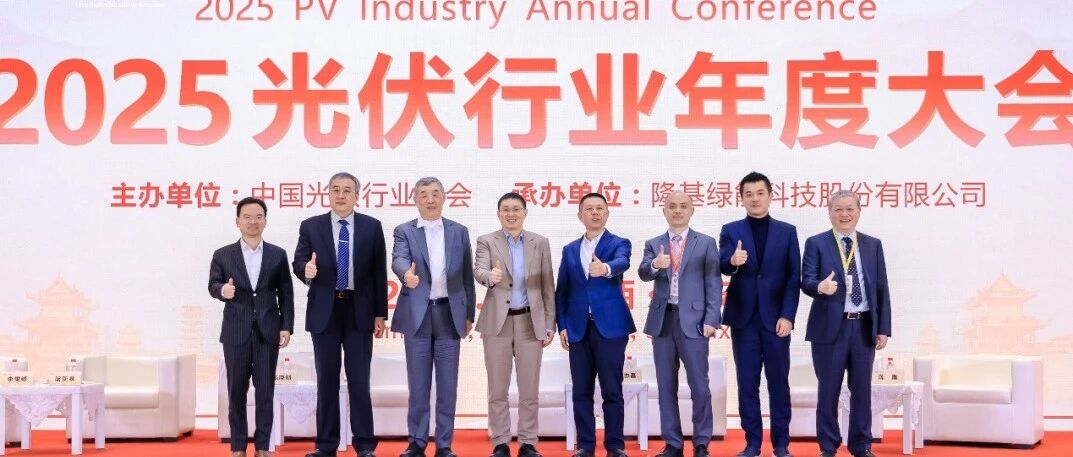
破“内卷”、立标准、向未来,光伏行业领袖共话行业生态重塑之道
中国能源报· 2025-12-19 08:42
Core Viewpoint - The keyword "breaking the cycle" has become the strongest theme for the 2025 photovoltaic industry annual conference, emphasizing the need for high-quality development and the rejection of vicious competition in the industry [1][3]. Group 1: Industry Transformation - The photovoltaic industry is urged to move away from "involution" and focus on high-quality development, requiring collaboration among industry authorities, local governments, associations, media, and financial institutions [3]. - The essence of addressing "involution" is to promote competition based on technology and quality rather than price wars, as highlighted by industry leaders [3][4]. - There is a consensus that companies must rely on independent innovation and original technology to enhance product standards and quality, while the market should raise entry barriers to support advanced products [4][7]. Group 2: Global Supply Chain Resilience - The global trade environment is becoming increasingly complex, posing new challenges for Chinese photovoltaic companies as they seek to expand internationally [6]. - Companies are encouraged to shift from simple product output to creating value, building a more resilient global supply chain [6]. - Key agreements among industry leaders include raising export standards for photovoltaic products, integrating advanced technology and ESG performance into financial assessments, and establishing stricter quality standards with international recognition [7]. Group 3: Future Growth and Market Dynamics - The photovoltaic industry is transitioning from a phase of rapid installation to one focused on high-quality consumption and market-driven growth [9]. - The role of photovoltaic energy is becoming more prominent in the new power system, necessitating solutions for intermittency and demand-side response through "photovoltaic + energy storage" models [9]. - Despite current challenges, industry leaders maintain an optimistic outlook for the future, anticipating breakthroughs in quality and sustainability supported by policy and market forces [10].





光伏高质量发展的储能“答案”
Zhong Guo Neng Yuan Wang· 2025-12-04 01:36
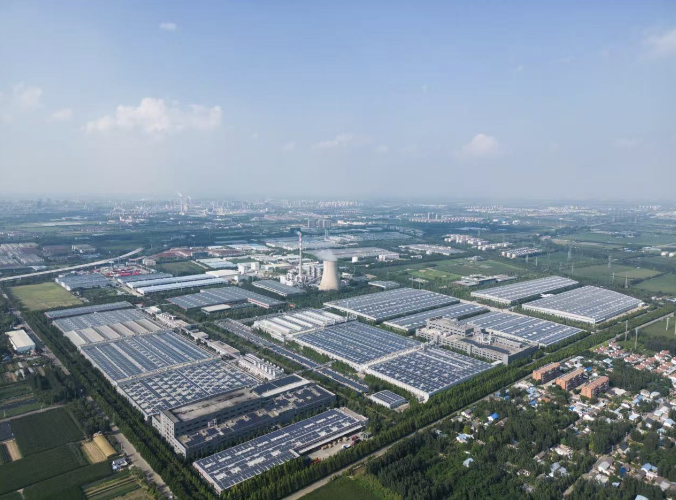
Core Viewpoint - The rapid expansion of renewable energy in China, particularly solar power, faces significant challenges related to grid absorption and low profitability, necessitating innovative solutions like energy storage to enhance efficiency and sustainability [1][2][4][5]. Group 1: Renewable Energy Expansion - China's renewable energy installed capacity is approaching 2.2 billion kilowatts, with wind and solar power exceeding 1.7 billion kilowatts combined [2]. - In the first three quarters of this year, 31 million kilowatts of new renewable energy capacity was added, a year-on-year increase of 47.7%, accounting for 84.4% of all new installations, with solar power contributing 24 million kilowatts [2][4]. Group 2: Challenges in the Industry - The rapid growth in installed capacity is putting immense pressure on the grid's ability to absorb this energy, while policy changes and market dynamics are compressing profit margins for projects [4][5]. - The introduction of the "136 Document" emphasizes market-oriented electricity trading and strengthens the responsibility for renewable energy absorption, challenging the traditional "full grid access" model [4][5]. Group 3: Energy Storage as a Solution - Energy storage is identified as a critical solution to the challenges of solar energy absorption and profitability, transitioning from an optional configuration to a necessary component in renewable energy projects [5][12]. - The implementation of a 30MW/60MWh energy storage system at Huqin Group's industrial park has significantly improved solar energy utilization, increasing self-consumption rates from 80% to 92% and reducing electricity costs by 10 million yuan annually [7][11]. Group 4: Importance of Quality in Energy Storage - The choice of high-quality energy storage systems, such as those from CATL, is crucial for ensuring long-term reliability and safety, as the storage systems must endure frequent charge and discharge cycles [8][11][12]. - The industry consensus highlights that energy storage should not be viewed merely as an add-on but as an integral part of the energy management system, enhancing the overall economic viability of solar projects [12][14]. Group 5: Future Trends in the Industry - The integration of energy storage with solar power is expected to redefine the role of solar companies, shifting them from being solely solar providers to comprehensive energy service providers [8][12][14]. - The successful implementation of energy storage solutions at Huqin Group serves as a replicable model for over 500 similar industrial parks across the country, showcasing the potential for broader industry transformation [8][12].

国际能源署下调增长预期 全球光伏或迎来理性发展期
Zhong Guo Neng Yuan Wang· 2025-10-23 08:24
Core Insights - The International Energy Agency (IEA) has revised its global renewable energy generation capacity forecast for 2025-2030 down by 5%, indicating a total of approximately 3.68 terawatts of new solar photovoltaic (PV) capacity, which still accounts for nearly 80% of the total renewable energy additions during this period, but at a slower growth rate than previously expected [1][2][4] Group 1: Market Dynamics - The downward revision is attributed to structural changes in the global PV market and key policy adjustments, with a projected reduction of about 248 gigawatts in global renewable energy capacity, of which 173 gigawatts is from solar [2] - In the U.S., the forecast for solar capacity is expected to decrease by over 140 gigawatts due to changes in tax incentives for residential solar systems, leading to a significant slowdown in distributed solar installations [2][3] - The IEA notes that issues such as insufficient grid capacity and complex approval processes continue to hinder solar project development in various regions [2][3] Group 2: Regional Performance - In contrast to the U.S., the European solar market is expected to remain robust, with countries like Germany, Spain, and Italy driving growth through renewable energy project auctions [3] - Despite varying policy execution speeds within the EU, factors such as declining industry costs, advancements in storage technology, and rising residential electricity prices are expected to sustain high levels of solar demand in Europe [3][4] Group 3: Future Projections - The IEA anticipates that by the end of 2030, renewable energy will become the largest source of electricity globally, accounting for 43% of total generation, with solar surpassing hydropower as the leading renewable source [4] - The global electricity demand is projected to grow at an average rate of 3.9% annually from 2025 to 2027, with renewable energy expected to meet 95% of this demand increase, half of which will come from solar PV [4][5] Group 4: Emerging Markets - Emerging markets in the Middle East, North Africa, and Southeast Asia are becoming new growth hubs for solar PV, driven by the need to address fossil fuel price volatility and electricity shortages [5][6] - Countries like Saudi Arabia and Pakistan are accelerating national solar projects, contributing to rapid increases in renewable energy capacity [6] Group 5: Systemic Challenges and Solutions - The IEA emphasizes the need for simultaneous upgrades in grid infrastructure, expansion of storage capabilities, and improvements in flexible dispatch mechanisms to activate the global renewable energy market [7] - The current challenge for the solar industry is transitioning from merely increasing installed capacity to optimizing usage, necessitating a focus on technological innovation, system integration, and operational efficiency [7][8] - A unified, transparent, and long-term policy framework is crucial for fostering confidence in solar development globally, as the industry undergoes a rebalancing of its global supply chain and market structure [8]