光催化

Search documents
行业聚焦:全球超细二氧化钛粉末市场头部企业份额调研(附TOP10 厂商名单)
QYResearch· 2025-12-17 01:20
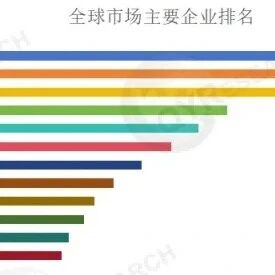
Core Viewpoint - The article discusses the rapid evolution of ultra-fine titanium dioxide (TiO₂) from a traditional pigment to a multifunctional nanomaterial, highlighting its diverse applications and the increasing market demand driven by advancements in various industries [4][11]. Market Size - According to QYResearch, the global ultra-fine titanium dioxide powder market is projected to reach approximately $368.02 million by 2025 and $513.24 million by 2031, with a compound annual growth rate (CAGR) of 5.70% over the coming years [5][8]. Industry Chain - The upstream supply chain includes raw materials such as ilmenite, rutile, titanium chloride, and sulfuric acid, with key resources concentrated in Australia, South Africa, Brazil, Canada, and parts of China. The midstream focuses on the core production processes, including crystal type control, particle size management, and surface coating [9][10]. - The downstream applications are extensive, covering cosmetics, plastics, rubber reinforcement materials, air purification, self-cleaning coatings, lithium battery anodes, and antibacterial materials [10]. Industry Trends - The first major trend is the upgrade towards functionalization and high-end applications, with TiO₂ becoming essential in photocatalysis, energy materials, and antibacterial applications [11]. - The second trend involves accelerated surface coating and composite material development to enhance stability and compatibility in various product systems [11]. - The third trend emphasizes the increasing requirements for green manufacturing, low energy consumption, and safe production practices, driven by tightening environmental standards [12]. Market Drivers - The growing global demand for effective sunscreen materials is a long-term core driver for ultra-fine TiO₂, as consumer awareness of UVA/UVB protection rises [13]. - Environmental governance and the rapid development of photocatalytic materials are also significant drivers, with TiO₂ being a mature and commercially viable material in air purification and water treatment [14]. - The explosion in demand for energy materials, particularly in lithium-ion and sodium-ion batteries, further propels the need for TiO₂ [14]. Market Challenges - A primary challenge is the technological gap and high concentration of high-end products among a few companies, making it difficult for domestic firms to penetrate high-end markets [15]. - Environmental pressures and rising costs associated with production processes pose additional challenges, particularly in meeting stringent regulations [15]. - Increased market competition and product homogenization are also significant challenges, necessitating continuous innovation and differentiation among producers [15]. Industry Barriers - The most significant barrier to entry is the technological complexity involved in high-end TiO₂ production, which requires expertise in multiple areas such as crystal type control and defect engineering [16]. - Customer validation barriers are strong, as industries like cosmetics and battery manufacturing demand high safety and stability standards, leading to lengthy testing periods [16].

武汉:吸引全球要素奔涌而来
Chang Jiang Ri Bao· 2025-11-19 00:23
Core Insights - Wuhan is emerging as a global hub for trade and innovation, hosting numerous international events and exhibitions that facilitate the exchange of goods, technology, talent, and capital [1][2]. Group 1: Trade and Exhibition Growth - The 2025 Wuhan (Hankou North) Commodity Trade Fair is set to feature over 3,000 enterprises across a massive exhibition area of 190,000 square meters, showcasing cutting-edge products and diverse demands [2]. - Over the past decade, the Hankou North Trade Fair has evolved from a regional platform to a significant global trade resource, attracting more than 50,000 enterprises and achieving a cumulative transaction volume exceeding 1 trillion yuan [2]. - The city's exhibition service industry has seen a 19% year-on-year revenue growth from January to September this year, indicating a robust development in the exhibition economy [5]. Group 2: International Collaboration and Innovation - Professional exhibitions in Wuhan are becoming bridges to connect global markets, with events like the World Health Expo showcasing innovative technologies such as AI-assisted diagnosis tools [3]. - The 2025 International Photochemistry Technology and Industry Conference highlighted Wuhan's advancements in photochemical research, with the successful development of a global first in photocatalytic technology [5][6]. - High-profile forums and international conferences are acting as catalysts for technology transfer and industry integration, attracting global experts and fostering collaboration [5][6]. Group 3: Economic Impact of Sports and Events - Major sporting events, such as the Wuhan Tennis Open and the Wuhan Marathon, have significantly boosted local consumption, with a 55% increase in group buying consumption during the events [11]. - The Wuhan Marathon attracted 4,000 participants, with 83.7% coming from outside the city, generating 975 million yuan in consumer spending during the event [11]. - The city has established a year-round schedule of events, enhancing hotel bookings, restaurant business, and overall tourism, contributing to a projected revenue of over 8 billion yuan from the exhibition industry in 2024 [12].

Spotlight Stock Market has today approved PHOTOCAT application to admit the Company’s shares for trading on Spotlight Stock Market
Globenewswire· 2025-07-21 10:30
Core Viewpoint - The company, Photocat, has received approval to transfer its shares from Nasdaq First North Growth Market to Spotlight Stock Market, aiming for cost savings and operational efficiency [1][2][4]. Group 1: Transfer Details - The first day of trading on Spotlight Stock Market is scheduled for August 5, 2025, while the last day of trading on Nasdaq First North Growth Market will be August 4, 2025 [1][3]. - The transfer is expected to provide a more cost-effective and flexible trading environment for the company and its shareholders [1][4]. Group 2: Company Statements - The Chairman of the Board emphasized that the decision reflects a commitment to optimizing operational efficiency and enhancing shareholder value [4]. - The CEO stated that the transition supports the company's mission of harnessing photocatalysis for environmental innovation, ensuring continuity for shareholders without requiring any action from them [4][5]. Group 3: Market Information - Spotlight Stock Market operates as a multilateral trading facility (MTF) with the same legal status as Nasdaq First North Growth Market, and trading will continue on Nasdaq INET Nordic [5]. - The company will maintain the same accounting standards post-transfer [5]. Group 4: Company Overview - Photocat is recognized for its sustainable solutions and commitment to environmental innovation, focusing on technologies that improve air quality [6]. - The company's shares are currently listed on Nasdaq Stockholm, First North, under the ticker symbol PCAT [6].