
数字教育

Search documents
数智赋能 携手推进中越教育合作新实践
Xin Lang Cai Jing· 2026-01-22 21:17
Core Viewpoint - Digital transformation is a significant opportunity for national development and a necessary path for improving governance and efficiency in both government and enterprises, with Vietnam prioritizing this since 2019 [1] Group 1: Digital Transformation Strategy - The Vietnamese Central Political Bureau issued Resolution No. 57 in December 2024, focusing on technological breakthroughs and digital transformation, aiming to accelerate the process of becoming a digital powerhouse [1] - The education sector is undergoing a transition towards intelligence and efficiency under the backdrop of digital reform, emphasizing the importance of cooperation with China in the field of digital education [1] Group 2: Cross-Border Digital Education Resource Sharing - Vietnam's digital reform necessitates the integration and circulation of quality digital resources in education, with China’s experience in digital education platforms providing crucial support for cross-border cooperation [2] - A cross-border digital education resource sharing platform should be established, covering basic, higher, and vocational education, aligning with local educational standards and incorporating multilingual interaction systems [1][2] Group 3: Collaborative Development in Smart Education - Focus on core disciplines such as artificial intelligence and big data management in joint educational programs, integrating practical cases and technological achievements from both countries into the curriculum [3] - A blended teaching model combining online and offline training with cross-border practical training is proposed to cultivate talents with cross-border cooperation capabilities and digital literacy [3] Group 4: Teacher Training System Enhancement - The teacher workforce is crucial for the success of digital education, and there is a need to enhance their digital skills and cross-border teaching capabilities [4] - A comprehensive teacher training model is suggested, incorporating online training, concentrated offline training, and mutual visits to optimize teaching methods and enhance technical application abilities [5] Group 5: Involvement of Enterprises - Enterprises play a vital role in the application of digital technologies and talent demand, transitioning from mere technology providers to core participants in every aspect of cooperation [6] - A cross-border digital education cooperation alliance involving government, universities, and enterprises is recommended to strengthen collaboration in talent cultivation and research, creating a sustainable support system [6] Group 6: Cultural and Educational Exchange - The cooperation in digital education not only supports Vietnam's digital transformation but also allows China to expand its mature digital education experiences and industrial advantages [7] - This deep cooperation fosters mutual understanding between the peoples of China and Vietnam, contributing to the ongoing warming of bilateral relations and supporting the construction of a community of shared destiny [7]
智改课堂 育见新篇
Ren Min Ri Bao Hai Wai Ban· 2026-01-21 22:45
Core Insights - The articles highlight the advancements in digital education in China, showcasing the integration of technology in teaching and learning processes, particularly through platforms that facilitate resource sharing and personalized education [4][5][6]. Group 1: Digital Education Development - The "14th Five-Year Plan" period has seen China's digital education evolve from isolated applications to a comprehensive "smart education" phase, emphasizing system integration and deepening [5]. - The National Smart Education Public Service Platform has aggregated over 130,000 quality resources for primary and secondary education, 12,500 vocational education courses, and 145,000 higher education courses, serving over 178 million users across more than 200 countries [6][7]. - China's global ranking in digital education has improved from 24th in 2023 to 6th in 2025, indicating a significant leap in its digital education capabilities [6]. Group 2: Technological Integration in Education - The introduction of AI-driven systems, such as the "AI Smart Sports System," allows for precise tracking of student performance in physical education, enhancing the scientific approach to sports teaching [4]. - The platform has expanded to include early childhood and graduate education, achieving comprehensive coverage of educational services [7]. - The integration of AI in classrooms is transforming teaching methodologies, with institutions like Fudan University and Tsinghua University implementing AI across their curricula [13]. Group 3: Personalized Learning and Resource Sharing - The platform offers personalized services to cater to diverse learning needs, including resources for elderly learners and job skills training for graduates [8][9]. - The Guangdong province has established a lifelong education service network, integrating over 8,000 online courses and creating 1.53 million lifelong learning accounts [8]. - The use of data-driven decision-making in educational governance is becoming more prevalent, allowing for tailored educational experiences based on individual student needs [10][11]. Group 4: Impact on Student Outcomes - Schools utilizing digital tools have reported a 33% increase in academic performance and a 24% improvement in physical health metrics among students [12][13]. - The shift towards AI-enhanced education is expected to continue, with a focus on creating a new educational framework that meets the demands of the digital age [13].

网经社:2025年Q4数字教育消费投诉数据与典型案例报告
Sou Hu Cai Jing· 2026-01-10 05:47
Core Insights - The digital education industry is transitioning from resource coverage to quality improvement and ecosystem construction, with significant consumer complaints remaining a challenge [6][7][9] - The primary complaint issue is refund problems, accounting for 71.26% of total complaints, followed by false advertising at 6.9% and after-sales service issues at 5.75% [7][9] - The report highlights the imbalance between rapid technological iteration and the long-term effectiveness of education, which is a core contradiction in the industry [6][7] Overall Data - Complaint types: Refund issues (71.26%), false advertising (6.9%), after-sales service (5.75%), with additional complaints related to online fraud and unfair terms [7][9] - Geographic distribution: The top three provinces for complaints are Guangdong (13.79%), Henan (9.20%), and Shandong (8.05%) [9][10] - Gender distribution: Male complaints account for 51.72%, while female complaints account for 48.28% [11] - Complaint amount distribution: The majority of complaints are concentrated in the 5000-10000 yuan range (25.29%), followed by over 10000 yuan (22.99%) and 1000-5000 yuan (18.39%) [13][14] Complaint Rankings and Typical Cases - The top 10 complaint platforms in the digital education sector include Zhong'an Jianpei, Yizhi Chuan Education, and Shangde Institution [14][18] - In the comprehensive education category, the top three complaint platforms are NetEase Cloud Classroom, Hujiang Online School, and Tencent Classroom [16] - The vocational education complaint rankings include Zhong'an Jianpei, Yizhi Chuan Education, and Shangde Institution [18] - Language education complaints are primarily directed at VIPKID and English Fluent Speaking [20] - Consumer ratings indicate that Saiyou Education received a "suggest to order" rating, while Bangkao.com received a "cautious to order" rating, and several platforms were rated as "not recommended" [22][24] Typical Cases - The report identifies multiple cases of consumer complaints, including exaggerated pass rates, unfulfilled refund promises, and poor after-sales service across various platforms [26][27][28][29][30][31][32][33][34]

2026,预见|宏观篇:盈利为核,流动为翼——2026年全球温和复苏中的价值新主线
Xin Lang Cai Jing· 2026-01-07 08:16
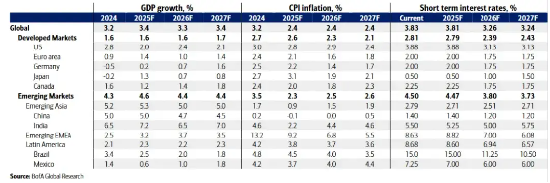
Core Viewpoint - The global economy is expected to show moderate recovery in 2026, supported by ample liquidity and a gradual recovery in inventory and profit cycles, shifting the market narrative from valuation recovery to profit support [1][30]. Group 1: Overseas Macro - The global economy will continue to recover, with K-shaped economic characteristics persisting but narrowing. Major economies are projected to have varied GDP growth rates: the US at 2.4%, Eurozone at 1.0%, Japan at 0.8%, and emerging markets at 4.2% [2][30]. - Global inflation is on a downward trend, with expectations that the Federal Reserve may cut interest rates 2-3 times in 2026, leading to a decrease in short-term rates [31][30]. Group 2: Domestic Macro - Fiscal policies are expected to drive investment recovery in major economic provinces, with a focus on infrastructure, manufacturing recovery, and a narrowing decline in real estate sales and investment [8][35]. - The Producer Price Index (PPI) is anticipated to rise initially before stabilizing, while the Consumer Price Index (CPI) may see moderate increases. The profit cycle is gradually recovering, with improvements expected in various sectors [9][35]. Group 3: Liquidity Environment - A clear trend of global liquidity easing is established, with the Federal Reserve leading improvements in overseas liquidity. Domestic monetary policy is expected to align with fiscal measures, potentially leading to interest rate cuts [12][38]. - The supply of funds is likely to be dominated by institutional capital, with private equity funds potentially driving high-net-worth individuals back into equity allocations [14][38]. Group 4: Strategic Allocation Directions - The market is expected to shift from valuation recovery to profit-driven dynamics in 2026, with Chinese assets still having room for valuation recovery [41][42]. - Key sectors to focus on include technology and advanced manufacturing, traditional export chains, and industries with increasing overseas revenue proportions [42][45]. - Future industry themes may include smart manufacturing, next-generation communications, advanced materials, and future energy solutions [47].
网经社2025《数字经济系列年终盘点&报告&百强榜》计划发布
Sou Hu Cai Jing· 2026-01-06 06:21
Core Insights - The company is launching the 2025 "Digital Economy Year-End Review & Report & Top 100 List"招商计划, covering various sectors such as digital retail, digital life, mobile travel, industrial e-commerce, cross-border e-commerce, digital education, digital health, and logistics technology [1][11] Group 1: Year-End Review Series - The company is initiating its 17th annual "Year-End Review" series, which aims to provide a professional retrospective and trend prediction rather than just a simple listing of events [2] - The series will include significant events in various sectors, including fresh e-commerce, digital retail, content e-commerce, second-hand e-commerce, logistics technology, AI e-commerce, and major players like Alibaba, Pinduoduo, and JD [5][6] Group 2: Reports and Rankings - The company will release the 2025 annual series of reports and rankings, utilizing its self-developed e-commerce database "DianShuBao" and various research methods such as data analysis, partner surveys, platform evaluations, user surveys, and expert interviews [9][12] - The reports will cover a wide range of topics, including market data reports for various sectors like cross-border e-commerce, digital health, and digital education, as well as investment and financing reports [16][17] Group 3: Publication Channels - The reports and rankings will be published through multiple channels, including the company's own media, self-media matrix, and a registered user base of over 500,000, which includes government departments, investors, and e-commerce service providers [20][25] - The annual reports and rankings are considered influential indicators in the e-commerce and digital economy sectors, useful for public relations, financing endorsement, brand promotion, and market research [36]

连续13年入选!网龙再登中国互联网综合实力百强榜
Xin Lang Cai Jing· 2026-01-05 10:44
Core Insights - The China Internet Association announced the "Top 100 Internet Companies in China for 2025," with NetDragon recognized for its robust business development and industry influence, marking its 13th consecutive year on the list alongside major players like Tencent, Alibaba, and Baidu [1][2]. Group 1: Evaluation and Recognition - The evaluation system for the 2025 ranking includes 20 core indicators across seven dimensions: enterprise scale, profitability, innovation capability, growth ability, risk management, social responsibility, and corporate credit [1]. - The ranking has gained significant attention and recognition from government departments, industry organizations, and experts due to its professionalism and authority [2][7]. Group 2: Business Strategy and Core Competitiveness - NetDragon employs a dual business strategy focusing on "Games + Education," establishing a unique and solid core competitiveness in both high-value sectors [4][8]. - In the gaming sector, NetDragon is one of the earliest Chinese online gaming companies to successfully enter international markets, with games like "Conquer," "Magic Domain," and "Soul of Heroes" available in 11 languages across over 180 countries [4][8]. - In the education sector, NetDragon is a leading global provider of digital education solutions, operating in over 190 countries and integrating cutting-edge technologies like AI, VR, and AR into educational settings [4][8]. Group 3: Social Responsibility and Future Outlook - NetDragon is committed to social responsibility, having donated over 50 million yuan worth of digital education products and services to underprivileged regions in China, promoting educational equity and balanced development [6][11]. - Looking ahead, NetDragon aims to leverage digital technology to deepen innovation across education, gaming, culture, and entertainment sectors, contributing to the sustainable development of digital education [11].


我国数字教育从“量的扩增”迈向“质的飞跃”
Xin Lang Cai Jing· 2025-12-30 20:11
Core Insights - The article discusses the significant advancements in China's education digitalization strategy during the "14th Five-Year Plan" period, highlighting the launch of new features on the National Smart Education Platform [1][2]. Group 1: National Smart Education Platform - The National Smart Education Platform has been upgraded to include new sections for preschool and graduate education, achieving comprehensive service coverage [2]. - The platform has aggregated over 130,000 quality resources for primary and secondary education, 12,500 vocational education courses, and 145,000 higher education courses, with a total user base exceeding 178 million and daily visits reaching 52 million [2]. Group 2: AI Integration in Education - Artificial intelligence has evolved from a single tool to a core element driving the entire educational process, impacting admissions, teaching evaluations, employment services, and campus governance [4]. - The Ministry of Education has established 509 AI education base schools to explore new educational concepts and practices, aiming to create replicable successful cases [3][4]. Group 3: International Influence and Rankings - China has released its first "White Paper on Smart Education," enhancing its international influence in digital education and providing a framework for global digital education development [4]. - According to the Global Digital Education Development Index, China's ranking has improved from 24th in 2023 to 6th in 2025, solidifying its position among the leading countries in digital education [5].
我国数字教育已从“量的扩增”迈向“质的飞跃”
Xin Lang Cai Jing· 2025-12-30 17:06
Core Insights - The digitalization of education in China has transitioned from "quantitative expansion" to "qualitative leap," becoming a crucial support for building a strong education nation [1][7] - The Ministry of Education outlined the progress made during the 14th Five-Year Plan and the development blueprint for the 15th Five-Year Plan, emphasizing a shift towards a comprehensive and integrated "smart education" phase [1] Group 1: Digital Education Development - During the 14th Five-Year Plan, China's digital education has evolved from isolated explorations to a systematic integration and deepening phase characterized by "smart education" [1] - Key aspects of this phase include: - Quality resource supply transitioning from local scarcity to universal sharing - Teaching and learning organization moving from standardized to personalized approaches - Application of intelligent technology evolving from tool assistance to scenario integration - Educational governance shifting from experience-based to data-driven decision-making [1] Group 2: National Smart Education Public Service Platform - The National Smart Education Public Service Platform has achieved significant development, recently adding sections for preschool and graduate education, thus covering all service targets [1] - The platform has aggregated over 130,000 quality resources for primary and secondary education, 12,500 premium vocational education courses, and 145,000 quality higher education courses, with a total user base exceeding 178 million across over 200 countries and regions [2] - The platform's total access volume has surpassed 72.6 billion, promoting equitable access to quality educational resources [2] Group 3: Regional Initiatives and Impact - In Guangdong Province, efforts to address educational resource shortages in underdeveloped areas have led to the delivery of 4,900 premium courses via television, reaching approximately 23 million families [2] - The total access volume for the Guangdong platform has reached 8.581 billion, with over 51% of visits from underdeveloped regions, indicating a significant impact on rural education [2] Group 4: Digital Transformation in Rural Schools - Digital transformation in rural schools has enhanced personalized education accessibility, with examples such as the Jinji Central School in Ningxia utilizing the national platform for tailored teaching strategies [3] - The implementation of digital tools has resulted in a 33% increase in student academic performance and a 24% improvement in physical health standards [3] Group 5: Artificial Intelligence Integration - The deep integration of artificial intelligence during the 14th Five-Year Plan has transformed teaching and learning models, with universities like Fudan and Tsinghua implementing AI across all courses and disciplines [3] - The establishment of a national big data center and an intelligent platform aims to break down data silos and enhance real-time monitoring of educational resources and quality [4][5] Group 6: International Influence and Future Directions - China's digital education has significantly improved its global standing, moving from 24th in 2023 to 6th in 2025 according to the Global Digital Education Development Index [5] - The Ministry of Education plans to advance the national education digitalization strategy 2.0, focusing on enhancing public service levels and governance capabilities [5][6] - Future educational developments will leverage artificial intelligence to create a new talent cultivation system and ensure technology serves the fundamental task of moral education [6]
专家:中国已稳固跻身全球数字教育发展的第一方阵
Xin Lang Cai Jing· 2025-12-30 06:40
Core Insights - China is projected to rank sixth globally in digital education by 2025, solidifying its position in the top tier of global digital education development [1][2] Group 1: Key Developments in Digital Education - The achievement is attributed to China's systematic construction of unique advantages in three core dimensions: competency enhancement, model reconstruction, and governance upgrade [1] - In terms of competency enhancement, artificial intelligence has been integrated into the compulsory education curriculum, strengthening the talent foundation and promoting teacher digital literacy [1] Group 2: Innovations in Educational Models - China has established the world's largest smart education platform, facilitating large-scale AI teaching applications and transforming education towards personalized instruction [1] - This transformation aims to cultivate students' innovative thinking and comprehensive problem-solving abilities, creating new pathways for future talent development [1] Group 3: Governance and Data Utilization - The launch of the National Education Big Data Center enables extensive sharing of educational data, supporting resource optimization, teaching quality monitoring, and educational evaluation [1] - This data-driven approach lays a solid foundation for precise governance in education [1]
从“量的扩增”到“质的飞跃” 我国数字教育实现五大领域全面提升
Yang Shi Xin Wen· 2025-12-30 04:43
Core Insights - The article highlights the significant advancements in China's digital education strategy since the 14th Five-Year Plan, emphasizing the transition from quantity to quality in education through the National Smart Education Public Service Platform. Group 1: Building a Comprehensive Resource Hub - The National Smart Education Platform has established the world's largest high-quality education resource center, covering all educational stages and reaching users in over 200 countries and regions [1] - The platform promotes educational equity through applications like "Special Classroom" and "MOOC in the West," facilitating the distribution of quality resources [1] - It integrates over 60 application tools to support new teaching models and significantly enhances teachers' digital literacy and teaching capabilities through research groups and online training [1] Group 2: Lifelong Learning Center - The platform aims to serve lifelong learners by aggregating a vast array of course resources tailored to different demographics [2] - It offers numerous "micro-professional" and vocational training courses for graduates and social learners to support high-quality employment [2] - Initiatives like the "Silver Age Classroom" cater to the elderly, enriching their later life, while a credit bank system provides institutional support for the recognition of learning outcomes [2] Group 3: Streamlined Education Services - The public service hall of the national platform integrates 51 government services across eight categories, achieving a "one-stop acceptance, one network for all" model [3] - Services such as student status inquiries and zero-material applications for compulsory education enrollment enhance service efficiency, significantly improving public satisfaction and accessibility [3] Group 4: National Education Big Data - The establishment of the National Education Big Data Center facilitates interconnectivity among educational departments and universities, serving as a central hub for data sharing [4] - The analysis and application of vast data sets enable dynamic monitoring of educational quality, optimized resource allocation, and precise student support services [4] - The creation of an "educational digital map" supports scientific forecasting and decision-making, advancing educational governance towards precision and scientific management [4] Group 5: International Leadership and Recognition - China has contributed significantly to global digital education development through initiatives like the World Digital Education Conference and the publication of the "China Smart Education White Paper" [5] - The international version of the platform offers courses globally, and initiatives like the "Digital Luban Workshop" serve multiple countries, fostering international consensus [6] - China's digital education achievements have received top awards from the United Nations, enhancing its international influence and attracting numerous countries for experience exchange [6]