
光追技术

Search documents
性能提升90%、人人用上光追,英伟达显卡黑科技如何改变游戏?
3 6 Ke· 2026-03-09 02:04
Core Viewpoint - The PC DIY market has been struggling recently due to skyrocketing flash memory prices, leading to increased costs for components like memory and graphics cards, causing many consumers to delay or cancel their upgrade plans. However, Microsoft has introduced the Shader Execution Reordering (SER) technology, which is expected to enhance gaming performance significantly by improving GPU efficiency in ray tracing scenarios [1][2][4]. Group 1: SER Technology Overview - SER, or Shader Execution Reordering, was initially developed by NVIDIA and has now been integrated into Microsoft's DirectX 12. Its primary function is to optimize GPU thread scheduling for ray tracing, allowing for better parallel processing and improved performance [2][5]. - The introduction of SER addresses the inefficiencies faced by traditional graphics cards when handling ray tracing tasks, which often lead to performance bottlenecks due to the random nature of ray tracing calculations [4][7]. Group 2: Performance Improvements - SER technology can provide a performance boost of 20% to 40% in frame rates when ray tracing is enabled, with some optimized demos achieving up to a 90% increase in performance [8]. - The technology is designed to be accessible to a wider range of graphics cards, as it does not require developers to make specific calls, only needing support for DirectX 12 [7][8]. Group 3: Compatibility and Hardware Requirements - Not all graphics cards will support SER; for NVIDIA, it is available on RTX 40 series and above, while AMD requires RX 9000 series or newer for full support. Intel's Xe2 architecture also supports SER from its inception [9][11]. - The current availability of high-performance AMD graphics cards is limited, which may affect their market competitiveness, while Intel's B580 graphics card has emerged as a strong contender in the 2K gaming segment due to SER [11][14]. Group 4: Future Implications and Software Optimization - The adoption of SER is expected to make ray tracing more mainstream, allowing older graphics cards to benefit from performance enhancements, although older games may not receive these updates without significant developer effort [15][16]. - As hardware performance improvements slow down, software optimizations like SER are becoming increasingly important for enhancing gaming experiences, indicating a shift towards software-defined hardware solutions in the industry [16].



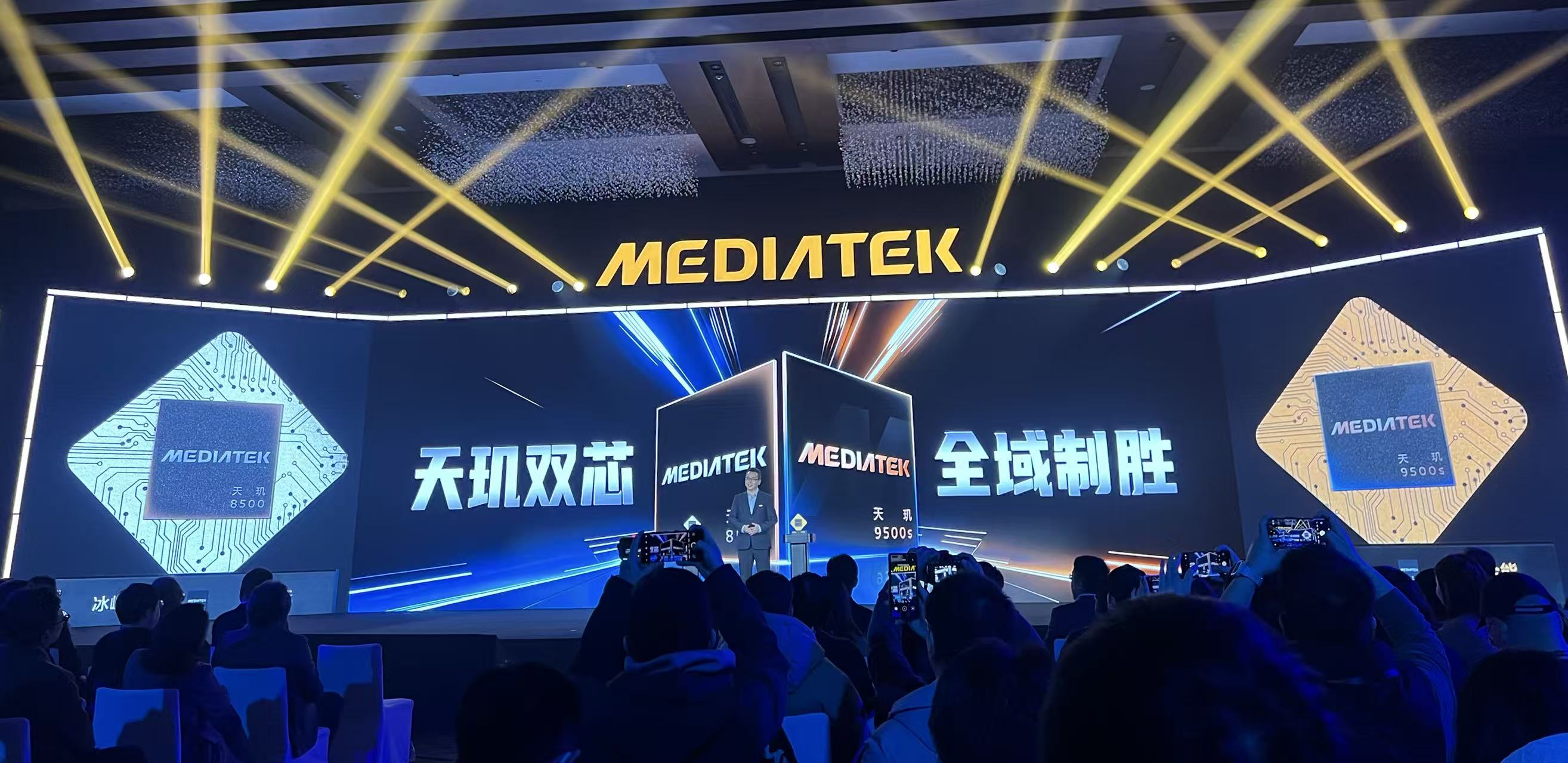
联发科发布两颗天玑芯片
Zhong Guo Jing Ying Bao· 2026-01-15 15:10
Core Insights - MediaTek has officially launched two mobile chips, the Dimensity 9500s and Dimensity 8500, targeting the flagship and light flagship markets respectively, enhancing the competitive landscape with advanced features and energy efficiency [1][3] Group 1: Product Specifications - The Dimensity 9500s is built on TSMC's 3nm process, featuring a "1+3+4" full-core CPU architecture and Immortalis-G925 GPU, supporting PC-level ray tracing and 165Hz ultra-high frame gaming [3] - The Dimensity 8500, aimed at the light flagship segment, utilizes a 4nm process with eight Cortex-A725 cores clocked at 3.4GHz, offering a 25% performance increase and 20% power reduction compared to its predecessor [3] Group 2: Market Positioning - The Dimensity 9500s aims to democratize flagship experiences, while the Dimensity 8500 focuses on the gaming needs of younger consumers [3] - Both chips enhance network and connectivity capabilities, supporting 5G Release-17 and advanced Wi-Fi and Bluetooth technologies, further solidifying MediaTek's product matrix across various price segments [3] Group 3: Strategic Partnerships - The REDMI Turbo 5 series will be among the first devices to feature the Dimensity 9500s, with the REDMI Turbo 5 Max expected to launch within the month [1][3] - The collaboration with REDMI and other flagship market terminals is anticipated to strengthen MediaTek's leading position in the global mobile chip market [3]
一颗野心勃勃的GPU
半导体行业观察· 2025-07-23 00:53
Core Viewpoint - The article discusses the emergence of Bolt Graphics, a startup aiming to redefine the GPU landscape with its new GPU called Zeus, which focuses on path tracing technology to challenge established giants like NVIDIA, AMD, and Intel [1][19]. Group 1: Path Tracing as a Breakthrough - Path tracing represents a significant advancement in rendering technology, providing a more accurate representation of light behavior compared to traditional real-time ray tracing [2]. - The computational demands of path tracing are substantially higher, requiring ten to a hundred times the power of standard GPUs for real-time applications [2]. Group 2: Bolt Graphics and Zeus GPU - Bolt Graphics was founded by engineers from major companies like NVIDIA, AMD, and Intel, with a mission to create a high-performance path tracing GPU [7]. - The Zeus GPU comes in three versions: Zeus 1c, Zeus 2c, and Zeus 4c, with varying power and performance specifications, including a path tracing performance of approximately 7.7 billion rays per second for the 1c version [7][8]. - The Zeus 4c version is designed for data centers, featuring a TDP of 500W and up to 2TB of DDR5 memory, aimed at high-performance computing (HPC) and rendering farms [8][10]. Group 3: Advantages of Zeus - Zeus GPUs utilize a unique memory architecture combining LPDDR5X for bandwidth and DDR5 for capacity, allowing for a total memory of up to 2.25TB, which is beneficial for both path tracing and HPC datasets [10]. - In terms of performance, Bolt claims that their GPUs can outperform NVIDIA's RTX 5090 by a factor of 10 in certain scenarios, significantly reducing the number of GPUs needed for complex rendering tasks [10][11]. Group 4: Ecosystem Development - Bolt is building an open and customizable ecosystem based on RISC-V architecture, which allows for greater flexibility and community engagement compared to traditional closed architectures [14]. - The company is developing a proprietary path tracing engine called Glow Stick, which aims to integrate with popular rendering tools and provide high-precision sampling and physical Monte Carlo integration [15][16]. Group 5: Challenges and Future Outlook - Despite its potential, Bolt faces significant challenges, including the timeline for mass production, which is projected for late 2026, and the need to establish a robust software ecosystem to support its hardware [17][18]. - The success of Bolt's Zeus GPU could redefine the graphics rendering landscape, particularly in gaming and HPC applications, if it can deliver on its promises of unprecedented visual fidelity and performance [19].


