入境游市场复苏

Search documents
我们发现60个入境游热门景点 外国游客爱京沪也爱小城
Xin Jing Bao· 2025-09-28 12:28
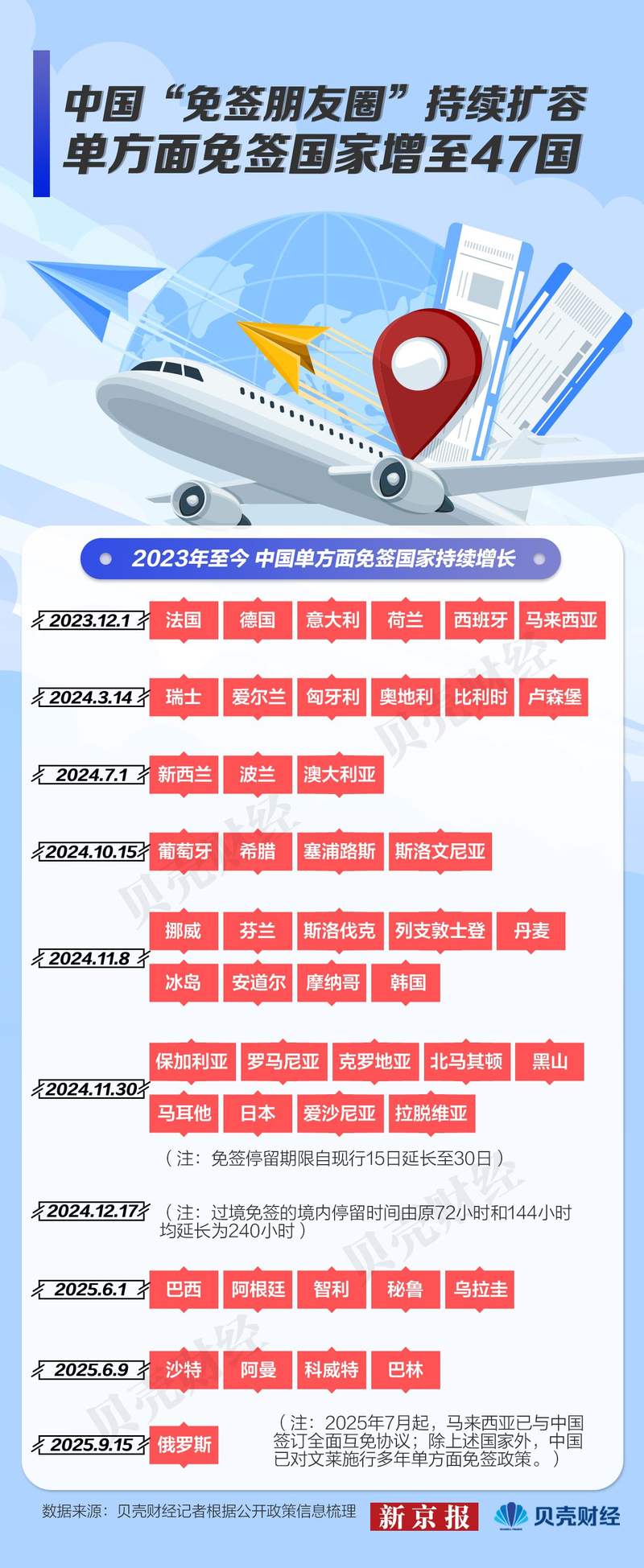
Group 1: Market Recovery and Growth - The inbound tourism market in China is showing a clear recovery trend, with over 19 million foreign visitors received in the first half of 2025, nearing 60% of the total for 2019, and a year-on-year growth of 30% [1][3] - Major cities like Beijing and Shanghai have seen inbound tourist numbers return to 2019 levels, with Beijing experiencing significant growth since Q2 2023, surpassing its previous peak [2][3] - The expansion of visa-free policies has accelerated the recovery of the inbound tourism market, with 47 countries now enjoying unilateral visa exemptions from China [3][7] Group 2: Tourist Preferences and Trends - Foreign tourists are increasingly interested in destinations beyond traditional hotspots, with places like Jiuzhaigou, Zhangjiajie, Lijiang, Yangshuo, and Guilin gaining popularity [1][11] - Different regions exhibit distinct travel preferences, with European tourists favoring slow-paced deep travel, Southeast Asian tourists drawn to food and photo opportunities, and Middle Eastern tourists focused on shopping [8][9] - Historical sites and natural landscapes are the most attractive to international visitors, with the Great Wall and other cultural landmarks being particularly favored [14][20] Group 3: Policy and Infrastructure Improvements - Various local governments are implementing measures to enhance the inbound tourism experience, focusing on payment solutions, language support, and tax refund policies to address tourists' immediate needs [21][22] - The combination of policies reflects three main strategies: prioritizing convenience to boost immediate consumption, competing for tourist flow through subsidies and events, and promoting cultural exports to expand market reach [25] - The growth of social media discussions around "China Travel" has contributed to the rising interest in inbound tourism, with over 2.3 million posts on platforms like TikTok [2][3]

暑期入境游火爆:外国游客从北上广奔向宝藏小城
2 1 Shi Ji Jing Ji Bao Dao· 2025-08-21 07:29
Core Insights - The inbound tourism market in China is experiencing a significant recovery, with a notable increase in foreign visitors, particularly from Europe, due to the expansion of visa-free policies [4][5][6] - Customized and small group tours are becoming increasingly popular, reflecting a shift in tourist preferences towards personalized travel experiences [2][3] - The growth in inbound tourism is supported by various government initiatives aimed at enhancing the travel experience and attracting more visitors to smaller cities [6][7] Group 1: Market Recovery - Inbound tourism in Beijing has seen a 48.8% year-on-year increase in visitor numbers, with spending rising by 51.3% to reach $32 billion [3][4] - The number of cities receiving foreign tourists has expanded to 144, with a significant increase in bookings for third-tier cities [1][7] - The implementation of visa-free policies for 54 countries has been a key driver in attracting tourists, with 71.2% of inbound visitors benefiting from these policies [4][5] Group 2: Changing Tourist Preferences - Tourists are increasingly opting for short, customized trips rather than traditional longer tours, with a focus on unique experiences [2][3] - The proportion of small group and customized tours has risen significantly, indicating a shift in how tourists wish to explore [2] - The influx of European tourists, particularly first-time visitors, highlights a diversification in the tourist demographic [3] Group 3: Government Initiatives - The Chinese government has introduced various measures to enhance the travel experience, including lowering the threshold for tax refunds and expanding the number of refund stores [5] - Cities like Beijing and Shanghai are actively promoting their unique attractions and services to capture a larger share of the inbound tourism market [6][7] - The introduction of the "BEIJINGPASS" aims to streamline transportation and access to attractions, enhancing the overall visitor experience [10] Group 4: Economic Impact - Inbound tourism is projected to contribute approximately 0.5% to China's GDP, with significant growth potential compared to other countries where this figure ranges from 1% to 3% [5] - The increase in foreign visitors is expected to stimulate local economies, particularly in smaller cities that are becoming more accessible [7][8] - The trend of tourists bringing empty suitcases to shop in China reflects a shift towards consumption-driven travel, benefiting local businesses [8] Group 5: Industry Challenges - Despite the recovery, challenges remain, such as the need for better payment solutions for foreign tourists and a shortage of qualified tour guides [9][10] - The industry is adapting to these challenges by enhancing service offerings and improving the overall tourist experience [10] - Continuous professional development for tour guides is essential to meet the evolving interests of foreign visitors [10]
专访携程集团联合创始人、董事局主席梁建章:构建多语种服务体系,力拓半日游项目推向更多城市
Bei Jing Shang Bao· 2025-07-03 09:02
Core Viewpoint - The Chinese inbound tourism market is experiencing a strong recovery and a new landscape, with expectations to fully restore to 2019 levels this year, driven by the 240-hour visa-free transit policy [1][3]. Group 1: Recovery of Inbound Tourism - Ctrip's inbound tourism business has recovered to 70%-80% of 2019 levels and is expected to fully recover and even exceed 2019 levels this year [3]. - In Q1 2025, Ctrip's inbound tourism bookings are projected to grow by approximately 100% year-on-year [3]. - Southeast Asian tourist numbers are rapidly increasing due to the visa-free policy, while European and American tourist numbers are also recovering [3]. Group 2: Destination Preferences - Major cities like Beijing and Shanghai are regaining their attractiveness as inbound tourism destinations, with Shanghai benefiting from its international urban image and social media presence [3]. - Emerging cities such as Chengdu and Chongqing are gaining popularity among inbound tourists, leveraging unique cultural elements like the panda [3][4]. - Unique destinations like Xinjiang and Heilongjiang are showing significant potential, particularly for Southeast Asian tourists attracted by winter sports [4]. Group 3: Challenges in Recovery - Despite the positive trends, challenges remain, including insufficient visa processing and airline capacity [5]. - The European and American markets have substantial growth potential but face transportation bottlenecks, such as high ticket prices due to limited flight availability [5][7]. Group 4: High-Value Tourist Segment - European and American tourists, typically high-net-worth individuals, are crucial for enhancing the value of China's inbound tourism [7]. - Ctrip is collaborating with airlines to restore international routes and optimize capacity to attract more high-end tourists [7]. Group 5: Future Growth Strategies - The inbound tourism sector has significant growth potential, with optimistic projections of a 50% annual growth rate, potentially doubling in two to three years [8]. - Ctrip is focusing on enhancing multilingual service capabilities, particularly for Arabic and Russian, to cater to a diverse range of inbound tourists [9][11]. - The company plans to upgrade its inbound tourism products and services, expanding from half-day tours to comprehensive travel experiences covering various aspects of tourism [12].