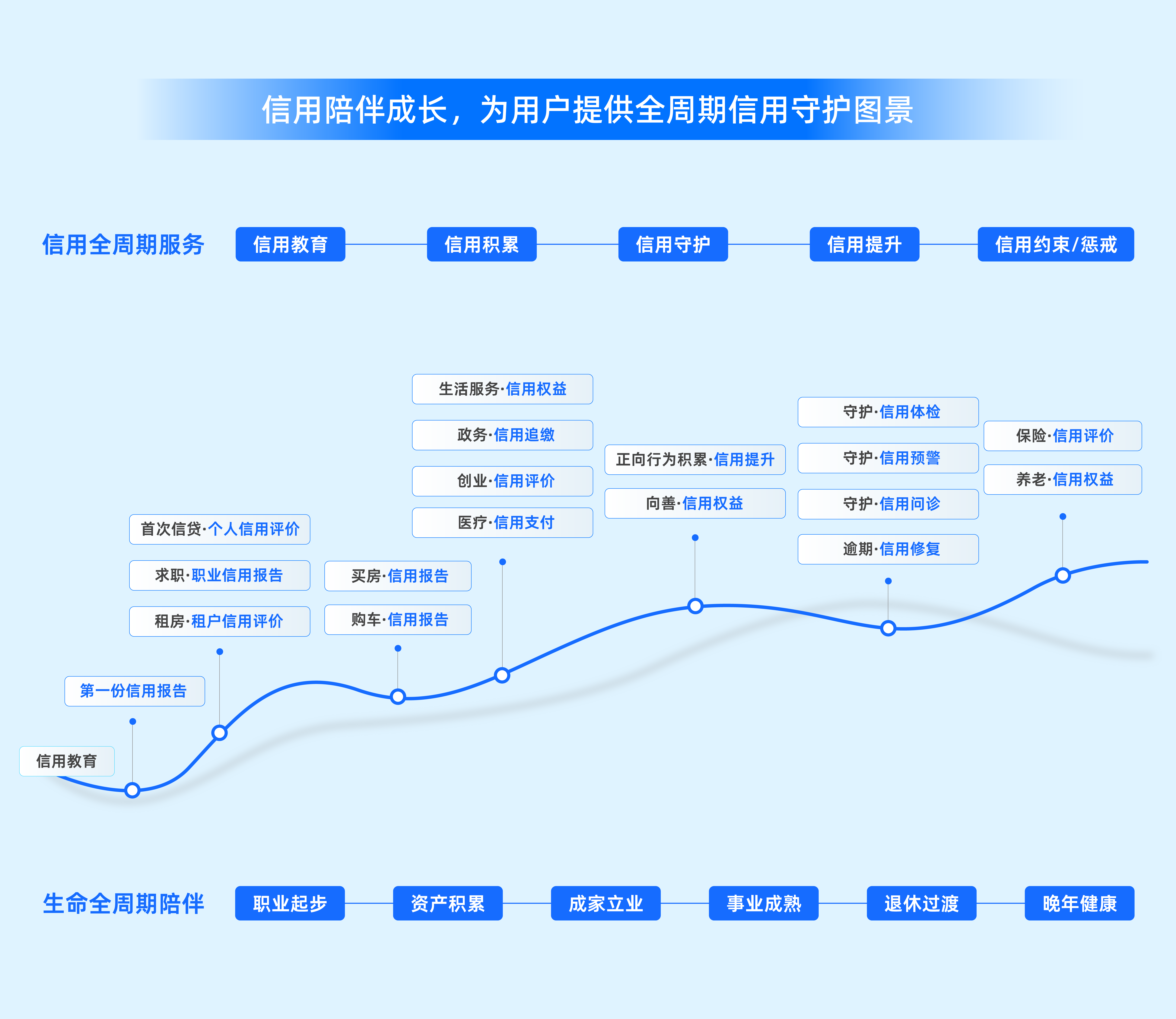
全周期个人信用管理服务

Search documents
征信“斩杀线”:美国吃干抹净,中国能走出另一条路吗?
Guan Cha Zhe Wang· 2026-02-12 05:33
Core Viewpoint - The People's Bank of China (PBOC) has introduced a one-time credit repair policy that allows individuals with overdue accounts of less than 10,000 yuan to have their credit records automatically cleared if they settle their debts by March 31, 2026, signaling a shift in the credit system from punishment to assistance [1][9][10]. Group 1: Current State of Credit Repair - Prior to the PBOC's policy, individuals with damaged credit had limited legal avenues for relief, with the official stance being that "credit repair" did not exist, leading to a lack of awareness and complex processes for legitimate appeals [2][3]. - The absence of legitimate options has allowed a gray market to flourish, with scams promising credit repair services that often result in victims losing personal information and money [3][4]. - The financial black market has seen a tenfold increase since 2021, leading to significant financial losses, with victims often facing harassment from debt collectors [3][4]. Group 2: Comparison with the U.S. System - The U.S. has a well-established credit repair industry, regulated by the Credit Repair Organizations Act (CROA), which allows consumers to seek assistance from legitimate agencies for a fee, while also having a darker side involving debt buying and collection practices that exploit consumers [5][6][7]. - The U.S. system emphasizes the monetization of credit scores, creating a complex industry where consumers are repeatedly charged for services related to their credit status [7][8]. Group 3: Future Directions for China's Credit System - The PBOC's policy reflects a different approach, aiming to provide a corrective opportunity for individuals with non-malicious credit issues, rather than forcing them to pay for score improvement [9][10]. - There is a growing consensus in the industry about the need for a market-oriented, sustainable service system that assists credit-damaged individuals in rebuilding their lives, rather than merely punishing them [11][12]. - A report suggests a comprehensive personal credit management service that extends beyond punitive measures to include proactive support in various life scenarios, such as employment and housing [12][13][14]. Group 4: Challenges and Opportunities - The main challenge for the credit industry in China is to develop legitimate market solutions quickly enough to outpace the black market, which continues to exploit consumer anxiety [15][16]. - The potential market for personal credit services is projected to reach between 80 billion to 100 billion yuan during the 14th Five-Year Plan period, indicating significant growth opportunities for legitimate service providers [15]. - The success of the credit repair initiative will depend on the collaboration between regulatory bodies, financial institutions, and the integration of public data to create a supportive environment for individuals seeking to improve their credit status [15][16].


全国首份个人信用经济发展报告:个人信用迈向“自主管理”时代
Zhong Guo Jing Ying Bao· 2026-01-30 13:40
Core Insights - The personal credit industry in China is experiencing a historic development opportunity due to the accelerated release of data value, as highlighted in the "Personal Credit Economy Development Report" [1][2] - The report predicts that during the 14th Five-Year Plan period, the personal credit service market in China could generate annual revenues of 80 billion to 100 billion yuan [1] Group 1: Definition and Trends - The report defines the personal credit economy as a new economic form centered on personal credit data, involving a full-cycle credit service system that serves individuals, financial institutions, and business entities [2] - Three major trends in personal credit development are identified: moving from passive recording to active management, integrating long-term credit management with point-in-time credit consumption, and shifting from punitive measures to a positive cycle of incentives and education [2] Group 2: Service Models - The report proposes a "dual closed-loop" model for full-cycle personal credit management, which includes a "product closed-loop" covering various aspects of credit service and a "service closed-loop" that integrates credit services into key life scenarios [3] - This model is applicable to small and micro enterprises, enhancing their resilience by linking personal credit accounts to business risks [3] Group 3: Target Demographics - The personal credit economy aims to benefit four key demographics: individuals in credit distress, flexible employment groups, small business operators, and altruistic individuals [4] - A "professional credit report" solution is proposed to address the challenges faced by flexible employment groups, enabling quick background checks for employers and enhancing job seekers' credibility [4] Group 4: Market Practices - Zhejiang Province is leading the exploration of the personal credit economy, with Qiantang Credit becoming the first provincial-level public data and commercial data integration case in the credit service sector [5] - Future initiatives by Qiantang Credit will focus on credit protection and credit reporting, collaborating with financial institutions to launch a series of products [5]
失信人群、灵活就业者受益,全国首份报告解锁个人信用经济新赛道
Di Yi Cai Jing· 2026-01-29 11:29
Core Insights - The report defines personal credit economy as a new economic form centered on personal credit data, providing credit services to individuals, financial institutions, and business entities through compliant data circulation and diverse application scenarios [1][10] Group 1: Target Demographics - The personal credit economy should primarily benefit four groups: individuals in credit distress, flexible employment groups, small business operators, and "virtuous" individuals [10][15] - There are over 100 million individuals in China with a history of bad credit records, highlighting the need for innovative credit repair mechanisms [10] Group 2: Credit Service Development - The report emphasizes the importance of a full-cycle personal credit management service, which includes credit protection, repair, incentives, education, and constraints [9][14] - As of November 2025, the financial credit information database has recorded 1.16 billion individuals, with approximately 810 million having credit records [12] Group 3: Industry Evolution - The personal credit industry in China has evolved from a focus on credit reporting to a broader application of credit data, with over 700 million personal information subjects recorded by market-oriented credit agencies [13][14] - The annual revenue of the domestic personal credit service industry has exceeded 10 billion yuan, with projections suggesting it could reach 80 to 100 billion yuan during the 14th Five-Year Plan period [14] Group 4: Future Trends - The report identifies three major trends in personal credit development: a shift from passive recording to active management, integration of long-term credit management with short-term credit consumption, and a transition from punitive measures to positive reinforcement and education [14][15] - The growth of the personal credit economy is expected to lower social trust costs and enhance the visibility and respect for individual credit value, leading to improved resource allocation and social governance efficiency [15]