全流程自动化

Search documents
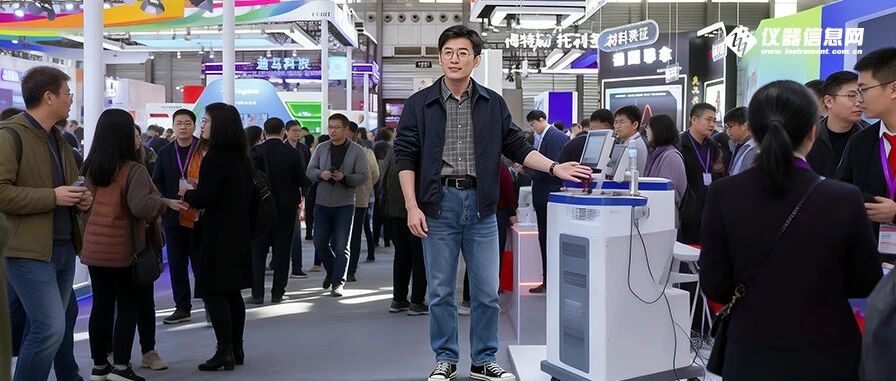
流式细胞仪的技术革新与自动化:analytica 2026全景见闻
仪器信息网· 2026-03-30 09:03
Core Insights - The 2026 Munich Biochemical Exhibition showcased the latest advancements in flow cytometry, highlighting trends towards high parameterization, automation, and customization in applications [2][14]. Group 1: Key Trends in Flow Cytometry - Flow cytometry is experiencing a paradigm shift with the integration of optical detection, microfluidic control, and artificial intelligence algorithms, reshaping industry standards and application boundaries [14]. - The detection capabilities are expanding from cellular analysis to the nanoscale, with new devices like Beckman Coulter's CytoFLEX nano achieving detection limits of 40-80 nm, addressing the need for detecting exosomes and viral particles [15]. - Automation in laboratories is increasing due to rising labor costs and the demand for large-scale screening, with new products featuring automated sampling systems and AI-driven data analysis [16]. Group 2: Product Highlights - Beckman Coulter's CytoFLEX mosaic 88 offers a dual-mode platform with 88 detection channels, enabling over 40 colors for complex immune profiling [3]. - Sartorius's iQue 5 is a benchmark in high-throughput screening, capable of analyzing 96-well plates in 5 minutes with a sample consumption of only 1μL [4]. - Bio-Techne's Pala system is designed for single-cell sorting with a high cell recovery rate, suitable for precious clinical samples [4]. Group 3: Market Dynamics - The industry is shifting from general-purpose platforms to specialized devices tailored for specific applications, such as high-throughput screening in antibody development and clinical diagnostics [17]. - The integration of automated workflows and validated testing kits is enhancing compliance and operational efficiency in clinical settings [17]. - The flow cytometry technology is penetrating new markets, including environmental monitoring and food safety, indicating a diversification of applications [17]. Group 4: Future Outlook - The innovations presented at the exhibition demonstrate the industry's vitality, with ongoing technological iterations and application expansions driving flow cytometry from research labs to broader clinical and industrial contexts [19].


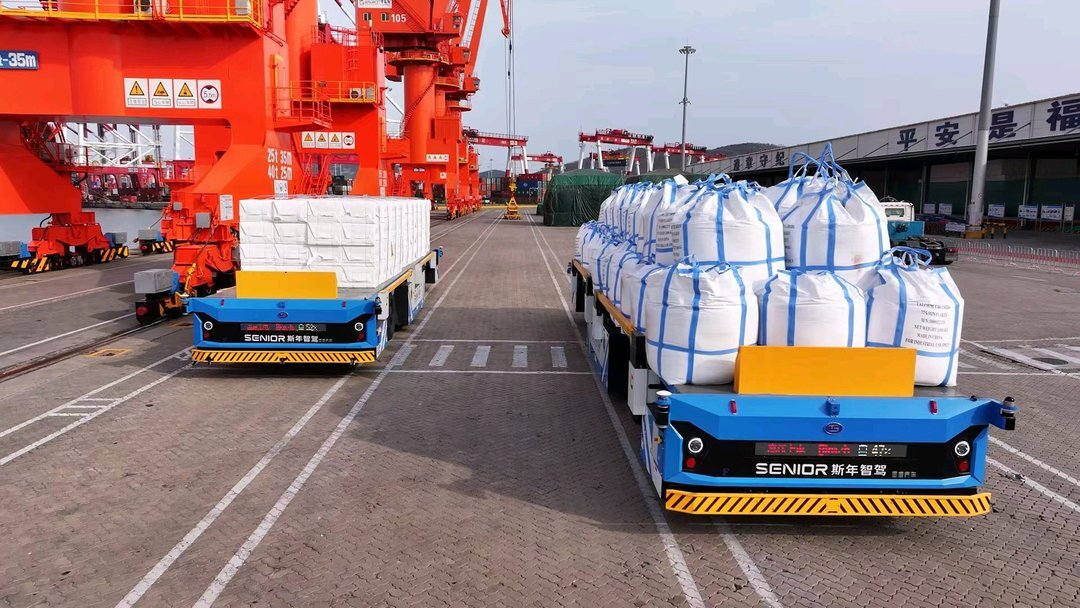
再创历史新高 山东港口青岛港前10月纸浆吞吐量同比增长17%
Da Zhong Ri Bao· 2025-11-17 08:04
Core Insights - Qingdao Port has established itself as the world's largest pulp import port, with a significant increase in pulp import volume, achieving a year-on-year growth of 17% from January to October, marking a historical high in throughput [3][4]. Group 1: Operational Efficiency - The transition to a fully automated pulp terminal has revolutionized the loading and unloading processes, reducing the need for manual labor and enhancing operational efficiency [4][6]. - Qingdao Port has initiated an "efficiency revolution," focusing on the automation of loading and unloading processes, which is expected to reduce manual labor by 80% once fully operational [6][7]. - The port has set a new world record for pulp unloading, achieving a throughput of 51,676 tons in a 24-hour period, attracting global pulp vessels to dock there [7]. Group 2: Logistics and Management - The port has implemented a collaborative mechanism for market, site, and warehouse management to optimize space utilization and enhance operational efficiency [8][10]. - Qingdao Port has adopted a "precision loading" strategy, dynamically adjusting operational plans based on real-time data to ensure efficient cargo handling [10]. - The port is extending its service capabilities along the entire logistics chain, collaborating with traders and railways to enhance the sea-rail intermodal service, thereby improving the delivery of imported pulp to domestic markets [11]. Group 3: Future Development - Qingdao Port aims to leverage its global logistics network and customer-oriented service brand to drive high-quality development in pulp logistics, contributing to regional economic growth [11].

AI写文章生成小程序怎么选?优采云全流程自动化超厉害
Sou Hu Cai Jing· 2025-10-21 19:07
Core Insights - The article discusses the challenges faced by a content operations manager in a medium-sized enterprise and how the adoption of an AI writing automation tool, Youcaiyun, significantly improved content production efficiency and quality [1][3][6]. Group 1: Challenges in Content Creation - The content operations manager struggled to manage multiple social media accounts and produce high-quality articles daily, initially finding common AI writing tools inadequate [1]. - The need for a solution that could automate the entire content creation process became apparent after several unsatisfactory attempts with existing tools [3]. Group 2: Introduction of Youcaiyun - Youcaiyun was identified as a comprehensive solution that automates the entire workflow from content acquisition to publication [3]. - The manager configured the tool by adding the company's website and social media accounts, ensuring clarity in the purpose of each platform for effective automated publishing [3][5]. Group 3: Automation Features - The system allows for cloud-based automation, enabling tasks to run even when the computer is off, thus maintaining productivity outside of regular working hours [5]. - Youcaiyun includes features for setting article length, additional requirements, and filtering out sensitive content, ensuring the quality and originality of generated articles [5][6]. Group 4: Multi-Platform Distribution - The tool facilitates automatic publishing across multiple platforms, such as WeChat, Zhihu, and Xiaohongshu, reducing the need for repetitive manual work [6]. - The manager set up publishing rules and intervals, allowing for a more organized and rhythmic content release schedule [6]. Group 5: Results and Impact - After two weeks of trial, the content production efficiency increased threefold, with the team now able to produce over twenty high-quality articles daily [6]. - The automation freed team members from repetitive tasks, allowing them to focus on content strategy and creative planning, ultimately improving work-life balance for the manager [6][7].

滴滴投资新石器无人车,小红书组建大商业板块
Mei Ri Jing Ji Xin Wen· 2025-08-13 23:05
Group 1 - Didi has invested in the autonomous delivery vehicle company "Xinshiqi," confirming its strategic layout in the unmanned delivery sector [1] - The partnership allows Didi to leverage its platform advantages and user base, positioning itself in the unmanned delivery market [1] - The application of unmanned delivery technology can reduce labor costs and enhance delivery accuracy and efficiency, improving user experience [1] Group 2 - Xiaohongshu has announced the establishment of a large commercial sector to enhance commercialization and transaction synergy [2] - The COO and CMO will lead the new sector, promoting cross-departmental collaboration of resources such as products, technology, and talent [2] - This restructuring aims to improve resource allocation in the commercial and transaction fields, enhancing competitiveness in the content e-commerce sector [2] Group 3 - AliExpress has upgraded its logistics warehouse in Dongguan, Guangdong, to become the first fully automated cross-border logistics park [3] - The warehouse is primarily used for domestic circulation of packages for European consumers, with domestic transport times potentially reduced by up to 6 hours [3] - The automation of logistics processes can significantly shorten package transit times and improve user experience while also reducing labor costs and enhancing delivery precision and efficiency [3]