全球储备资产

Search documents
大行评级丨Cantor Fitzgerald:大幅下调Strategy目标价至229美元 仍看多比特币
Ge Long Hui· 2025-12-08 03:19
Core Viewpoint - Cantor Fitzgerald has significantly lowered the target price for Strategy from $560 to $229 while maintaining an "Overweight" rating, indicating a strong belief in the company's potential despite the price adjustment [1] Company Analysis - Analysts Brett Knoblauch and Gareth Garcetta emphasize that the future performance of Strategy's stock will largely depend on Bitcoin [1] - The firm maintains a bullish outlook on Bitcoin, believing it will become a global reserve asset [1] Market Context - The recent decline in Bitcoin prices is viewed as a healthy correction rather than the onset of a "crypto winter" [1] - Following similar sell-offs in the current cycle, Bitcoin still has the potential to reach new highs [1]
美债要爆雷?比特币的黄金时代即将来了?
智通财经网· 2025-05-27 03:19
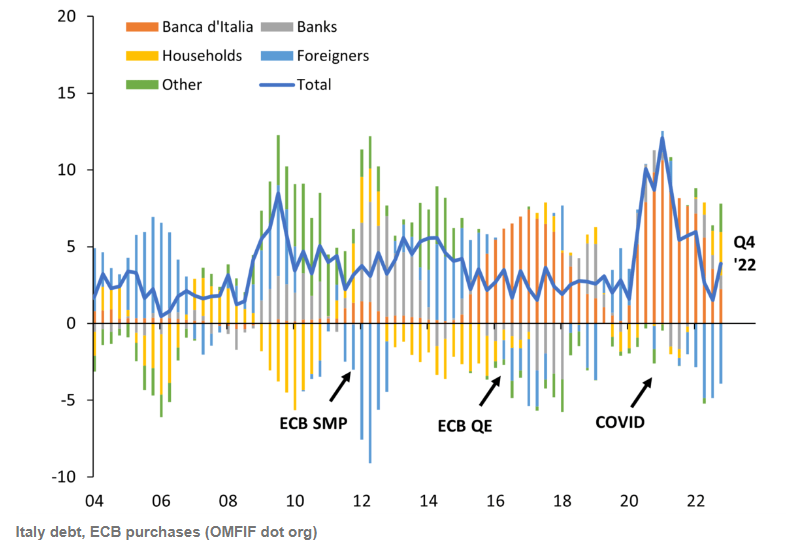
Core Insights - The ongoing U.S. sovereign debt crisis is increasing market interest in Bitcoin as a new global reserve asset, presenting a historic opportunity for the cryptocurrency [1] U.S. Debt and Credit Crisis - Since Trump's presidency, U.S. debt has worsened, with the 10-year Treasury yield nearing annual highs amid a shrinking GDP and stable inflation slightly above 2% [2] - Factors contributing to this situation include trade tariff uncertainties and expanding fiscal deficits leading to inflationary pressures, resulting in persistently high interest rates [3] - The current crisis is fundamentally a credit crisis, with the market recognizing that the U.S. has no intention of addressing its debt issues [3] Lessons from Italy and Japan - Italy has been trapped in a high debt-to-GDP ratio since the 2010s, with the pandemic leading to a de facto bankruptcy in the public market [4] - Japan, facing the highest debt-to-GDP ratio among developed nations, has been issuing debt to cope with declining population and stagnant productivity, with the central bank holding over half of government debt [5][9] Impact of U.S. Debt Crisis on Bitcoin - The U.S. is in a phase of uncontrolled debt, with long-term increases in debt supply and declining global demand for U.S. Treasuries, partly due to Trump's trade policies [10] - The U.S. Treasury and Federal Reserve may need to adopt strategies similar to Japan and Europe, including expanding debt purchases and acting as a "lender of last resort" [10] - Historical correlations show that Bitcoin's price is positively related to global monetary expansion, suggesting that increased liquidity will benefit Bitcoin [10][11] Bitcoin as a Reserve Asset - Bitcoin possesses ideal characteristics of a reserve asset, including durability, divisibility, interchangeability, portability, verifiability, and absolute scarcity [11] - Major economies are moving towards unlimited monetary expansion, with the potential for Bitcoin to become a significant player in the global reserve asset system [12] Economic Indicators from Japan and Italy - Long-term deficits in Japan and Italy have led to currency depreciation and stagnant wages, which may provide insights into the U.S. situation [16] - While the U.S. has a more favorable demographic outlook and economic resilience, the trend of currency depreciation could drive interest in scarce assets like Bitcoin [16] Bitcoin Valuation Models - According to Geneva Investor's model, if Bitcoin matures to a scale comparable to gold, its price could reach $750,000, with bearish scenarios predicting a drop to $50,000 [18][19] - The expected value of Bitcoin under various scenarios ranges from $112,500 to $200,000, indicating significant potential for asymmetric investment opportunities [19] Conclusion - The U.S. debt crisis, characterized by structural issues and high deficits, is likely to lead to permanent debt issuance and increased monetary expansion [21] - As major economies implement monetary expansion policies, the prices of scarce assets like Bitcoin are expected to rise, making it a compelling asymmetric investment choice in the current macroeconomic environment [21]